Getting Started
Beekeeping Mistakes That Cost Beginners Their First Colony
The beginner beekeeping mistakes that quietly end a first hive, and the small handful of habits that prevent most of them.
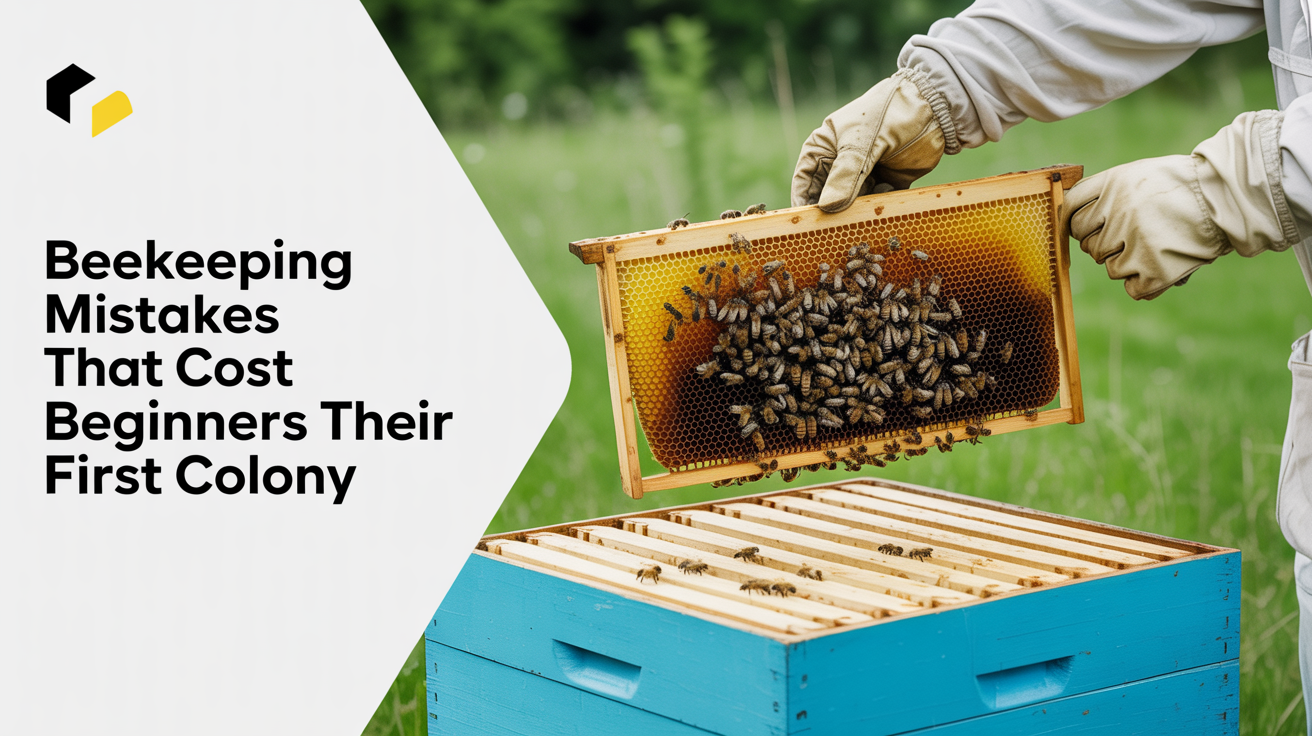
Most first hives do not fail because of one dramatic event. They fail because of a handful of small, avoidable decisions made across a season, none of which looked serious at the time. If you're heading into your first full year, the beginner beekeeping mistakes below are the ones that show up again and again in club forums, mentor conversations, and the "what happened to my bees" post-mortems people write after a colony dies. None of them require special bad luck. They just require not knowing where the decision point was.
Here are the five that do the most damage, framed as choices rather than warnings, plus the short list of habits that catches most of them before they become a dead-out.
Skipping the Mite Count Until It's Too Late
Varroa mites are the single biggest reason a seemingly healthy colony collapses in September or October, and the frustrating part is that a hive can look completely normal right up until it doesn't. Bees are still flying, still bringing in pollen, still building comb. Underneath that activity, mite levels can be climbing past the point where treatment still saves the colony.
The mistake isn't ignorance that mites exist. Most new keepers know mites are a threat in the abstract. The mistake is treating a mite count as something you'll get to later, once you're more comfortable handling frames, once the nucleus colony is established, once you're not so busy. Later tends to arrive after the damage is done, because mite populations grow fastest in mid to late summer, right when a lot of first-year keepers are feeling confident enough to stop checking as often.
An alcohol wash or sugar roll takes a few minutes and gives you an actual number instead of a guess. Do it on a schedule, not when something already looks wrong. If you want the full method and how to read the result against a treatment threshold, the site's guide on monitoring and treating varroa mites walks through the wash step by step.
Opening the Hive Too Often, or Too Rarely
New keepers tend to land on one of two extremes, and both come from the same place: not having a routine to trust.
The anxious version opens the hive every few days "just to check." Every time you crack the lid, you cool the brood nest, stress the colony, and risk rolling or crushing bees, including possibly the queen. Frequent full inspections during a nectar flow can also interrupt comb building and slow the colony's own momentum more than any pest would.
The opposite version comes from nervousness about handling bees, or a busy summer, and it leads to going three or four weeks without a look inside. That's long enough for a colony to swarm, go queenless, or fill every available frame with honey and stop laying, all without you knowing until you finally open the box and find a problem that's already a week or two old.
The fix isn't a strict number of days. It's a routine you actually follow: a full inspection every one to two weeks during the growing season, shorter checks in between if something seems off, and fewer disturbances once the colony is settled into fall. If you don't have a consistent inspection routine yet, a beginner's hive inspection routine is the place to build one, since it's easier to stick to a habit you've written down than one you're improvising each time.
Feeding at the Wrong Time of Year
Sugar syrup has a job, and that job changes with the season. Thin 1:1 syrup in spring stimulates comb building and brood rearing when the colony is expanding. Thick 2:1 syrup in fall is about packing away stores for winter, not growth. Feeding the wrong ratio at the wrong time doesn't just waste sugar. It can push a colony to expand brood rearing right before a dearth, or leave a fall colony without the concentrated stores it needs when temperatures drop.
The other common version of this mistake is feeding when the bees don't need it at all, during a strong nectar flow, which can crowd the brood nest with syrup instead of the nurse bees storing actual nectar, or feeding too late in fall after the colony has already stopped taking syrup down efficiently in cold weather. Watch what the frames are actually telling you (empty comb versus full comb, brood pattern, incoming pollen) rather than feeding on a fixed calendar regardless of conditions.
Crowding a New Colony Into Too Much Space
It seems generous to give a brand-new package or nucleus colony a full-size deep box, or even two boxes, right from the start. In practice it usually backfires. A small cluster of bees has to heat, defend, and patrol whatever cavity you give them. Put a few thousand bees into a ten-frame box built for forty thousand, and they'll spend energy trying to manage that space instead of building comb and raising brood. The extra volume also makes the hive harder to defend against robbing bees and wax moths while the colony is still small.
The better approach is to start a new colony in a reduced space, whether that's a nucleus box or a full box with a follower board taking up the extra room, and expand only as the bees actually fill what they have. Adding a box (supering) is a response to a strong, established colony running out of room, not a starting configuration.
Missing the Early Signs of a Queenless Hive
A colony that has lost its queen doesn't announce it. The early signs are quiet: fewer eggs than the last inspection, a spottier brood pattern, bees that seem more agitated or "roarier" when you open the box, or queen cells appearing on the face of a frame. New keepers frequently miss these because they're looking for the queen herself rather than reading what the brood pattern and behavior are telling them, and a queen can be genuinely hard to spot even when she's right there.
By the time a colony is visibly queenless with no eggs, no larvae, and no cells in progress, your options have narrowed to introducing a new mated queen or combining with another colony, and the window to do either successfully is shrinking. Catching the signs one or two inspections earlier, spotty brood, a thinning population, cells started but not yet capped, gives you far more room to fix the problem before it becomes a collapse. This is one more reason a consistent inspection routine matters more than almost any single piece of equipment.
The Habits That Prevent Most of This
You don't need to master every skill in the first season to avoid the mistakes above. Three habits cover most of it.
Keep a written inspection log, even a simple one: date, what you saw, what you did. Patterns (a brood pattern getting worse, stores dropping faster than expected) are obvious in a log and easy to miss from memory alone.
Put mite counts and feeding on the calendar instead of leaving them to feel. Decide now, before the season gets busy, roughly when you'll wash for mites and when you'll switch syrup ratios, so you're not deciding in the moment when you're also tired and behind on everything else.
Start small on purpose. A nucleus colony in a right-sized box, checked on a routine, beats a full-size setup checked whenever you remember. If you're still working out your overall approach and budget for the first year, what beekeeping actually costs in year one and the general step-by-step guide to starting beekeeping are both worth reading before your bees arrive, not after the first problem shows up.
Frequently Asked Questions
How often should a first-year beekeeper inspect the hive?
A full inspection every one to two weeks during spring and summer is a reasonable default for a new colony. Shorten the interval if you've seen something concerning, like a thinning brood pattern, and lengthen it in late fall once the colony is settled and disturbing it does more harm than good.
What's the most common reason a first hive dies over winter?
Untreated or under-treated varroa mites are usually near the top of the list, often combined with insufficient honey stores going into cold weather. Both are things a regular mite count and a fall feeding check can catch well before winter arrives.
Can a new colony recover from being queenless?
Often yes, if you catch it early. A colony with worker bees, comb, and no queen can accept an introduced mated queen or be combined with a queenright colony. The odds get much worse the longer the hive goes without eggs or brood, since the worker population starts aging out with nothing to replace it.
Is it possible to feed a colony too much syrup?
Yes. Overfeeding during a nectar flow can leave the brood nest crowded with syrup instead of open cells for the queen to lay in, and it can also encourage robbing if syrup is spilled or fed in the open. Feed based on what the frames show, not on a fixed amount you decided in advance.
How big a box should a beginner start with?
Start smaller than feels intuitive: a nucleus box or a single deep with a follower board, rather than a full multi-box setup. Add space as the colony fills what it already has, rather than giving a small cluster of bees a large cavity to manage from day one.