Hive Management
How to Do a Hive Inspection: A Beginner's Routine
Learn how to inspect a beehive with confidence: what to look for, how often to check, and the step-by-step routine every new beekeeper needs.
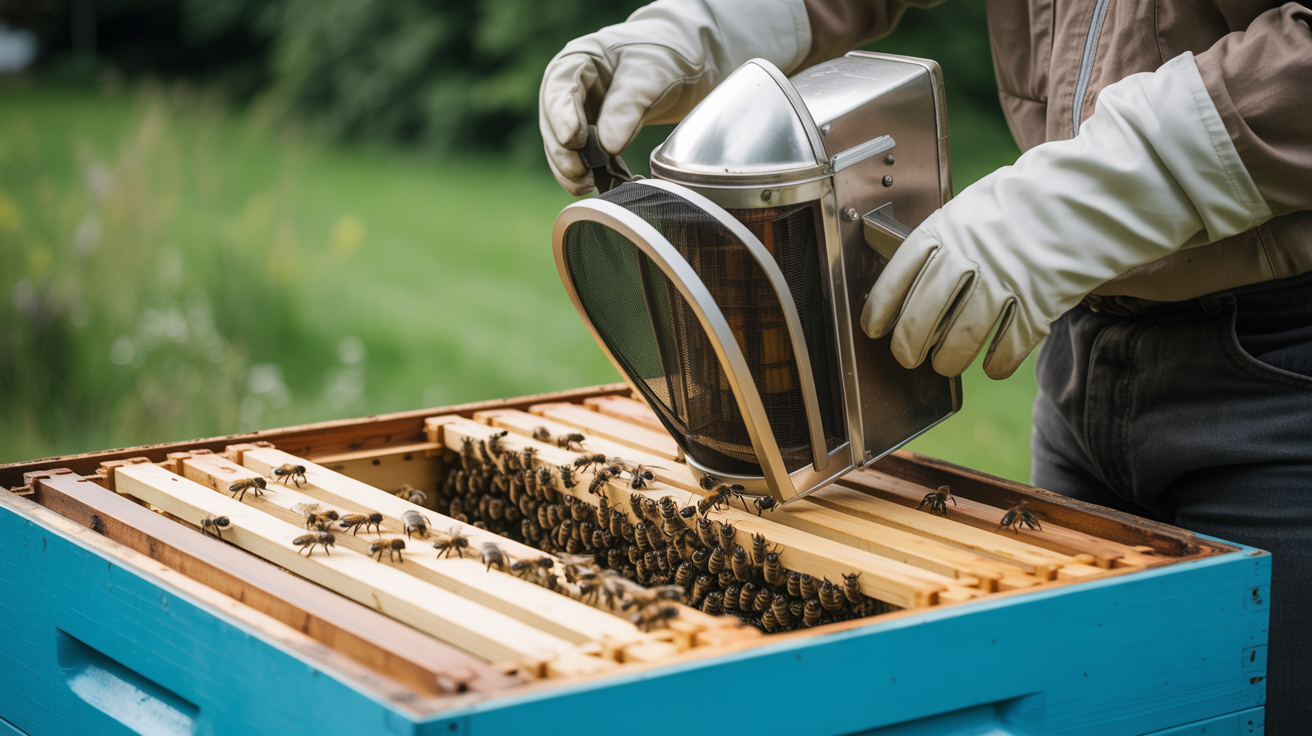
A hive inspection is how you take the colony's temperature, figuratively speaking. You're looking for signs that the queen is laying, the brood is healthy, the bees have enough food and space, and no obvious trouble is brewing. During spring and early summer, plan to inspect every 7 to 10 days. During a strong nectar flow or in the slower weeks of late summer, you can stretch that to every two weeks. What you don't want to do is inspect constantly out of anxiety; every time you crack the hive open, you disturb the colony and set them back a bit.
When (and When Not) to Inspect
Bees are remarkably forgiving, but they do have preferences.
Best conditions:
- Midmorning to early afternoon on a sunny, calm day, roughly between 10 a.m. and 2 p.m.
- Temperatures above 60°F (ideally 65°F or warmer)
- No rain or strong wind in the forecast for the next few hours
- During or just after a flow, when foragers are out and the hive population is lower
Skip it when:
- It's raining, overcast and cold, or very windy. The bees haven't been able to forage and they're all home, edgy, and defensive.
- Temperatures are below 55°F. Breaking the cluster in cold weather can chill brood and set the colony back.
- You're rushed. A distracted inspection misses things and tends to end badly.
A quick note on timing: you don't need to inspect at the same hour every time. The main goal is to catch the bees when most of the foragers are out. That reduces the number of bees on each frame and generally produces calmer colonies to work with.
Gear and Getting Your Smoker Going
You need four things: a veil (at minimum), a smoker, a hive tool, and a plan.
A full suit or jacket with an attached veil is the most practical setup for beginners. Bare ankles and open cuffs are how people get stung in ways that ruin the experience, so tuck everything in. Light-colored clothing tends to be less provocative to bees than dark colors.
Lighting the smoker is a skill that takes a few tries to get right. The goal is a cool, billowing white smoke that you can puff into the entrance and under the cover. Hot, thin smoke doesn't work well and can harm bees.
Steps for a reliable smoker light:
- Stuff a small wad of newspaper or dry grass loosely into the bottom of the smoker.
- Light it, let it catch, then add a few handfuls of dry fuel: pine needles, burlap, wood chips, or cardboard all work.
- Pump the bellows steadily until you see thick white smoke and the smoker holds a flame on its own.
- Add more fuel on top, pack lightly, and close the lid. Test it by pumping a few times. Cool, white smoke means you're set.
Carry extra fuel. A smoker that dies mid-inspection is an avoidable problem.
Opening the Hive Calmly
Approach the hive from the side or back, never directly from the front where you block the entrance.
Puff two or three small clouds of smoke into the entrance and wait 30 to 60 seconds. This triggers a feeding response in the bees (they think there's a fire) and interrupts the alarm-pheromone chain. You're not trying to suffocate them; a small amount is all you need.
Remove the outer cover, give a puff of smoke across the top bars if the bees are boiling up, and set it aside upside down (you'll use it as a stand for frames). Remove the inner cover by sliding your hive tool under the edge to break the propolis seal, then lift slowly. If bees surge upward, another gentle puff settles them.
Once the top box is exposed, you're ready to work.
The Order to Work Through Frames
In a standard Langstroth hive, start in the box where the queen is most likely to be (usually the bottom brood box in a new colony, or the lower brood box in an established two-story setup).
Pull an outer frame first. It's usually less congested and gives you a place to set a frame aside so you have room to maneuver. Work inward, pulling and inspecting one frame at a time.
Hold each frame vertically, like a window pane, to keep the cells from draining. Tilt it slightly to catch the light so you can see down into the cells.
After inspecting, replace each frame in the exact order you removed it. Bees build their cluster with specific spacing; jumbling the order can trap the queen between frames with different thermal profiles.
When you finish the bottom box, close it up, remove and set aside the top box, inspect the bottom box the same way if needed, then work through the top. Don't leave frames hanging out longer than necessary.
The Five Things to Confirm Every Time
This is the core of the inspection. Every visit, you're answering five questions.
1. Is the Colony Queen-Right?
You don't need to find the queen herself every time; you need evidence she was laying recently. Look for eggs. Eggs are the freshest proof of a laying queen. They look like tiny grains of rice standing upright in the bottom of a cell. If you can see eggs, the queen was present within the last three days. Good lighting (inspect with the sun over your shoulder when possible) makes eggs much easier to spot.
For a deeper guide on actually locating her, see finding the queen during an inspection.
2. How Does the Brood Pattern Look?
A healthy brood pattern is mostly solid: capped cells covering a large, unbroken oval on the frame with few empty gaps. Empty scattered cells within a capped brood area (called a "shotgun" or "peppered" pattern) signal trouble.
Signs of a healthy pattern:
- Eggs, young larvae (curled in royal jelly), and capped cells all present in concentric stages
- Cappings are tan/brown and slightly convex (domed)
- Smell is sweet and faintly yeasty
Signs something may be wrong:
- Sunken, punctured, or discolored cappings (possible American foulbrood)
- Larvae that look twisted, dried out, or dark (sacbrood, European foulbrood)
- Cappings that look greasy or oily instead of matte
- More than 20-25% of cells empty in what should be solid brood
3. Are Stores Adequate?
Check both honey and pollen. Capped honey looks distinctly white or golden and is found in the upper corners of brood frames and in the honey super if you have one. Pollen comes in a range of colors (yellow, orange, purple, green) and is packed into open cells near the brood.
A thriving colony in spring or summer should have at least two or three full frames of capped honey in the brood area. If stores are thin, especially in early spring before the main flow, you may need to feed.
4. Does the Colony Have Enough Space?
A colony that runs out of space in the brood nest is likely to swarm. If you see backfilled brood cells (foragers storing nectar in cells where the queen should be laying), nectar stuffed into the top third of every frame, or bees hanging in big clumps outside the entrance (called bearding), they may need more room.
Adding a honey super is the usual answer once the upper brood box is 70 to 80 percent full. See when and how to add a honey super for timing and setup details.
5. Are There Visible Signs of Pests or Disease?
While looking at brood, also check for:
- Varroa mites: reddish-brown dots on adult bees or visible in open brood cells
- Wax moths: webbing, larvae tunneling through comb, or feces trails
- Small hive beetles: small dark beetles scurrying away from light in the corners
- Chalkbrood: mummified white or gray larvae that rattle when you shake the frame
Don't expect to become an expert on bee disease overnight. Photograph anything that looks off and compare it to a reference guide or post it to a beekeeping forum before acting.
Reading a Good vs. Bad Brood Pattern
This comparison helps if you're new and unsure what "normal" looks like.
| Feature | Healthy | Concerning |
|---|---|---|
| Cell filling | Tight, oval, 80-90% solid | Scattered gaps throughout |
| Cappings | Tan, slightly convex, matte | Sunken, greasy, punctured, or dark |
| Larval color | Pearly white, curled cleanly | Brown, twisted, or dried out |
| Smell | Sweet, faintly yeasty | Sour, foul, or rotten |
| Eggs visible | Yes, upright in cells | None (colony may be queenless) |
If you're not sure whether what you're seeing is normal, wait until the next inspection before acting. One anomalous frame isn't always a crisis; a consistent pattern across multiple frames warrants action.
Closing Up
Put the hive back together in reverse order. Replace frames in the order you removed them, making sure there are no gaps between frames. Bees will chew comb into any gap you leave.
Replace the inner cover, then the outer cover. Give a final puff of smoke to encourage any bees lingering on the top edges back down before you seat the lid.
Record your observations. A small notebook or phone note works fine. Write down the date, weather, what you saw, what you did, and what you want to check next time. Memory is unreliable across 10-day gaps; notes are not.
What NOT to do:
- Don't crush bees against the box edges when replacing frames; take your time.
- Don't leave the hive open more than 20 to 30 minutes, especially in cool weather.
- Don't inspect just because you're curious with no checklist in mind. Purposeless inspections stress the colony and usually leave you uncertain anyway.
- Don't use excessive smoke. A little goes a long way.
- Don't try to find the queen and inspect every frame every time. Focus on answering the five questions above.
Step-by-Step Inspection Checklist
Use this as a quick reference until the routine is second nature.
- Check the weather: calm, sunny, above 60°F
- Gather gear: suit/veil, smoker, hive tool, notebook
- Light smoker; confirm cool white smoke before approaching hive
- Approach from the side; puff smoke at entrance, wait 30-60 seconds
- Remove outer cover; puff smoke across top bars if needed
- Remove inner cover; set aside
- Pull outer frame from top box (or brood box) to make working room
- Inspect frames one by one: eggs, brood pattern, stores, space, pests
- Replace frames in order; avoid crushing bees
- Reassemble hive: inner cover, outer cover
- Note observations: date, conditions, what you saw, next steps
Signs Something Is Wrong (Quick Reference)
- No eggs visible on multiple frames
- Shotgun brood pattern (scattered gaps)
- Sunken, punctured, or foul-smelling cappings
- Larvae that are brown, twisted, or dried out
- Very low adult bee population relative to frame count
- No stored honey and no active nectar coming in
- Bees extremely aggressive without obvious provocation (could signal queenlessness)
- Visible mites on adult bees at high density
Any of these warrants a follow-up inspection within 3 to 5 days rather than waiting the full 7 to 10 days.
Thinking About Swarm Season
If you're inspecting regularly through spring and you spot charged queen cells (large, peanut-shaped cells attached to the lower face of a frame), the colony may be preparing to swarm. This is a management moment, not a crisis. You can address it by adding space, removing some frames to start a split, or relocating queen cells into a nucleus hive. See how to split a hive to prevent swarming for a step-by-step breakdown of that process.
Frequently Asked Questions
How often should I inspect my hive?
Every 7 to 10 days during spring and early summer is the standard recommendation. Once a strong nectar flow is underway and the colony is clearly thriving, every two weeks is fine. In winter, don't open the hive at all unless there's a specific reason; instead, do a quick "heft test" by lifting one side of the hive to gauge honey stores.
Do I need to see the queen every time?
No. Finding eggs is better than finding the queen, because it tells you she was active within the past three days. Experienced beekeepers often go months without spotting the queen directly. If you see fresh eggs, assume she's there and move on.
What's the best time of day to inspect?
Between 10 a.m. and 2 p.m. works well for most situations. Foragers are out in the field, which reduces the number of bees in the hive and tends to produce calmer inspections. Avoid evening inspections when foragers are returning and defensive behavior increases.
How long should a hive inspection take?
For a beginner, 20 to 30 minutes per box is reasonable. As you gain experience and know exactly what you're looking for, a thorough inspection of a two-body hive can take 15 to 20 minutes. Don't rush, but don't linger either.
Will I get stung during an inspection?
Probably, eventually. Proper gear dramatically reduces stings, but they do happen: through a glove seam, up a cuff, through thin fabric. Most stings during inspections come from a bee landing on you and getting accidentally pinched or squeezed. Moving slowly, not swatting, and not breathing directly on the frames all help. A well-lit, calm inspection on a good-weather day with a working smoker produces very few defensive responses.