Getting Started
What Beekeeping Really Costs in Your First Year
A real-world breakdown of first-year beekeeping costs — hive, bees, gear, and extras — so you can budget honestly before you start.
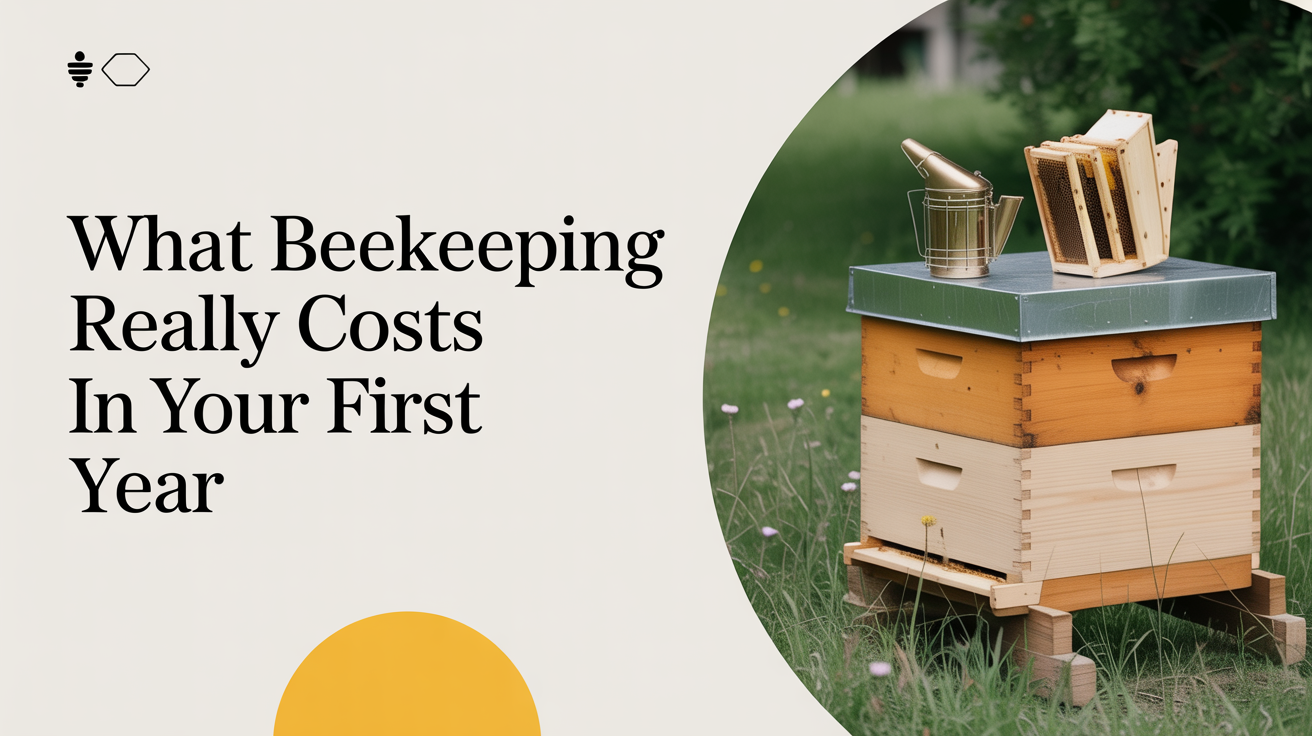
Starting a backyard hive will run most beginners somewhere between $400 and $900 for the first year, and that range widens further if you buy premium gear or add a second hive. The reassuring news: year two drops sharply, often to under $150, because the big equipment purchases are done. Here's where the money goes and where you can trim without cutting corners that matter.
At a Glance
- Expect to spend $490 to $1,030 in year one, with $747 as a realistic middle figure for one hive.
- Bees and woodenware together make up more than half the total; everything else is smaller line items.
- Year two typically costs $100 to $200 per hive, once the hive body, suit, and tools are already bought.
- The single biggest money-saver is skipping the extractor in year one; crush-and-strain or a club loaner covers most small first harvests.
- Nucs cost more upfront than packages but usually pay that difference back in a faster buildup and better honey odds.
- Join a local beekeeping association before you buy anything. Group discounts and loaner equipment routinely save $50 to $150.
The Hive Itself: Woodenware
A standard Langstroth hive consists of a bottom board, two deep brood boxes, one or two honey supers, frames, foundation, an inner cover, and a telescoping top cover. Buying a complete beginner kit from a supplier like Mann Lake, Dadant, or your local beekeeping co-op is the most common entry point.
Assembled vs. unassembled: Pre-assembled kits cost $40 to $80 more than unassembled. If you're comfortable with a hammer and wood glue, unassembled saves real money and takes maybe two hours per kit. If not, assembled is worth the premium to start right.
What to budget:
- Unassembled 10-frame Langstroth starter kit: $150 to $200
- Assembled kit: $200 to $280
- Second brood box (added mid-season): $30 to $50
- Extra super for a strong colony: $25 to $40
Beginners often buy too many supers upfront. Start with one brood setup, add as needed.
One place worth spending a few extra dollars: buy new woodenware for at least your brood boxes rather than secondhand. Used equipment can carry American foulbrood spores or wax moth damage that isn't visible until your colony is already established in it, and by then the fix is far more expensive than the equipment itself. Used supers with no history of disease are a lower-risk place to save.
The Bees: Package vs. Nuc
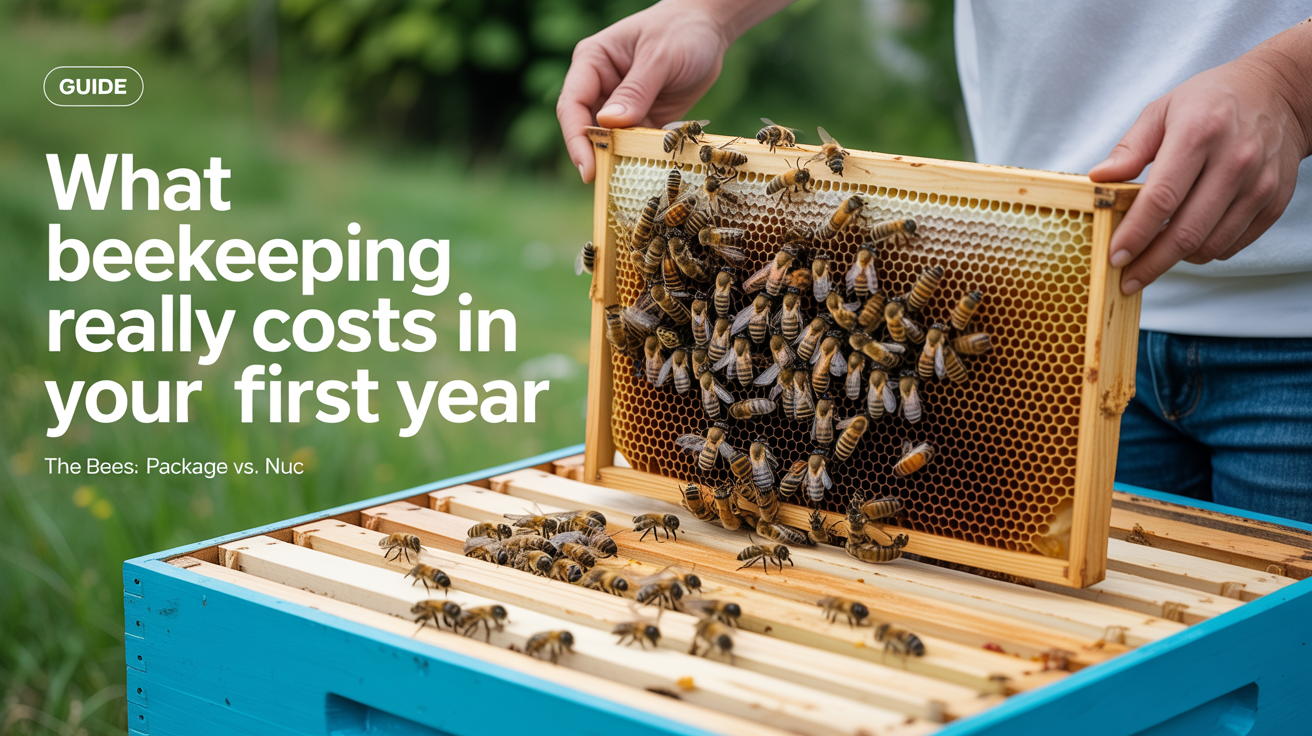
This is where the single biggest choice in your first year lands. You have two main options, covered in more depth in our guide to package bees vs nucs.
Package bees are three pounds of bees (roughly 10,000) plus a caged, mated queen, shipped or picked up in spring. They cost $130 to $175 depending on your region and source. Packages are widely available and easy to install, but the colony starts from scratch and builds more slowly.
Nucleus colonies (nucs) are a five-frame working colony with brood, stores, workers, and a laying queen already established. They run $175 to $240. Nucs give you a head start and a better chance of harvesting even a little honey in year one. Local nucs are almost always stronger than shipped packages.
Order early. Good suppliers sell out by January for spring delivery.
Protective Gear
Do not skimp on your veil. A bee sting to the face is painful and can ruin your enthusiasm fast. Everything else has room to economize.
Full suit vs. jacket: A full bee suit (with integrated veil) costs $80 to $160. A ventilated jacket with attached veil runs $60 to $120 and is cooler in summer. Either works; choose based on your climate. Avoid cheaply sewn collars that gap around the face.
Gloves: Leather gloves ($15 to $30) are the beginner standard. They reduce dexterity but give confidence. As you gain experience, many beekeepers switch to nitrile gloves or work bare-handed for inspections.
Boots: Tuck your pants into knee-high rubber boots, or use the elastic cuffs included with most suits. No special purchase needed.
Where beginners overspend: Buying both a full suit AND a jacket. Pick one. A jacket is usually enough for backyard beekeeping.
Tools and Smoker
The essential toolkit is short:
- Hive tool ($8 to $15): A J-hook style is the most versatile. Buy two; you'll lose one.
- Smoker ($25 to $55): Buy a quality one. Cheap smokers lose their seal, go out constantly, and make inspections miserable. Dadant, Lyson, and Mann Lake all make reliable mid-range smokers. Skip the smallest size.
- Brush ($5 to $10): For gently moving bees off frames during harvest.
- Frame grip ($10 to $15, optional): Helpful when frames are heavy with honey.
Budget $50 to $90 for tools total. Smoker fuel is close to free: dried grass, pine straw, burlap, or wood pellets sold specifically for smokers all work, and a bag lasts most of a season.
Extraction and Harvest Gear: Defer This to Year Two
Here's the category most beginners buy too early. A two-frame hand extractor costs $150 to $250. An electric extractor runs $300 to $600. For your first season, you probably won't need one.
Most beginner colonies don't produce a harvestable surplus in year one, especially from a package. The bees spend the first season building comb and storing enough for winter. A nuc may give you one or two supers of honey; a package usually won't.
Better options for year one:
- Crush-and-strain: Cut comb honey from the frame, crush it in a bucket with a strainer. No equipment needed beyond a food-grade bucket ($10 to $15) and a mesh strainer ($15). This works fine for small harvests.
- Share an extractor: Many local beekeeping clubs own one and loan it to members for a small fee. Join your county or state association before you buy anything.
If you do extract in year one, renting or borrowing is almost always cheaper than buying.
Recurring Costs: Feed, Treatments, and Replacement Bees
These continue every year, so factor them into your long-term math.
Supplemental feeding: New hives need feeding in spring and sometimes fall to build up stores. A bag of granulated cane sugar ($20 to $30) or a pail of 1:1 sugar syrup is the standard approach. Pollen substitute patties ($15 to $30 per season) help in early spring. Expect to spend $30 to $60 on feed in year one.
Varroa mite treatment: Varroa destructor is the primary killer of managed colonies, and untreated hives die. You will treat, and you should plan for it. The Honey Bee Health Coalition's varroa management resources are the standard reference most state extension programs point beginners toward for choosing and timing a treatment. Common options:
- Oxalic acid (Api-Bioxal or generic): $20 to $40 for a vaporizer plus $10 to $20 for acid. Most beekeepers buy a vaporizer ($60 to $80, reusable for years).
- Formic acid strips (Mite Away Quick Strips or FormicPro): $30 to $50 per treatment.
- Apivar (amitraz strips): $15 to $25 for two strips, effective and popular.
Budget $50 to $100 for mite management in year one, including a vaporizer if you go the oxalic route. That vaporizer is a one-time cost; from year two on, mite treatment usually runs $20 to $40 per hive per year in consumables alone.
Replacement bees: Colonies can fail through winter, especially in cold climates. Having $150 to $175 in reserve for a replacement package in spring is sensible risk management, not pessimism. National surveys have tracked annual winter colony losses running well above historical norms since the mid-2000s; that risk drops with beekeeper experience.
First-Year Cost Summary
| Item | Low | Typical | High |
|---|---|---|---|
| Hive woodenware (1 hive) | $150 | $220 | $280 |
| Bees (package or nuc) | $130 | $175 | $240 |
| Protective suit/jacket | $70 | $110 | $160 |
| Gloves | $15 | $22 | $30 |
| Smoker + tools | $45 | $70 | $95 |
| Feed (sugar, pollen sub) | $30 | $45 | $65 |
| Mite treatments + vaporizer | $50 | $80 | $110 |
| Miscellaneous (jars, labels, etc.) | $0 | $25 | $50 |
| First-Year Total | $490 | $747 | $1,030 |
Extraction equipment excluded; defer to year two or share through a club.
This same math scales up if you're thinking past a backyard hive or two. The University of Missouri Extension's beekeeping enterprise budget walks through the identical categories, hive establishment, bees, feed, treatments, at 10, 20, and 30-hive scale, and is a useful sanity check if your plans grow beyond a single hive.
Where to save money:
- Join a local beekeeping association before buying anything (they often have group discounts and loaner equipment)
- Buy unassembled woodenware and put it together yourself
- Choose a nuc over a package if available locally (less risk, more productive)
- Skip the extractor in year one; use crush-and-strain for small harvests
- Buy one suit, not two
- Purchase oxalic acid in bulk with other beekeepers to split the cost
Year One vs. Year Two: Where the Money Goes
The reason year two is so much cheaper is that woodenware, the suit, and most tools are one-time purchases. Only a handful of categories repeat every year:
| Category | Year One | Year Two (established hive) |
|---|---|---|
| Woodenware | $150–$280 | $0 (unless expanding) |
| Bees | $130–$240 | $0, unless requeening ($30–$45) or replacing a dead-out ($130–$175) |
| Protective gear | $70–$160 | $0, unless replacing worn gear |
| Tools + smoker | $45–$95 | $0–$15 (occasional replacement) |
| Feed | $30–$65 | $30–$60 |
| Mite treatment | $50–$110 (includes vaporizer) | $20–$40 |
| Total per hive | $490–$1,030 | $100–$200 |
A colony that dies over winter is the one thing that can push year two back up near year-one costs, since you're rebuying bees. That's the main argument for starting with two hives if your budget allows it: the marginal cost of a second hive (roughly $350–$450, since you share tools and a suit) is often cheaper than replacing a single failed colony from scratch the following spring.
Frequently Asked Questions
What's the cheapest way to get started?
The least expensive legal path is to buy unassembled woodenware ($150), source a package rather than a nuc ($130 to $140), use a veil-only option temporarily ($25 to $40), and borrow an experienced mentor's smoker for early inspections. That can get you started for under $400. The trade-off is slightly higher risk of problems that an experienced eye and better gear might catch early. For most people, spending closer to $600 to $700 with solid equipment is the better long-term value.
Can you make the money back from honey sales?
Realistically, not in year one. A beginner hive might produce 20 to 40 pounds of surplus honey by fall, if the colony is strong and you got an early start. At $8 to $12 per pound retail, that's $160 to $480 in potential sales. But many states restrict honey sales without a cottage food license or inspection, and your first year's harvest may be small or zero. Treat the economics like a garden: the payoff is real but it takes a season or two to get there.
Do you need two hives to start?
Not required, but experienced beekeepers almost universally recommend it. Two hives let you compare colonies, borrow brood or resources between them if one struggles, and confirm whether a problem is colony-specific or a broader issue. The second hive costs roughly $350 to $450 more in year one (woodenware plus bees; you can share the same gear). If budget allows, starting with two hives is a meaningful upgrade to your odds of success.
What does year two actually cost?
Dramatically less. You won't rebuy the hive, the suit, or most tools. Typical recurring expenses are feed ($30 to $60), mite treatments ($50 to $90 in year one, dropping toward $20 to $40 once the vaporizer is paid off), and possibly replacing a queen ($30 to $45) if yours fails. If a hive dies over winter, add $130 to $175 for replacement bees. Most established beekeepers spend $100 to $200 per hive per year in ongoing costs, offset by whatever honey they harvest.
Do I need a permit or have to worry about zoning costs?
Sometimes, and it's easy to overlook when budgeting. Many cities and counties allow backyard hives without a permit, but some require registration with the state apiary inspector (often free or under $20), a setback distance from property lines, or a cap on the number of colonies per lot. HOA rules can be stricter than city code. Check before you order bees; a $0 to $50 permit fee is cheap insurance against having to relocate or give up a hive after you've already spent hundreds on it.
Before you decide on woodenware or bees, read our guides on how to start beekeeping and how to choose the best spot for a backyard hive. The equipment decisions are easier once you know where the hive is going and what your local beekeeping community looks like.