Bee Health
Varroa Mites: How to Monitor and Treat Them
Learn how to monitor varroa mite levels, read the numbers, and choose the right treatment to protect your colonies through winter.
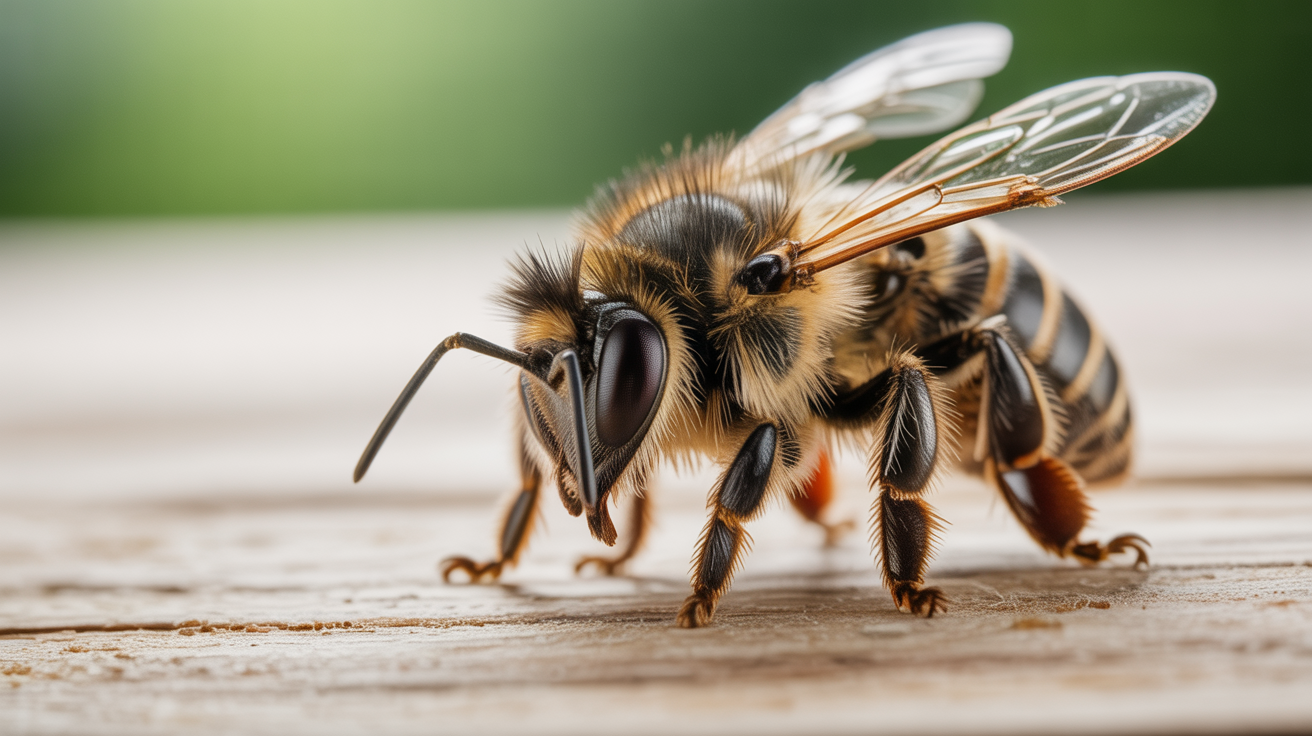
Varroa destructor is the single biggest killer of managed honey bee colonies worldwide. Left unchecked, a mite infestation doesn't just weaken a hive gradually, it collapses it, often by fall or the following spring, and takes nearby colonies with it through drifting bees. The job isn't to spray and hope; it's to monitor on a schedule, compare your count against a threshold, and treat accordingly.
What Varroa Mites Are and How They Damage Colonies
Varroa are reddish-brown external parasites, roughly 1.5 mm wide, that feed on developing bee pupae and adult bees. A mated female mite enters a brood cell just before capping, lays eggs inside, and her offspring feed on the developing bee. The foundress and her mature daughters then hitchhike out on the emerging adult and move to the next brood cell.
The feeding alone causes physical damage, but the real destruction comes from viruses. Varroa are efficient vectors for Deformed Wing Virus (DWV), Sacbrood, and several other pathogens. A bee that hatches from a mite-infested cell often emerges with crumpled wings or a shortened abdomen, bees that can't fly can't forage, nurse larvae, or survive winter. High mite loads drive exponential DWV replication in the colony, which is why populations can crash quickly even when they looked fine a month earlier.
Why "I Don't See Any Mites" Isn't Safe
Varroa spend roughly two-thirds of their lives inside capped brood cells, invisible to the eye. By the time you spot a few mites on adult bees during a casual inspection, the population inside the comb is already large. A colony can look outwardly healthy, good population, active foragers, laying queen, while carrying a mite load that will kill it by December.
Visual spot-checks are not a monitoring method. The only way to know where you stand is a standardized count.
Monitoring Methods and the Action Threshold
Two methods are in wide use, both well-tested and genuinely reliable.
Alcohol wash (the gold standard for accuracy). Collect roughly 300 bees (about half a cup) from a brood frame into a jar with rubbing alcohol. Shake for 60 seconds, then pour the alcohol through a mesh lid into a white tray. Count the mites in the tray, divide by the number of bees washed, and multiply by 100 to get your percentage. A detailed walkthrough is in our guide on how to do a mite wash.
Sugar roll (non-lethal, slightly less precise). Same sampling method, but with powdered sugar instead of alcohol. The mites fall off the bees into the tray when shaken; the bees are returned to the hive. Results run 10–30% lower than alcohol wash because mites grip better to live bees, so factor that in.
Sticky boards (corrugated plastic boards coated in petroleum jelly, placed under a screened bottom board) show natural mite drop over 24–72 hours, but the correlation to infestation level is too variable to use as the primary trigger. They're fine for detecting presence or roughly trending up or down over time.
The action threshold. The most widely cited threshold is 3% (3 mites per 100 bees). Some researchers and extension programs drop that to 2% heading into late summer, when protecting winter bees matters most. At or above the threshold, treat. Below it, retest in 30 days or according to your local extension service's schedule.
Test at minimum:
- Once in spring when brood is building up
- Once in midsummer (July)
- Once in late summer before your main treatment window (August in most temperate climates)
- After any treatment, to confirm efficacy
Treatment Options: Types, Temperatures, and Trade-offs
No single product works in every situation. The right choice depends on ambient temperature, whether honey supers are on, the size of the infestation, and what's registered in your region. Always read the label completely before mixing or applying anything, and verify that a product is approved in your state or province, registration varies by jurisdiction.
| Treatment Type | Active Ingredient | Temp Range (°F) | Honey Supers On? | Key Notes |
|---|---|---|---|---|
| Oxalic acid (dribble) | Oxalic acid | 25–60°F | No | Kills phoretic mites only; most effective when colony is broodless |
| Oxalic acid (vaporization) | Oxalic acid | Any (follow label) | No (during treatment) | Multiple treatments needed with brood present; requires vaporizer hardware |
| Formic acid pads | Formic acid | 50–85°F | Some products: yes (check label) | Penetrates capped brood; effective in one application; temp-sensitive |
| Thymol (e.g., Apiguard, ApiLifeVar) | Thymol | 59–105°F | No | Works best above 65°F; strong odor may interrupt feeding |
| Amitraz strips (e.g., Apivar) | Amitraz | Above 50°F | No | Synthetic; highly effective; leave in 6–8 weeks; rotate with organics to slow resistance |
| Fluvalinate strips (e.g., Apistan) | Tau-fluvalinate | Any | No | Synthetic; widespread resistance documented in many regions; test efficacy locally |
A few points worth calling out explicitly:
Oxalic acid by dribble is most effective when the colony has no capped brood (a natural or induced broodless period, or early spring before the queen resumes laying). With brood present, the mites inside capped cells are unaffected. Vaporization (sublimation) with a registered vaporizer and labeled product can be repeated every 5 days for 3 treatments to catch mites emerging between treatments, though this is more labor-intensive.
Formic acid products like Mite Away Quick Strips work by vapor penetration and can kill mites inside capped cells, which is why they're useful with brood present. The temperature window matters: too hot and the vapor releases too fast, stressing bees and risking queen loss; too cold and there's no efficacy. Follow the label's temperature guidance exactly.
Amitraz (Apivar) is one of the most reliable options available to backyard beekeepers in the US. Because it's a synthetic miticide, rotating it with organic acid treatments helps slow the development of resistance in your local mite population. Don't run strips indefinitely or use them back-to-back every season.
Timing: Late Summer Is the Critical Window
Winter bees, the long-lived bees that carry a colony from October through March, are reared in August and September from brood laid in late July and August. These bees need to emerge from cells free of mite parasitism. A mite-damaged winter bee has shortened fat bodies and compromised immune function; it won't survive until spring.
If your mite count is at or above threshold in early August, treat immediately. Waiting until September means the winter bees being reared right now are already hatching from parasitized cells. Post-harvest treatments (after honey supers come off) are ideal both because most products can't be used with supers on and because the mite-to-bee ratio spikes as summer forager populations drop.
A practical calendar for a temperate northern hemisphere apiary:
- April–May: First mite wash after spring buildup. Treat if at threshold.
- July: Midsummer check. Populations often peak here.
- Early August: Remove supers, treat if at threshold. This is the highest-stakes window.
- November–January (broodless period): Oxalic acid dribble or vapor as a late-season knockdown if not done in fall.
Integrated Pest Management: More Than Just Chemicals
Chemical treatments are effective, but pairing them with cultural tactics reduces the mite pressure your colonies face and extends the useful life of each product class.
IPM tactics for varroa:
- Brood break. Confining or removing the queen for 24 days (or requeening) stops new brood production. Without capped cells to hide in, virtually all mites are phoretic (on adult bees) and vulnerable to a single oxalic acid treatment. This is especially powerful in late summer.
- Drone comb trapping. Varroa prefer drone brood (roughly 8–10× more than worker brood). Inserting a frame of drawn drone comb lets mites preferentially infest it; once capped, freeze the frame and remove the mites along with the drone pupae. Repeat monthly. This doesn't replace chemical treatment but reduces load.
- Screened bottom boards. Mites that fall off bees drop through the screen rather than re-boarding a bee. Evidence on efficacy as a standalone control is modest, but there's no downside to using them.
- Resistant stock. Bees with VSH (Varroa Sensitive Hygiene) or Hygienic traits detect and remove mite-infested pupae from cells. Requeening with VSH-selected stock won't eliminate mites but can meaningfully slow their reproduction rate, giving treatments more time to work.
- Split timing. Splits and swarms create a temporary broodless period in the parent colony; this is a natural mite management opportunity if timed with a late-summer treatment.
No single tactic is enough on its own. A monitored, threshold-based approach that combines cultural practices with well-timed treatments is the realistic standard of care.
Related Health Problems to Watch For
High varroa loads open the door to other diseases. Virus-weakened bees can't maintain hygienic behavior as effectively, which makes colonies more susceptible to bacterial infections. If you're seeing spotty brood, foul-smelling cells, or sunken cappings alongside mite problems, check our guide on American and European foulbrood, foulbrood requires a completely different response and, in many jurisdictions, mandatory reporting to a state apiarist.
Weakened colonies also experience higher rates of nosema, a gut fungal infection that reduces bee lifespan. Treat underlying mite problems first; secondary issues often improve once mite pressure is removed.
Frequently Asked Questions
How often should I test for mites?
At minimum, three times per season: spring buildup, midsummer, and late summer before your main treatment window. If you treated and want to verify efficacy, retest 4–6 weeks after removing a treatment. In high-density beekeeping areas with lots of neighboring hives, monthly checks from June through August aren't excessive.
Can I skip treatment if my count is below 3%?
Yes, that's the point of having a threshold. Treating below threshold wastes product, accelerates resistance development, and exposes your bees to unnecessary chemical stress. Retest in 30 days and treat when the count reaches the threshold. If counts stay consistently low all season, continue monitoring and consider whether your stock has some genetic resistance worth preserving.
Will oxalic acid or formic acid hurt the queen or brood?
Oxalic acid applied correctly to adult bees at labeled rates has minimal effect on queens. The dribble method applied when the queen is actively laying can cause some brood mortality in the cells it contacts, which is one reason the broodless-period treatment is preferred. Formic acid poses more risk: a too-hot ambient temperature or prolonged exposure can cause queen loss. Follow label temperature guidelines strictly, and don't apply when temperatures will exceed the label's maximum during the treatment period.
Do mites go away on their own in summer?
No. Without intervention, varroa populations grow exponentially through the brood season. A colony might limp through summer on a large population of short-lived bees, then crash in fall when bees die faster than they're replaced. The apparent "disappearance" some beekeepers observe, dead colonies with no obvious mites, is usually colony collapse after the bees left or died, leaving only the mites' preferred host: capped brood that's long gone.
Can I treat with honey supers on?
It depends entirely on the product. Most treatments registered for varroa in the US and Canada require that supers be removed before application. A few formic acid products (check the specific label for the product you're using) allow application with supers on under certain conditions. Never assume, read the current label for the product in your hands, since labels can change between registration cycles. Residues in honey from non-labeled use are both a food safety issue and a legal one.