Hive Management
When and How to Add a Honey Super
Learn when to add a honey super using the 7/10 frame rule, how to use a queen excluder, and why timing matters for your honey harvest.

Supering is about one thing: giving your bees somewhere to put nectar before they run out of room. When a flow hits and the hive is already packed, bees don't just slow down, they get restless, may swarm, and the honey harvest you were counting on goes nowhere. Add a super at the right moment and you turn a crowded hive into a productive one.
At a Glance
- Super by the frame count, not the calendar: add one when roughly 7 of 10 frames per box are drawn and covered, with a nectar flow underway.
- Festooning, burr comb on top bars, and bearding at the entrance all mean you're already a bit late.
- A queen excluder keeps honey brood-free but can slow initial uptake; a metal excluder or a temporary frame of open brood fixes that.
- Add the next super once the current one is about half full. Running out of room mid-flow costs more honey than an empty super sitting in reserve.
- Drawn comb gets filled immediately; foundation needs to be built first, which eats into the first week or two of a flow.
- Check back 3 to 5 days after adding a super. No bees, no nectar, and no new wax after a week means something is blocking uptake.
The 7/10 Frame Rule: Reading When the Hive Is Ready
The most reliable timing signal is how full your brood boxes are, not the calendar. The general principle: super when roughly 7 out of 10 frames in each box are drawn and covered with bees, and a nectar flow is already underway.
This matters for two reasons. First, bees don't store honey in space they're not already using. A half-empty box with a super on top means the super sits untouched, bees won't trek up there to fill it when there's room below. Second, timing the super to a flow means the bees have nectar coming in that actually needs storing. A full hive during a dearth is a different problem.
Signs it's time to add a super:
- Frames in the brood boxes are 70 to 80 percent drawn and covered with bees
- You're seeing a visible nectar flow (plants blooming, bees returning heavy and low, nectar smell in the hive)
- Bees are starting to festoon (hang in chains) in any empty corner, a classic "no room" signal
- Wax building has picked up; fresh white comb is appearing on top bars or around frame edges
- The brood nest is tight, with honey being stored right up against the brood
- You're three to four weeks past your last super addition and that one is getting full
If you see bees building burr comb on the tops of frames or clustering densely on the outside of the hive (bearding), you may already be a week late.
The University of Georgia Bee Program frames this the same way: add supers ahead of the nectar flow to relieve congestion and limit late-season swarming, rather than waiting until the hive is visibly overcrowded.
Signs and What They Mean
| What You See | What It Means | What To Do |
|---|---|---|
| 70–80% of frames drawn, bees calm | Hive is ready and not yet stressed | Add first super now |
| Festooning in empty corners | Bees perceive a space shortage | Add or add another super within days |
| Burr comb on top bars | Space pressure has been building for a while | Add a super immediately, inspect for swarm cells |
| Bearding at the entrance in the evening | Hive may be overcrowded or just hot; check both | Confirm with an inspection before assuming it's only heat |
| Slow entrance traffic, no heavy foragers | Flow may be over or hasn't started | Hold off; a super won't get filled during a dearth |
The Queen Excluder Debate
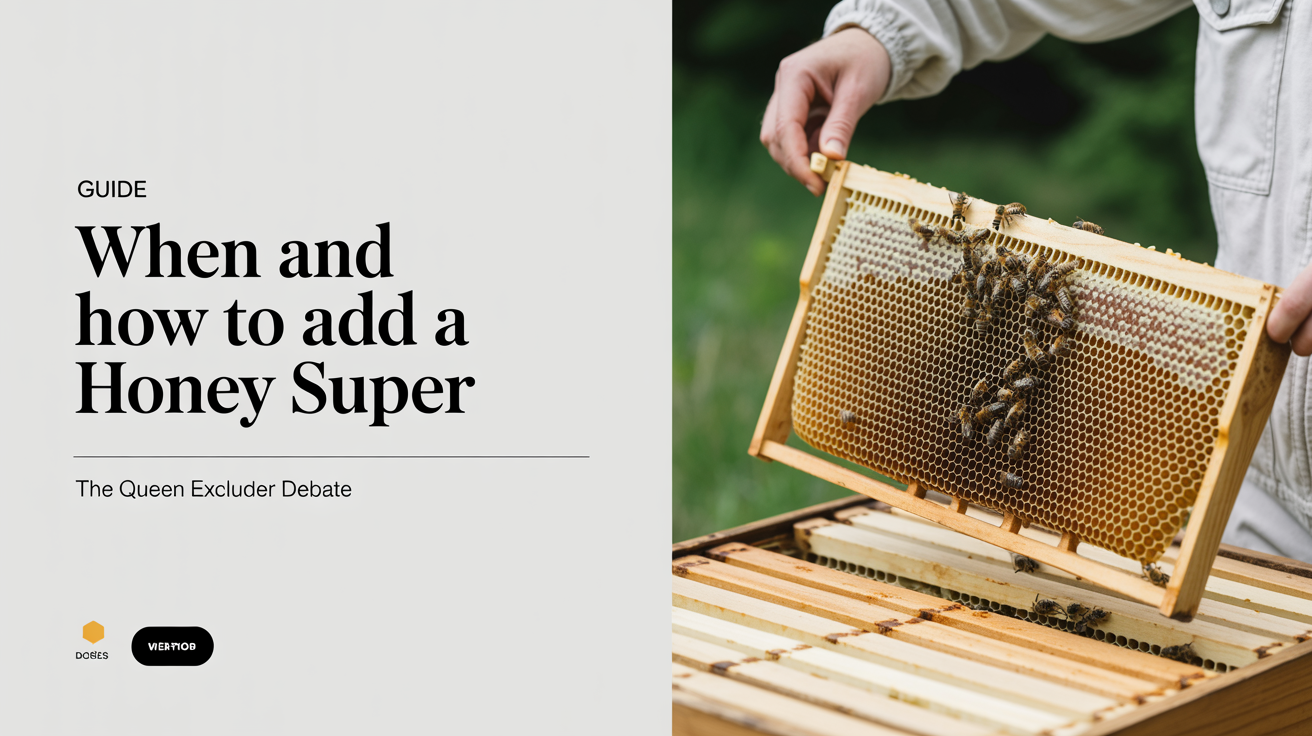
A queen excluder is a grid of metal or plastic that fits between the brood box and the super. The spacing is wide enough for workers to pass through, narrow enough to stop the queen. The logic: honey in the super stays brood-free and is easier to harvest.
Some beekeepers call it a "honey excluder" because they're convinced it slows bees down enough to matter. They're not entirely wrong. Worker bees do seem reluctant to cross a new excluder, particularly a plastic one or one that hasn't been drawn on before. For a week or two after adding one, some hives show noticeably slower adoption of the super.
With vs. without a queen excluder:
| With Excluder | Without Excluder | |
|---|---|---|
| Honey quality | Brood-free, cleaner extraction | May find brood frames mixed in |
| Harvesting ease | Straightforward; no queen risk | Must check each frame carefully |
| Bee uptake | Can slow initial adoption | Bees move up more readily |
| Management | Extra piece to clean, inspect | One less step per inspection |
| Queen loss risk | Queen stays in brood box | Queen can end up in super accidentally |
The practical middle ground: use an excluder, but use a metal one (bees accept it more readily than plastic), and make sure it's clean and flat. If bees won't cross it, a quick trick is to move one frame of open brood up into the super for a few days, workers will follow the brood, learn the route, and keep coming back even after the frame goes back down.
If you'd rather skip the excluder entirely, there's a middle option worth knowing: according to MAAREC (the Mid-Atlantic Apiculture Research and Extension Consortium), a full frame of honey placed directly above the brood chamber acts as a natural barrier that discourages the queen from moving up, without the cost or the uptake delay of a physical excluder. It's less reliable than a real excluder, but many hobbyists use it successfully on a single-brood-box hive.
Top-Supering vs. Bottom-Supering
When you're adding a second super to a hive that already has one, you have two options.
Top-supering means placing the new super above the existing one. This is the default approach for most hobbyists. It keeps the organization simple and bees naturally move upward.
Bottom-supering means sliding the new super between the brood box and the existing super. The theory is that bees prefer to fill the space closest to the brood cluster first, so a bottom super gets adopted faster. There's something to this in practice, though it means you have to move a full (and heavy) super every time you add a new one below it. A full medium super of honey weighs 40 to 50 pounds, so bottom-supering on a hive with two or three boxes already on is a genuine lift, not just a minor inconvenience.
For most small-scale beekeepers running one or two hives, top-supering is fine. Bottom-supering makes more sense if you're running a large operation and flow timing is aggressive, or if you've repeatedly had bees ignore a top super.
Foundation vs. Drawn Comb in Supers
If you have drawn comb from a previous season, use it. Bees can start filling drawn comb the day you add it. Foundation, whether wax or plastic, requires the bees to build comb first, which takes time, bees, and resources. During a strong flow this isn't a dealbreaker, but it does mean the first week or two of a flow goes into construction instead of honey.
Drawn comb also gets bees to cross a queen excluder faster, because it already smells like the colony and there's nothing strange about it.
If you're working with foundation in supers, consider dusting plastic foundation lightly with beeswax or buying wax-coated foundation to encourage faster uptake. Keep foundation frames together so bees aren't trying to draw isolated frames surrounded by empty space.
Adding More Than One Super
Once a flow is on and your first super is getting drawn, don't wait for it to be capped before adding another. A good rule: add a second super when the first is about half full. Bees can feel the flow slowing before you can see it end, and a hive that runs out of room will start making swarm preparations fast.
If you're in a region with a reliable long flow (clover, basswood, tulip poplar), you may need two or three supers on a strong double-brood hive. Running out of room mid-flow is the main way beekeepers leave honey on the table.
Stack supers so you can check them during your regular inspection routine without pulling the whole stack apart each time. A quick peek at the top frames tells you how full things are; you don't have to pull every frame every visit.
Reading Whether Bees Are Actually Filling the Super
Adding a super doesn't automatically mean the bees will use it. Check back three to five days after adding one. You're looking for:
- Bees present on the frames (not just a few stragglers)
- Nectar or early honey in cells
- Wax building on foundation, if that's what you used
If none of this is happening and it's been a week, the flow may have ended, the excluder may be blocking movement, or the brood boxes may not have been full enough to push bees upward.
A super added during a dearth won't get filled. If the flow ends before bees draw out the super, pull it off and store it. Leaving an empty super on during a dearth gives small hive beetles more hiding space and gives you nothing in return.
Watch the hive entrance for traffic. During a good flow, the entrance is busy and bees come in slow and heavy with nectar. When that slows, the flow is winding down. That's your signal to assess whether more supers are actually needed or whether it's time to think about harvest.
When you're also watching for swarm signals during inspections, it helps to be familiar with finding the queen, because a hive building up to swarm will show a different pattern in the brood frames than one that's simply ready to super. If swarm cells are already present, you may need to think about splitting the hive before adding honey supers.
Frequently Asked Questions
When should I add the first super?
Add your first super when both brood boxes (if you're running two) are about 70 to 80 percent full of bees and comb, and you can see a nectar flow is active. In most temperate climates, this is sometime in late spring to early summer. Don't go by the calendar alone; go by what you see inside the hive.
Do I need a queen excluder?
You don't strictly need one, but most beekeepers use one. Without an excluder, the queen may lay eggs in the super, leaving you with frames of brood mixed into your honey. This makes harvesting messier and means you have to be more careful when pulling supers to avoid taking brood frames by mistake. If you use an excluder and bees seem reluctant to cross it, try moving a frame of open brood into the super temporarily to pull workers up, or rely on a full frame of honey above the brood nest as a softer, if less certain, alternative.
How many supers should I add?
Start with one and monitor it. Add a second when the first is roughly half filled. During a heavy flow on a strong hive, you may end up running two or three. Running short on space mid-flow is a much bigger problem than having an empty super sitting in reserve, so err on the side of adding one early rather than scrambling when the hive is already packed.
Why won't my bees go up into the super?
A few common reasons: the brood boxes aren't full enough yet (bees have no pressure to move up), a plastic excluder is acting as a barrier, the super has foundation instead of drawn comb, or the flow has slowed or ended. Try the open-brood-frame trick to lure workers up, switch to a metal excluder if you're using plastic, and double-check that a flow is actually happening by watching entrance traffic and checking for nectar in the brood boxes.
Can I add a super to a single-brood hive?
Yes, but make sure the brood box is genuinely full first. A single brood box that's only half built out won't push bees upward into a super. If you're running a single, consider whether the colony is strong enough to be supering at all, or whether it still needs time to build up population and stores.
Medium or shallow supers, does it matter?
Mostly it's a matter of your back. A medium super (roughly 6 5/8 inches deep) holds more honey but can weigh 40 to 50 pounds full; a shallow super (roughly 5 11/16 inches deep) weighs closer to 30 to 35 pounds but needs more boxes to store the same amount of honey. Many beekeepers standardize on all-medium equipment so every box and frame is interchangeable between brood and honey supers. If lifting heavy boxes is a real concern, shallow supers are worth the extra box count.