Hive Management
How to Find the Queen During an Inspection
Learn how to spot the queen bee during a hive inspection, when you actually need to, and what to do if you can't find her.
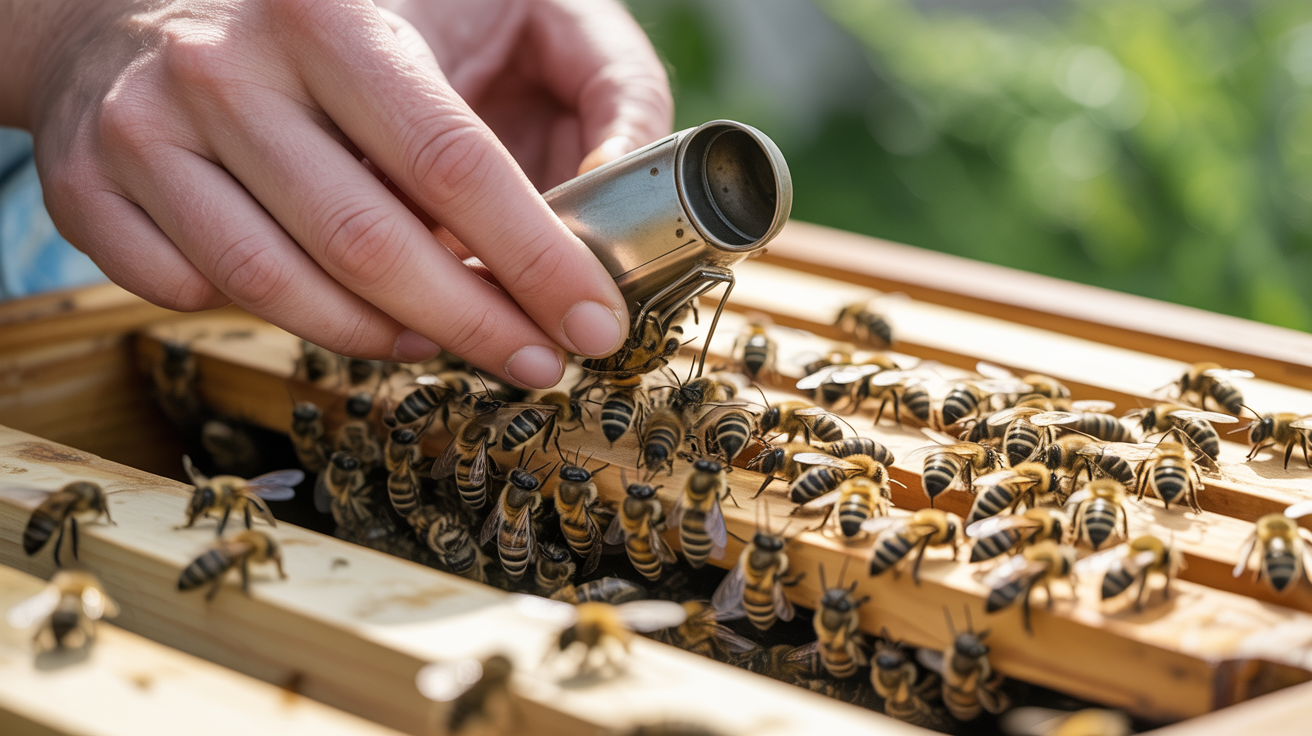
Most experienced beekeepers will tell you the same thing: if you can see eggs, you probably don't need to find the queen at all. A frame of fresh eggs and young larvae is proof she was there within the last three days, and that's usually enough. That said, there are real situations where you need eyes on her directly (before a split, when you suspect she's failing, or when you want to mark her), and those are the moments this guide is for.
At a Glance
- Fresh eggs standing upright in cells mean the queen was laying within the last three days, and that alone confirms the colony is queenright.
- Start your search in the center of the brood nest, not the honey frames on the outer edges.
- The queen moves slowly and deliberately, and a small circle of workers facing inward toward her (the retinue) is a strong visual cue.
- A marked queen turns a 15-minute hunt into a 30-second glance; the international color code repeats on a five-year cycle.
- If two careful passes turn up no queen, read the comb instead: eggs, capped brood age, and the presence or absence of queen cells tell the story.
- Use smoke sparingly during a queen search; a moving, spooked colony makes tracking her much harder.
What the Queen Looks Like
The queen doesn't wear a crown, but she does have a few unmistakable features once you know what you're looking for.
Body Shape
She's longer than a worker, and her abdomen extends well past her wing tips. Workers look stumpy by comparison. Her thorax (the middle section) is roughly the same width as a worker's, but the overall silhouette is elongated. A virgin queen is slimmer than a mated, laying queen, which can make her harder to spot.
How She Moves
This is the detail that often clicks first for new beekeepers. The queen moves with a slow, deliberate gait, almost like she's gliding through the comb. Workers scurry. When you scan a frame and something seems to be moving at a different pace than everyone else, that's worth a closer look.
Her Retinue
Workers tend to face toward the queen, forming a loose circle around her. This "retinue" behavior is easy to spot when the hive is calm. If you see a small group of bees oriented inward toward a central bee, follow that cluster. The retinue forms because workers are drawn to her pheromone signature, the same chemical cues that hold the whole colony's social structure together; the University of Florida's IFAS Extension covers how that pheromone system works in its overview of honey bee castes, useful background if you want to understand why the retinue behaves the way it does.
Where to Start Looking
The Brood Nest First
The queen spends most of her time in the brood nest, moving between frames where she can lay. On a standard Langstroth hive, this is usually the center of the lower box. Start there. Pull the second or third frame in from the center (not the very outer frames, which are mostly honey and pollen) and work your way toward the middle.
Follow the Eggs
The freshest eggs are where the queen was most recently. If you find a frame with eggs that are standing straight up in the cells (not yet tilted, which happens after about a day), the queen was on or near that frame very recently. Examine that frame and the ones immediately adjacent to it first.
Check the Frame She Can't Hide On
Queens rarely linger on frames that are mostly capped brood or honey. They want open, empty cells to lay in. If a frame is 90% capped, she's probably not there. Focus on frames that have open cells mixed in with young larvae.
Working Methodically Without Spooking Her
Speed matters here, but so does light management. Queens dislike bright direct sunlight and will often move away from it. Try not to hold frames in direct sun for extended periods.
A Practical Search Order
- Start with the center brood frames and work outward
- Give each frame a full 10-15 seconds of deliberate scanning, top to bottom
- Don't tip the frame at a steep angle; keep it as vertical as possible so the queen doesn't crawl to the back side
- If you see a dense cluster of bees, part them gently with your finger before assuming the queen isn't there
- Check the bottom bar of each frame as you go; queens sometimes rest near the edges
- If she's not in the lower box, she may have moved up into a super, especially in a crowded colony
Minimize Disturbance
The more you smoke the hive, the more the bees move around, and a moving queen is harder to track. Use smoke sparingly during a queen-search inspection. A light puff at the entrance is often all you need.
Two Sets of Eyes Beat One
If you have a second person available, use them. One beekeeper can hold and rotate the frame while the other scans, splitting the visual field roughly in half and cutting search time considerably. Agree on a simple system before you start: one person calls out "clear" on a frame before it goes back in the box, so neither of you assumes the other already checked it. Working alone is completely normal too, it just means being more deliberate about tracking which frames you've already scanned, since it is easy to lose count once a hive is half-open.
The "Eggs Mean Queenright" Shortcut
Before you spend 20 minutes hunting the queen, ask yourself why you need to find her. If the answer is "I just want to confirm the colony is healthy," then eggs do that job for you.
Fresh eggs in worker cells mean the queen was laying within 72 hours. Young larvae in a "C" shape (not yet capped) tell you she was active within the last week. If both are present and the pattern looks solid (mostly full cells without gaps), your colony is almost certainly fine. You can close the hive and move on.
This shortcut saves beginners enormous time and reduces the stress on the colony. Reserve the active queen search for situations where you genuinely need her location.
Marking the Queen
Why Mark Her
A marked queen is dramatically easier to find on every future inspection. One small dot on her thorax turns a 15-minute search into a 30-second one. It also tells you immediately if the colony has superseded her: a marked queen replaced by an unmarked one is a clear sign, no guesswork needed.
The International Color Code
Beekeeping associations worldwide use a five-year rotating color code so you can tell a queen's year at a glance:
| Year ending in | Color |
|---|---|
| 1 or 6 | White |
| 2 or 7 | Yellow |
| 3 or 8 | Red |
| 4 or 9 | Green |
| 5 or 0 | Blue |
A handy mnemonic: Will You Raise Good Bees. For 2026, the color is white.
How to Mark Her Safely
Use a queen-marking pen (available at any bee supply), a marking tube, or a crown of thorns tool if you're new to handling queens. The goal is to place a small dot on the top of her thorax, not her abdomen. Hold her gently but firmly, apply the dot, and let it dry for a few seconds before returning her to the frame. Most queens tolerate this well. The paint is non-toxic and doesn't harm her.
If you're not confident handling the queen bare-handed, a marking cage pressed lightly over her on the comb lets you mark her without picking her up.
If You Can't Find Her
Don't Panic Immediately
Queens hide. Sometimes they slip to the far side of a frame, or they're tucked in a corner you didn't scan carefully. If you've gone through every frame once and haven't spotted her, take a breath and start again from the beginning. Fresh eyes on the second pass often find her.
Look for Evidence Instead
If you truly can't locate the queen after two careful passes, let the comb do the talking:
| What you see on the frame | What it likely means | Approximate timeline |
|---|---|---|
| Eggs standing upright, one per cell | Queen present, laid within the last 1-3 days | Current |
| Eggs lying tilted or on their side | Queen present recently, eggs are 3-4 days old | 3-4 days ago |
| Young "C"-shaped larvae, no eggs | Queen was laying at least a week ago, may still be present | 4-9 days ago |
| Only capped brood, no eggs or larvae | Queen has been gone at least a week, possibly longer | 9+ days ago |
| Emergency queen cells on the comb face | Colony detected queenlessness and is rearing a replacement | Started within days of losing the queen |
| Multiple eggs per cell, scattered on cell walls | Laying workers have taken over; colony has been queenless for weeks | 3+ weeks |
What to Do If She's Truly Gone
If signs point to a queenless colony, you have a few options depending on timing. If you see emergency cells already in progress, the bees may handle it themselves. If it's been more than two weeks without a queen and there are no cells, you'll need to introduce a new queen or combine with a queenright colony. This connects directly to how to split a hive to prevent swarming, since splits also require confirming queen status before you close them up.
Understanding the state of your colony before adding equipment matters too. If you're wondering whether a colony is strong enough to use more space, see the guide on when and how to add a honey super.
Frequently Asked Questions
Do I need to find the queen every time I inspect?
No. Most routine inspections don't require seeing the queen directly. Checking for eggs, healthy brood pattern, adequate food stores, and signs of disease covers what you actually need to know. Look for her only when you have a specific reason: before a split, when you want to mark her, or when you suspect a problem.
What do eggs tell me about the queen?
Fresh eggs (standing upright, one per cell) mean the queen laid them within the last three days. Seeing them confirms the colony is queenright without requiring you to locate her. If you're unsure whether what you're seeing are eggs, try angling the frame so light passes through the cells from behind you. Eggs are small and easy to miss in poor light. See the full inspection routine for beginners for more on reading brood frames.
Is marking the queen safe?
Yes, done correctly. The paint in queen-marking pens is formulated to be non-toxic to bees. The risk comes from handling her too roughly, not from the paint itself. If you're new to it, practice with a drone first (they're larger, slower, and harmless to pick up). The mark doesn't appear to bother the queen or change how workers interact with her.
What if I accidentally injure the queen while searching?
It happens, especially early in your beekeeping. If you've dropped her or she's not moving normally, watch the colony for the next week. If workers are calm and you see eggs within a few days, she likely recovered. If not, look for emergency cells (the bees will try to raise a new queen from young larvae) or plan to purchase a replacement. Keep a spare queen cage or a contact at a local queen breeder for situations like this.
How long should a queen search take?
With practice, finding a marked queen in a single-box colony takes under two minutes. An unmarked queen in a populous two-box hive can take 15-20 minutes even for experienced beekeepers. If you've spent more than 20 minutes and haven't found her, shift to evidence-based confirmation (eggs, larvae, brood pattern) rather than continuing to stress the colony with a prolonged inspection.
Does a queen excluder make her easier to find?
Indirectly, yes. A queen excluder confines her to the brood boxes below it, so you never need to search honey supers for her. It doesn't make her easier to spot within the brood nest itself, but it does eliminate one entire section of the hive from your search. If your colony runs an excluder, you can skip supers entirely during a queen hunt.
Why does a newly mated queen look different from an established layer?
A virgin or newly mated queen has a slimmer, shorter abdomen because her ovaries haven't yet swollen with developing eggs. Give her one to two weeks after a successful mating flight, and her abdomen lengthens noticeably as her egg-laying ramps up. This is why new queens are sometimes harder to spot than an established layer of the same age class: her silhouette is closer to a worker's until she settles into full production.