Hive Management
How to Split a Hive to Prevent Swarming
Learn how to split a beehive to prevent swarming, increase your colonies, and keep your bees productive all season long.
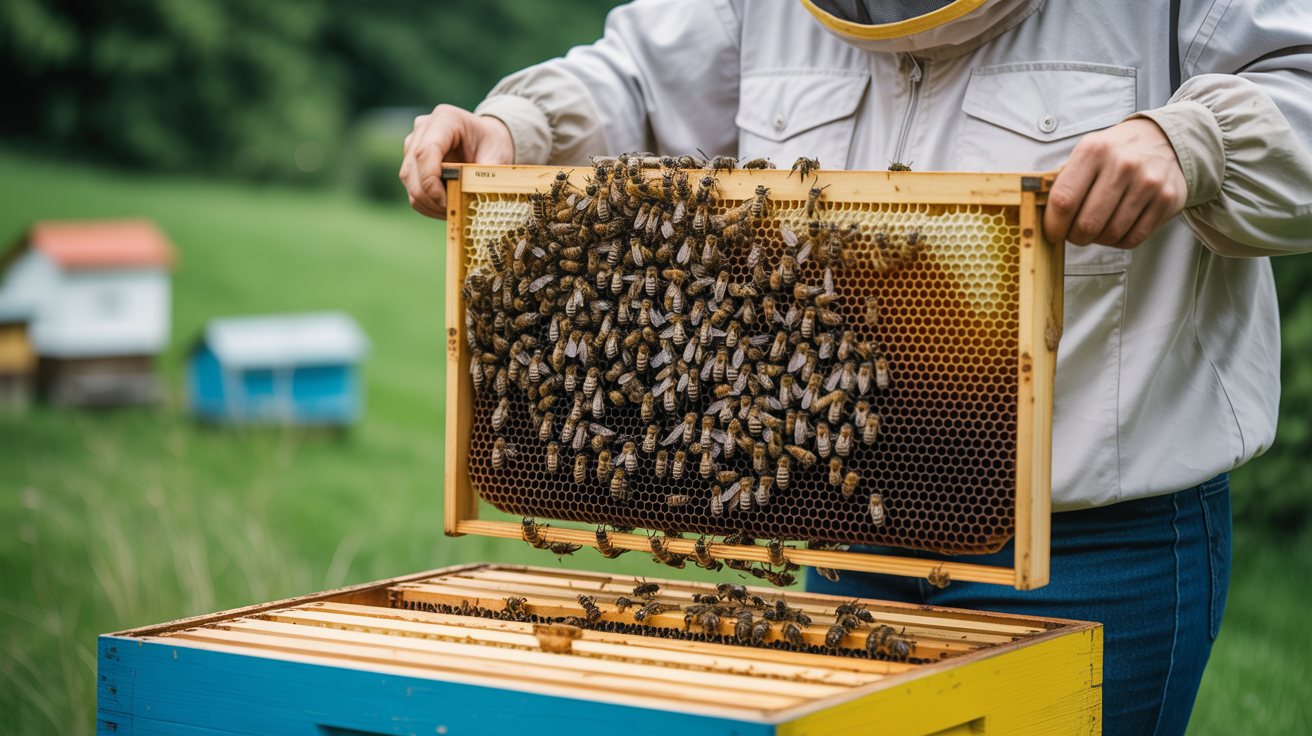
A split takes a single strong colony and divides it into two, relieving the crowding that pushes bees toward swarming. Done at the right moment in spring, it redirects that reproductive energy into a new hive instead of a cloud of bees disappearing over your fence.
Why Splitting Prevents Swarming
Swarming is the colony's way of reproducing. When a hive fills up with bees and brood, space gets tight, the queen slows her laying, and the workers start raising new queens. Once a new queen is nearly ready, the old queen leaves with roughly half the foragers. Your hive loses its population and you lose that swarm to the wild.
The trigger is congestion. Splitting addresses that directly. By moving a portion of the bees, brood, and stores into a second box, you give the original colony room to breathe. The split itself mimics swarming in miniature, so the bees no longer have the same pressure to swarm naturally.
One split doesn't guarantee your bees will never swarm again. A colony that's already building queen cells may swarm within days regardless. But splitting proactively, before queen cells appear, removes the primary cause.
When to Split
Timing matters. A split made too early can strand bees in cold nights with not enough workers to cover the brood. A split made too late often comes after the swarm impulse is already in motion.
The general window in temperate climates is late spring, roughly when dandelions are blooming and daytime temperatures are reliably above 55°F. More specifically, look for:
- A colony with at least eight to ten frames of bees (meaning frames covered wall-to-wall)
- Multiple frames of solid capped brood
- Drones flying from nearby hives
That last point matters if you plan a walk-away split. The new queenless half needs to raise its own queen, and that queen must fly out to mate. If drones aren't present in the area yet, she won't find mates, and the split fails. Check with neighboring beekeepers if you're unsure whether drones are flying locally.
Conduct a thorough hive inspection a few days before you plan to split so you know exactly what's in the hive and where the queen is laying.
The Walk-Away Split, Step by Step
The walk-away split is the simplest method for most hobbyists. You divide the hive and let the queenless half raise their own queen from the eggs you leave behind. You don't need to buy a queen or track down a queen cell.
Here's how to do it:
- Set up your equipment. You need a second hive body (the same size as your current boxes), frames with foundation or drawn comb, a cover, and a bottom board. Have everything ready before you open the hive.
- Open the original hive and find the queen. This step is optional but helpful. If you know which frame she's on, you can decide which box gets the mated queen and which gets the eggs to raise a new one. See the guide on finding the queen during an inspection if you're not confident spotting her.
- Move frames into the new box. Transfer three to four frames of brood, making sure at least one or two frames have eggs and very young larvae (you'll recognize them as tiny white grubs in the bottoms of cells). Add two frames of honey and pollen. Fill remaining spaces with drawn comb or foundation.
- Move bees with the frames. The bees on those frames go into the new box. You can also give it a shake or two of additional frames to boost nurse bee numbers. Do not move more bees than necessary from the original hive; it still needs a healthy population.
- Close up both boxes. Place the new box in a spot at least a few feet from the original hive, ideally facing a different direction. Foragers returning to the original location will mostly go back to the old hive, which is fine.
- Leave both hives alone for at least a week. The queenless colony will start building emergency queen cells within 24 hours if they have eggs and young larvae.
- Check at day 7-10 to confirm queen cells are present. You don't need to do anything; just verify they started.
- Wait three to four weeks total before your follow-up inspection to check for a laying queen in the new split.
What Each New Box Needs
- At least one frame with eggs (less than three days old; they look like tiny grains of rice standing upright in cells)
- One or two frames of capped worker brood (for emerging bees to boost population quickly)
- One frame of honey and a frame of pollen or bee bread
- Enough nurse bees to cover the brood and keep it warm
Raising a Queen vs. Buying One
A walk-away split is convenient because it requires nothing beyond what's already in your hive. The drawback is time. From egg to laying queen takes about 23 to 25 days: 16 days to emerge, a few days to mature, a few days of mating flights, and a week or so before she settles into a steady laying pattern. That's nearly a month of no new brood in the split.
Buying a mated queen speeds things up considerably. You can introduce her within a day or two of making the split, and she can start laying within a week. The downside is cost (typically $30 to $50) and the availability window, which varies by region and supplier.
A middle option is using a capped queen cell from another hive or a local breeder. A capped queen cell is only days away from emerging, so you shorten the timeline compared to starting from an egg. The risk is handling: queen cells are fragile and must be kept upright.
For most backyard beekeepers doing one or two splits per year, the walk-away method is fine. The waiting is manageable, and you end up with a locally-adapted queen.
Balancing the Two Boxes
After a split, the original hive typically keeps more foragers (they fly back to the original location) while the new box has more nurse bees (the young bees that stay with the moved frames). That's actually a workable division: the queenless split has nurse bees to raise the new queen, and the original has foragers to bring in nectar and pollen.
But if one side looks significantly weaker a week later, you can rebalance. Moving a frame of capped brood (without the queen) from the stronger side adds emerging bees to the weaker one. Don't overdo it. Both hives need enough population to function, and raiding one too heavily defeats the purpose of the split.
Check stores in both boxes. A split done during a nectar dearth may need a frame of honey moved over, or light supplemental feeding with 1:1 sugar syrup to help them draw comb and support brood rearing.
Following Up: What to Look For
Give the queenless split three to four weeks before your first real assessment. At that point you're looking for:
- Eggs and young larvae in cells. This is the clearest sign that a queen is present and laying.
- A steady, solid brood pattern. A new queen sometimes starts with a slightly spotty pattern, which usually improves as she gets into her rhythm.
- No more queen cells. Once they have a laying queen, the workers stop building queen cells.
If you find no eggs after four weeks, inspect carefully for the queen. New queens can be harder to spot than experienced ones. If you find no queen and no brood and no queen cells, the split may have failed. At that point you can introduce a purchased queen, merge the queenless split back with the original hive (using the newspaper method), or give them another frame of eggs from a healthy colony and let them try again.
Managing Mites During the Brood Break
A split creates a temporary break in the capped brood cycle in the queenless half. That's actually useful for mite control. Varroa mites reproduce inside capped brood cells, so a brood break (even an unplanned one) reduces mite populations naturally.
Take advantage of this. Do an alcohol wash or sugar roll to check mite levels in both boxes after the split. If either hive is over the treatment threshold (generally 2-3 mites per 100 bees, though check current guidelines from your local extension), the queenless period is an excellent time to apply a miticide that works best with no capped brood present, such as oxalic acid dribble or vaporization. Time the treatment so you catch the window before the new queen starts laying again.
Adding a honey super to the original hive after a split is also worth considering if there's a strong nectar flow on. The split relieves congestion below; a super gives the foragers somewhere to put incoming honey.
Frequently Asked Questions
When can I split my hive?
The best time is late spring when the colony is strong, drones are flying, and nighttime temperatures stay above freezing. In most temperate climates this is April through June. Splitting earlier risks chilling the brood; splitting later means the swarm impulse may already be underway.
Do I need to buy a queen to make a split?
No. A walk-away split lets the bees raise their own queen from the eggs and young larvae you leave in the new box. Buying a queen speeds up the process and can be useful if you want the split producing sooner, but it's not required.
How do I know if my split has a laying queen?
Wait three to four weeks, then inspect for eggs. Eggs are easier to see in bright sunlight; hold the frame so sunlight enters from behind you and angles into the cells. If you see tiny white specks standing upright at the bottom of cells, there's a laying queen. If you only see capped brood with no eggs, the queen may still be present but young. Give it another week before worrying.
Will splitting stop my bees from swarming completely?
Not necessarily. A well-timed split removes the main trigger (congestion), and most beekeepers find it dramatically reduces swarming. But bees that have already started building queen cells, or a colony with particularly strong swarm instinct, may still issue a swarm. Regular inspections through spring are the best defense. Some beekeepers make two splits per season in heavily swarm-prone colonies.
Can I split a first-year hive?
Generally, no. A first-year colony installed from a package in spring needs the entire first season to build up. Splitting it weakens both halves and risks leaving you with two struggling hives heading into winter. Wait until the colony has overwintered at least once and comes out of winter strong enough to fill eight or more frames by late spring before attempting a split.