Hives & Equipment
The Beekeeping Starter Kit Worth Buying First
Cut through the marketing noise: exactly what equipment you need to start keeping bees, what to skip, and whether a bundled kit is actually worth it.
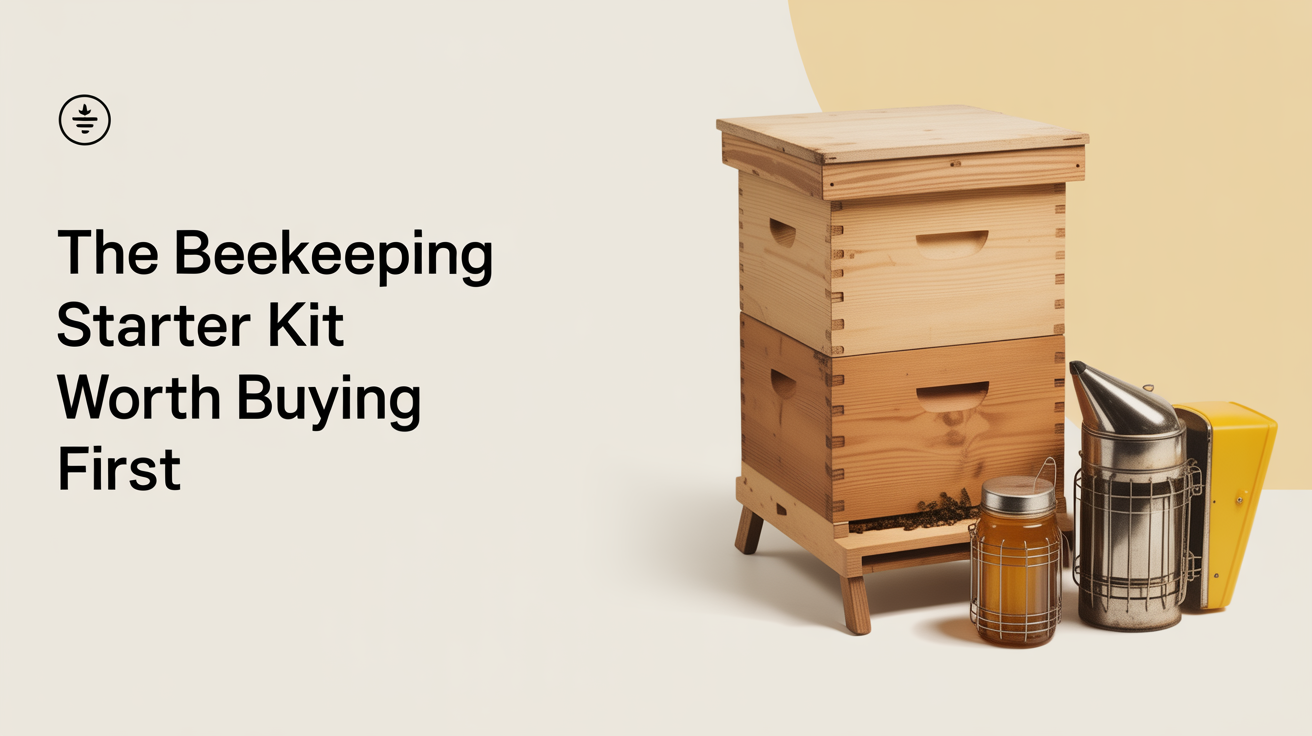
Most beginner beekeeping kits include things you'll use every day and things you won't touch for two years. The problem is they're priced and marketed as a complete package, which makes it hard to know what's genuinely necessary on day one. Here's a straight look at what you actually need to install your first package of bees and keep them alive through their first season, and what you can hold off on buying until you know the hobby is for you.
The Hive
The hive is the biggest decision and the biggest purchase. For most beginners in North America, a Langstroth hive is the right starting point. The parts are standardized, replacements are widely available, and nearly every piece of advice you'll find online or in books assumes you're working with one. (If you're considering alternatives, comparing hive styles is worth doing before you spend money.)
A basic single-brood-chamber Langstroth setup includes:
Bottom board. This is the floor the hive sits on. A screened bottom board is worth a few extra dollars over solid wood because it gives you some natural ventilation and lets mites fall through instead of re-climbing onto bees.
Brood box. One deep box (10-frame or 8-frame) with frames and foundation is enough for the first year. Some beekeepers run two deeps; plenty run one deep and add a medium when the colony outgrows it. The question of deeps vs. mediums matters, but don't let it paralyze you early on.
Frames and foundation. Plastic foundation snaps into a wood or plastic frame and is durable and beginner-friendly. Wax foundation is more traditional and bees sometimes draw it faster, but it's fragile to ship and handle. For a first hive, either works. You need 10 frames per box.
Inner cover and outer cover. These protect the colony from weather. The telescoping outer cover (the one with a metal cap) is standard. Don't skip the inner cover; it creates an air gap and keeps the outer cover from getting glued to the hive with propolis.
A basic 10-frame Langstroth hive body with frames, foundation, bottom board, and covers runs $150 to $250 depending on material (pine vs. cypress vs. polystyrene) and supplier. Polystyrene hives cost more upfront but insulate well and don't rot.
Protective Gear
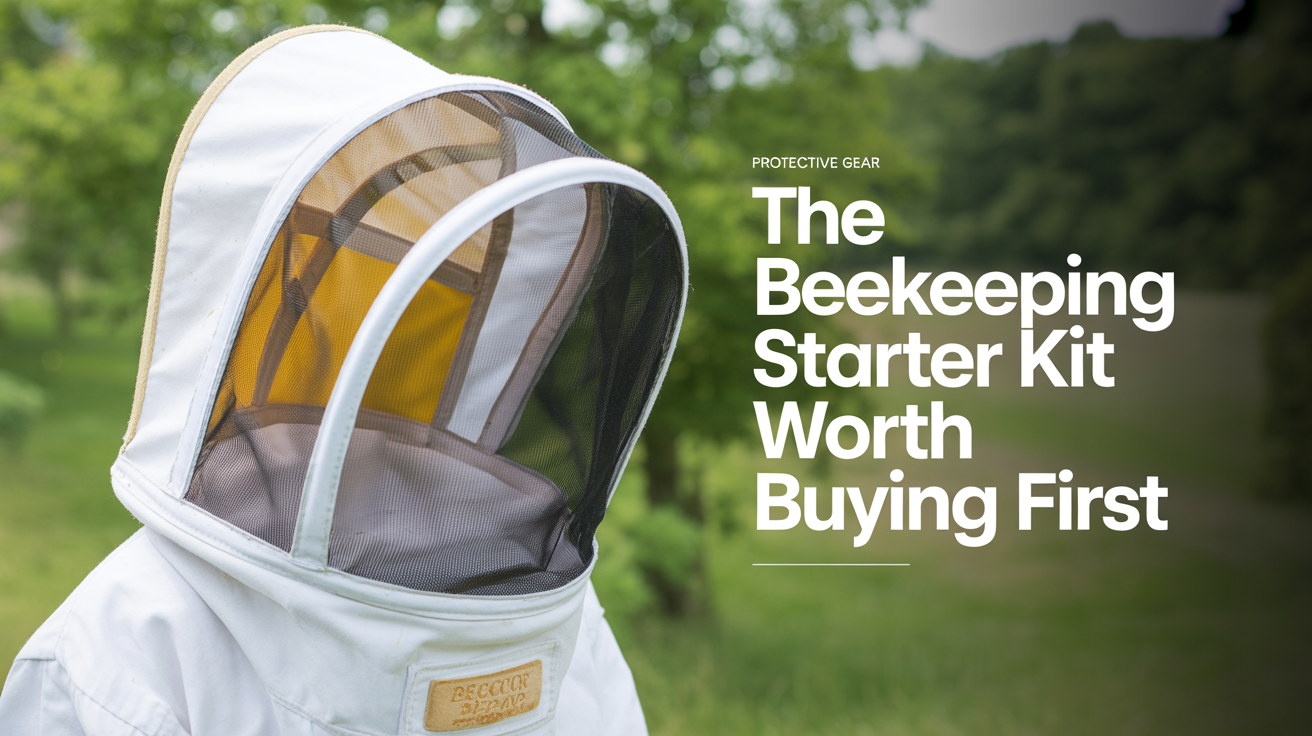
You don't need to spend a lot on this category, but you do need something.
Jacket with integrated veil vs. full suit
A good ventilated jacket with an attached veil runs $60 to $120 and covers most beekeepers through most inspections. Full suits cost more ($100 to $200) and are genuinely useful if you have aggressive colonies or work in hot weather where you'd otherwise wear light clothing underneath. Either way, buy the veil as an integrated piece, not a separate add-on that can gap at the zipper.
Don't buy the cheapest unventilated suit you can find. Working hives in a hot, airless suit is miserable, and miserable beekeepers rush inspections.
Gloves
New beekeepers should wear gloves. Yes, experienced beekeepers often work bare-handed, but confidence with bees takes time, and a sting on the hand at the wrong moment will make you flinch, and a flinch can crush bees and make the colony defensive. Thick leather gloves blunt your dexterity; nitrile or latex disposable gloves give you better feel and are easy to replace. A box of nitrile gloves costs around $10 and will last the whole season.
Core Tools
Hive tool
A hive tool is a flat pry bar used to separate hive bodies, lift frames, and scrape propolis. Bees glue everything together with propolis, so without one you're not getting into the hive. Standard J-hook hive tools run $8 to $15. Buy one. You'll lose it in the grass and wish you'd bought two.
Smoker and fuel
The smoker is the other non-negotiable. A good stainless steel smoker with a heat shield runs $25 to $50. Cheaper ones work but don't hold heat as well. For fuel, pine needles, wood pellets, burlap, and dried grass all work. The how-to on lighting and using a smoker is worth reading before your first inspection.
Bee brush
A soft-bristle bee brush lets you gently move bees off frames or equipment without rolling them. They cost $5 to $10. Some beekeepers shake bees off frames instead and skip the brush; either method works once you're comfortable.
Feeding Equipment
New packages of bees need supplemental feeding for at least the first few weeks while they build comb and establish foraging. You'll need a feeder.
Entrance feeders (a jar inverted over a base that sits at the hive entrance) are cheap ($5 to $8) and easy to check. Their downside is that they can trigger robbing behavior from nearby colonies because the syrup is exposed near the entrance.
Frame feeders sit inside the hive and hold more syrup. They're less visible to robbers and generally preferred for early-season feeding. Expect to pay $8 to $15.
Top feeders sit above the inner cover and hold a gallon or more of syrup. They're convenient for busy beekeepers because they don't require opening the hive to refill. They cost $20 to $35.
Pick one style and use it consistently. The bees don't have a preference; the difference is convenience for you.
What You Can Wait On
| Item | Need Now or Later | Rough Cost |
|---|---|---|
| Hive body (1 deep, 10 frames, foundation) | Now | $60–$100 |
| Bottom board (screened) | Now | $20–$35 |
| Inner and outer cover | Now | $20–$40 |
| Ventilated jacket with veil | Now | $60–$120 |
| Gloves (nitrile) | Now | $10 |
| Hive tool | Now | $8–$15 |
| Smoker (stainless, mid-size) | Now | $25–$50 |
| Bee brush | Now | $5–$10 |
| Feeder | Now | $8–$35 |
| Honey extractor | Later | $150–$500+ |
| Second hive body (for honey super) | Later (3–6 months) | $40–$80 |
| Second hive tool | Nice to have | $8–$15 |
| Queen marking kit | Later | $10–$25 |
| Observation window insert | Skip | $30–$60 |
| Electronic hive scale | Skip for now | $100–$300 |
Things to skip in year one:
- Honey extractor (borrow from a local club for your first harvest, or crush and strain)
- Uncapping knife or tank (same reason)
- Pollen trap
- Varroa testing kit that's fancier than a sticky board or sugar roll (the basics are fine)
- Heated gloves or high-tech ventilation systems
- Decorative hive paint kits
Bundled Starter Kit vs. Assembling Your Own
Bundled starter kits (sold by Mann Lake, Dadant, Betterbee, and others) typically include a hive body, frames, foundation, a jacket or suit, gloves, a hive tool, a smoker, and an entrance feeder. Prices range from $200 to $400 for a mid-range kit.
The case for a kit: It's one purchase, one shipping charge, and everything arrives matched in size and style. If you're not sure what to buy or find the parts list confusing, a kit from a reputable supplier removes the guesswork.
The case for building your own list: You can choose better versions of the things that matter most. A $90 ventilated jacket from a specialty supplier beats the $40 jacket padded into a cheap kit. You can skip the items you don't need and add a second feeder or extra frames instead. You'll also understand your equipment better because you selected each piece deliberately.
The honest answer is that either approach works. If you find a kit from a known supplier that includes good-quality gear and saves you more than $30 compared to buying the same things individually, it's a reasonable buy. If the kit pads in cheap gloves and a low-quality smoker to hit a price point, you're better off building your list from individual items.
One thing kits almost always skip: they don't include the bees. You'll order a 3-pound package or a nucleus colony (nuc) separately, and those typically cost $40 to $180 depending on source and region. Plan for that expense on top of your equipment budget.
Realistic First-Year Budget
A reasonable first-year setup, assembling your own parts at mid-range quality, runs $350 to $550 before bees. A quality bundled kit from a reputable supplier falls in roughly the same range. Add $100 to $180 for a package of bees plus shipping, and you're looking at $450 to $700 total to start keeping bees responsibly.
That's not a trivial amount, which is why borrowing from a local beekeeping club for your first extraction makes sense. Most clubs have extractors available; the annual membership often costs $25 to $50 and pays for itself quickly.
Frequently Asked Questions
Are starter kits actually worth buying?
Sometimes. Kits from reputable suppliers (Mann Lake, Dadant, Betterbee, Brushy Mountain) offer reasonable value and convenience. Kits from no-name brands on Amazon are often padded with poor-quality gear and poorly fitted frames. If you buy a kit, check that the frames and boxes are a consistent brand, that the veil is fully attached to the jacket, and that the smoker has a heat shield. Those three points separate a usable kit from a frustrating one.
Do you really need gloves as a beginner?
Yes. You'll be calmer, you'll move more deliberately, and you'll avoid flinching into a frame. Experienced beekeepers who work bare-handed have thousands of hive inspections behind them. Give yourself the season to build confidence before you drop the gloves.
What can you realistically delay buying?
An extractor, uncapping equipment, and a honey super (the extra box where bees store honey) can all wait until your colony is strong enough to produce surplus honey, which typically doesn't happen until late in the first season at the earliest. Many first-year hives produce little or no harvestable honey because the bees use everything they make to establish the colony.
Should you buy assembled frames or build your own?
Assembled frames cost a bit more but are ready to install. Unassembled frames require gluing and nailing, which is straightforward but takes time. If you're ordering online, assembled frames also ship better. For a first hive, assembled frames make sense unless you enjoy that kind of work and want to save $10 to $15 per box.
How many hives should you start with?
Most experienced beekeepers recommend starting with two. Having two lets you compare colonies, borrow resources (frames of brood, honey) from a strong hive to support a weaker one, and recognize what "normal" looks like by seeing the difference. The cost is roughly double, but so is what you learn in year one. If budget is a hard constraint, one hive is fine to start.