Hives & Equipment
Deeps vs. Mediums: Picking Your Hive Box Sizes
Deep, medium, or shallow? The box you pick shapes how hard you work every inspection. Here's how to choose the right hive box sizes for your back and your bees.
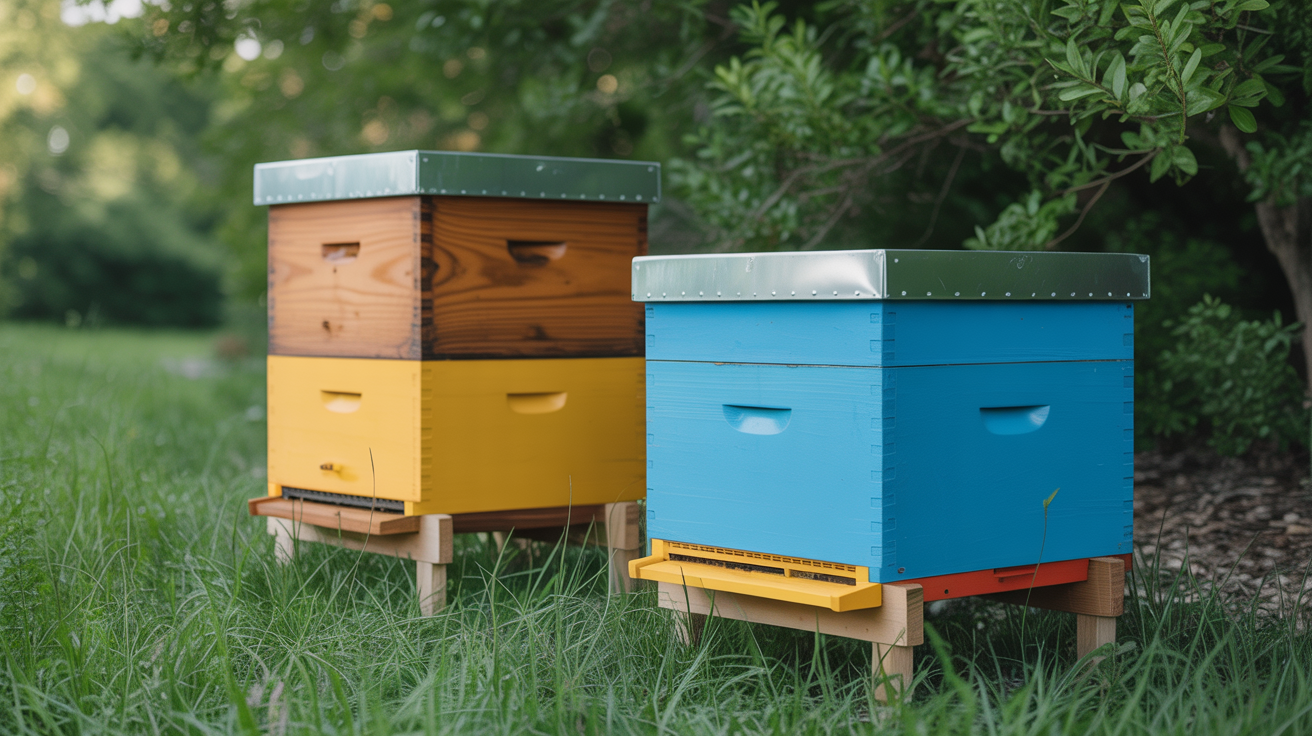
A Langstroth deep, a medium, and a shallow all share the same 16¼ × 19⅞-inch footprint. The only difference is how tall they are, and that difference shapes how much weight you lift on every inspection, whether your frames are interchangeable across boxes, and how you'll divide brood space from honey storage. Getting this right early saves you from mixing mismatched equipment for years.
At a Glance
- Deep, medium, and shallow boxes share the same footprint; only the height, frame size, and weight change.
- A full 10-frame deep of capped honey runs 80-90 pounds; a full medium runs 50-60 pounds; a full shallow runs 35-45 pounds.
- Frames are not interchangeable across box heights, a deep frame won't work in a medium box, and vice versa.
- The classic setup is two deeps for brood plus medium supers for honey; the all-medium setup uses one frame size for everything.
- 8-frame equipment is lighter across the board but less common and can be harder to source locally.
- Pick one format for your whole operation. Mixed frame sizes in the same hive complicate every inspection you'll ever do.
The Three Box Depths Explained
Langstroth boxes come in three standard heights. Each holds the same width and length of frame, but the comb depth changes.
Deep (9⅝ inches)
The deep is the original Langstroth workhorse. It holds 10 frames (or 8 in an 8-frame hive) of deep foundation. This is where most colonies naturally want to rear brood. The deep comb gives the queen plenty of vertical space, and a cluster can move up through a deep during winter better than it can navigate a stack of shallow boxes.
Medium (6⅝ inches)
Also called a "Illinois super" or "Western," the medium splits the difference. It holds medium frames, which many beekeepers consider the sweet spot: enough comb per frame to make extraction worthwhile, but light enough to lift with one arm when the season peaks. Mediums are the most versatile box in the yard and have become the most popular format over the past decade. Mississippi State University Extension's beginning beekeeping guide walks new beekeepers through this exact decision, since box size is one of the first equipment choices you make before your bees ever arrive.
Shallow (5¾ inches)
The shallow is less common today. It was historically used as a thin honey super or for comb honey production. The frames hold less honey per box, which means more trips to the extractor room. Most modern beekeepers skip shallows entirely in favor of mediums.
How Heavy Do These Boxes Actually Get?
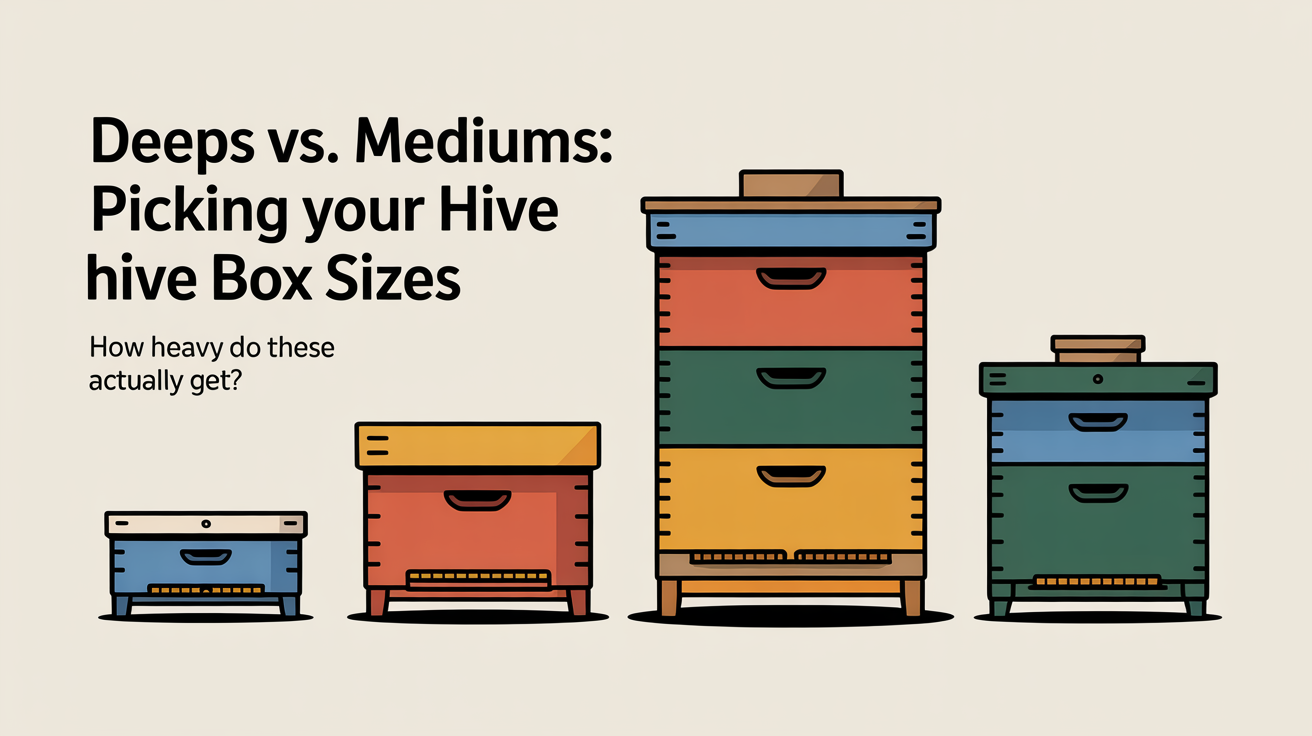
Weight is where box choice stops being theoretical.
A full 10-frame deep full of capped honey can hit 80 to 90 pounds. Even a "light" deep going into winter, packed mostly with brood and pollen, runs 50 to 60 pounds. That's a two-person lift, or a back problem waiting to happen if you're inspecting alone.
A full 10-frame medium weighs roughly 50 to 60 pounds at peak honey flow. Still heavy, but manageable for most adults working alone. A full 8-frame medium drops another 20 percent from there.
| Box | Typical Use | Full Weight (10-frame) | Frames | Parts Interchangeable With |
|---|---|---|---|---|
| Deep (9⅝") | Brood nest | 80-90 lb | 10 (or 8) | Other deeps only |
| Medium (6⅝") | Brood or honey | 50-60 lb | 10 (or 8) | Other mediums only |
| Shallow (5¾") | Comb honey, light supers | 35-45 lb | 10 (or 8) | Other shallows only |
Notice the last column. A deep frame does not fit in a medium box, and vice versa. If you mix formats, you're carrying two incompatible parts inventories forever.
A Worked Example: Two Setups, Same Colony
To make the trade-off concrete, here's how the same strong two-box colony compares under each system at peak summer weight, before you add any honey supers.
| Setup | Boxes for brood | Approx. total brood-nest weight | Heaviest single lift |
|---|---|---|---|
| Two deeps (10-frame) | 2 | 130-160 lb combined | 80-90 lb |
| Three mediums (10-frame) | 3 | 140-170 lb combined | 50-60 lb |
| Two deeps (8-frame) | 2 | 105-130 lb combined | 60-70 lb |
| Three mediums (8-frame) | 3 | 115-140 lb combined | 40-50 lb |
The total weight you're managing across the season is similar either way, the colony still needs roughly the same volume of comb. What changes is how that weight is divided. Three mediums mean more individual lifts, but none of them approach the 80-90 pounds a full deep can hit.
Classic Setups: Two Deeps for Brood, Mediums for Honey
The most common setup in North America is two deep brood boxes stacked on the bottom, topped with medium honey supers during the flow. The logic is straightforward: most colonies expand brood into both deeps by late spring, and using mediums above the queen excluder keeps the lifting manageable.
This system works well, and countless experienced beekeepers swear by it. The deeps give the colony a roomy, single-format brood nest. The mediums give you honey frames you can actually carry.
The downside is that you're locked into two incompatible frame sizes. Your deep frames will never work in your supers, and when you want to move a frame of brood up or a frame of honey down, you can't do it across the divide. You'll also need to buy and store two sets of foundation, frames, and feeders that fit each size.
The All-Medium Hive: One Size for Everything
The all-medium hive uses medium boxes exclusively, for brood and for honey. The colony gets three or four medium boxes for the brood nest instead of two deeps, and the same frame type continues into the supers above.
Pros of going all-medium:
- Every frame, box, and piece of equipment is interchangeable across your whole operation
- No box ever exceeds 50 to 60 pounds, even at peak honey flow
- A single frame format simplifies splits, swaps, and combining colonies
- Easier on your back if you're a solo beekeeper or managing a larger apiary
- One size of foundation and drawn comb to manage
Cons of going all-medium:
- You need more boxes per colony (three to four medium brood boxes vs. two deeps), so startup costs are higher
- Colonies have to fill more boxes, which can slow them early in spring
- Less common, so some local beekeepers and mentors won't be familiar with your setup
- Finding drawn comb, nucs, and packages on medium frames can be harder in some regions
Many beekeepers who switch to all-mediums after years on deeps say they wish they'd started that way. The interchangeability alone simplifies management considerably once you're running more than two hives.
8-Frame vs. 10-Frame
The frame count question adds another layer. Standard Langstroth equipment is 10-frame. An 8-frame setup uses narrower boxes that hold two fewer frames per box.
A full 8-frame deep weighs around 60 to 70 pounds versus 80 to 90 for a 10-frame deep. An 8-frame medium maxes out around 40 to 50 pounds. If back issues are your primary concern, moving to 8-frame equipment shaves weight off every box.
The trade-off: 8-frame and 10-frame equipment are not compatible side by side on the same hive, and 8-frame gear is somewhat less common, which can affect your options at local suppliers.
For most new beekeepers, 10-frame medium is the easiest to source locally and offers the best balance between availability and manageable weight.
Which Setup Should You Actually Choose?
If you're just starting out, two options make the most sense:
Traditional (two deeps + medium supers): Go this route if you want to follow the most widely documented Langstroth methods, have access to local mentors who use this setup, or plan to buy nucs and packages on deep frames. You'll have plenty of resources and YouTube guides built around this format.
All-medium: Go this route if you're starting from scratch with no existing equipment, want to keep things simple as you scale, or know your back won't tolerate 80-pound lifts in five years. The higher upfront box count is a real cost, but the long-term simplicity is real too.
What you shouldn't do is mix frame sizes without a plan. A hive with one deep brood box and one medium brood box creates a split inventory that complicates every inspection. Pick a format and stick with it.
For context on the full equipment picture as you set up, the beekeeping starter kit guide covers what you actually need to buy first. And if you're still deciding on hive style altogether, the hive type comparison walks through Langstroth vs. top-bar vs. Warré. Once your hive is built, you'll want to know how to use a smoker before your first real inspection.
Frequently Asked Questions
Are deep frames and medium frames interchangeable?
No. Deep frames are 9⅛ inches tall; medium frames are 6¼ inches tall. A deep frame will not sit properly in a medium box, and a medium frame will hang with a gap in a deep box. They use the same width and length, so the boxes stack on each other fine, but the frames themselves are not swappable.
How heavy is a full box of honey?
A full 10-frame deep of capped honey weighs roughly 80 to 90 pounds. A full 10-frame medium runs 50 to 60 pounds. An 8-frame version of each is about 20 percent lighter. These are real-world numbers from beekeepers, not theoretical maximums.
Can you really run all mediums for the brood nest?
Yes. Bees don't have a preference for box depth; they build comb and raise brood wherever you give them space. Colonies in all-medium setups expand into three or four boxes for the brood nest, behave normally, and overwinter fine in most climates. The adjustment is mostly in your management routine, not in the bees' behavior.
What's the difference between 8-frame and 10-frame equipment?
An 8-frame box holds two fewer frames and weighs noticeably less at peak capacity. The boxes are narrower, so an 8-frame box and a 10-frame box sitting side by side on the same hive would be misaligned. Pick one count for your whole operation. Ten-frame is more common and easier to source; 8-frame is the lighter option if weight is a concern.
Should beginners start with deeps or mediums?
Either works. Deeps give you access to more local knowledge, pre-drawn comb on the used market, and nucs. Mediums give you interchangeable parts and lighter lifts. If you're starting from zero with no local equipment source to tap, all-mediums is worth serious consideration. If you have a mentor on deeps or access to nucs on deep frames, matching their setup makes your first season easier.
Can I convert an existing two-deep hive to all-medium later?
Yes, but plan for a transition season rather than a single afternoon. Add medium boxes above the deeps, let the colony draw comb in them, and gradually shift brood frames up as the deep frames age out or get replaced. Many beekeepers convert opportunistically: when a deep frame's comb gets too dark or damaged to keep, they replace it with a medium frame in a newly added box instead of buying another deep frame. Over two or three seasons, the deep count shrinks naturally.
Do commercial and sideline beekeepers use different box sizes than hobbyists?
Many larger operations standardize on mediums or even shallow-depth boxes specifically because of the repetitive lifting involved in moving hundreds of colonies. A commercial beekeeper who lifts dozens of boxes a day feels the weight difference between a deep and a medium far more acutely than a hobbyist with two hives in a backyard. That said, plenty of commercial operations still run deeps for brood and only switch to mediums or shallows for supers, so there's no single industry standard either way.