Hive Management
Swarm Control: Catching Swarms and Stopping Them
Learn how to prevent swarming, catch a swarm that's already left, and set up a swarm trap. Practical swarm control for backyard beekeepers.
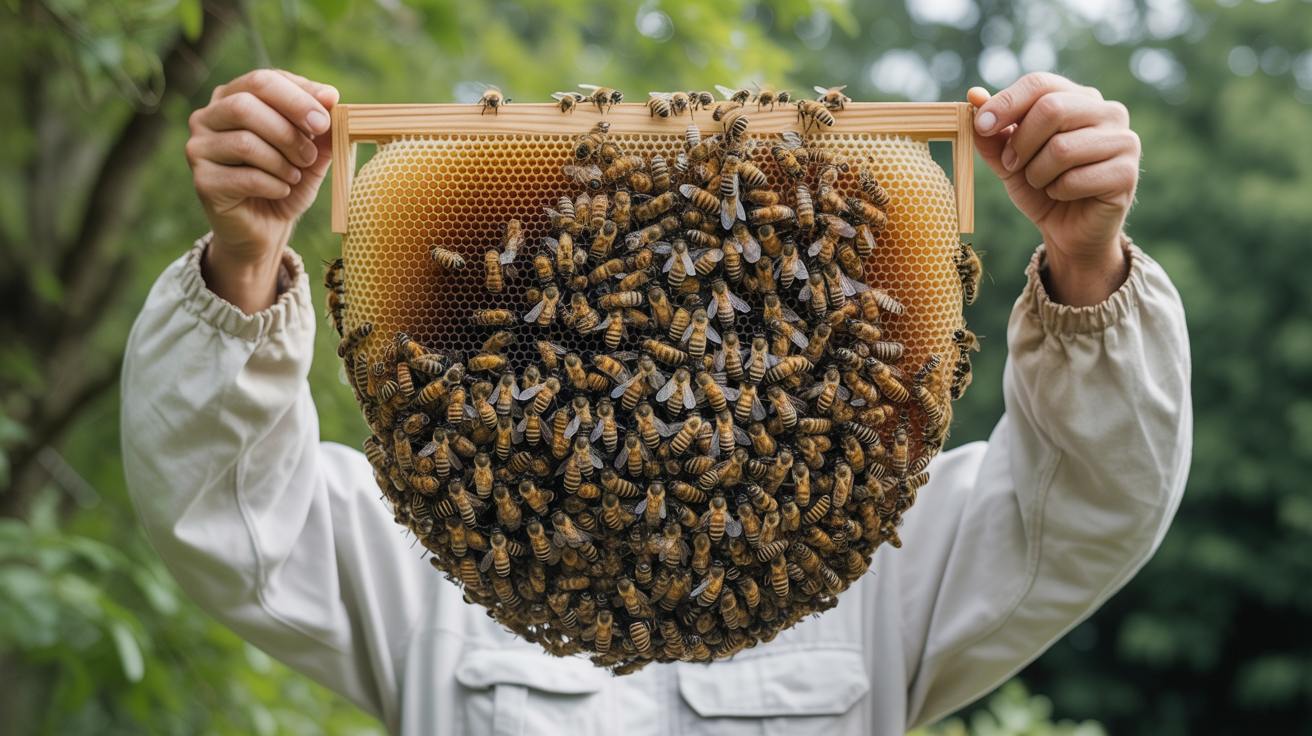
Swarming is a colony's natural way of reproducing, and in a backyard apiary it means roughly half your bees are about to leave. Catching swarms and reducing the urge to swarm are skills every hobbyist beekeeper needs in their toolkit.
Why Bees Swarm
Before you can manage swarming, it helps to understand what's driving it. A colony swarms when it outgrows the space it has and the queen's pheromone signal can no longer reach every worker in the hive. The bees respond by raising new queens, and the existing queen departs with about 50 to 60 percent of the adult workers.
The trigger is almost always some combination of three things:
- Congestion in the brood nest. When every frame is packed with brood and the queen runs out of empty cells to lay in, swarm preparations begin.
- Poor ventilation or excess honey. A honey-bound hive where nectar is backfilling the brood area gives the same crowding signal.
- The time of year. Spring buildup is peak swarm season. A colony that doubled in population over four weeks is a prime candidate.
Understanding this tells you where your prevention efforts should go: keep the brood nest open and give the colony room to expand before it decides to leave on its own.
Spotting Swarm Preparations Before They Happen
Catching a swarm in progress is reactive. Catching the signs during a routine inspection gives you a chance to intervene before the bees vote with their wings. During your regular hive inspection, check specifically for these indicators.
Queen Cells Along the Bottom Bar
Swarm queen cells (sometimes called "swarm cups") appear along the bottom edges of frames. Unlike supersedure cells, which typically appear in the middle of a frame, swarm cells hang like peanuts from the lower margin. Finding one capped swarm cell means the swarm may already be imminent. Finding multiple occupied cells means swarming is actively underway or about to start.
A Congested Brood Nest
Pull several frames and look for a clear pattern: brood from edge to edge, very few empty cells, and workers bearding heavily outside the entrance even in the morning. If you struggle to find any open comb in the bottom box, the hive is telling you it needs more space.
Backfilling Around Brood
When nectar is coming in fast during a flow, foragers sometimes store it in cells directly adjacent to the brood nest. This compresses the queen's laying area and mimics the congestion effect. Check whether the cells immediately surrounding the brood pattern are filling up with nectar rather than staying open for the queen to use.
How to Prevent Swarming
Prevention is a combination of timely management and giving the colony enough room to thrive without feeling cornered.
Add Space Before the Bees Ask for It
The most reliable way to reduce swarm pressure is to add a super or second brood box before the colony fills the one it has. A good rule of thumb: once seven of the ten frames in a Langstroth box are drawn and occupied, it is time to add space. Adding a honey super at the right moment can relieve nectar congestion without disrupting the brood nest.
Checkerboarding the Brood Nest
During a pre-swarm inspection, alternating full brood frames with empty drawn comb (or frames of honey that you move up) creates artificial open space in the brood nest. This tricks the colony into perceiving more room than it actually has. It is not a permanent fix, but it can buy you two or three weeks.
Making a Split
The most effective swarm prevention tool is also a way to grow your apiary: make a nucleus colony (nuc) from the parent hive. Pull three or four frames of capped brood, nurse bees, and at least one swarm queen cell into a separate box with a frame of honey and a frame of drawn empty comb. The parent colony loses enough population that its swarm drive drops, and the new nuc raises its own queen.
This works best when you can confidently locate the original queen and leave her in the parent hive. The nuc gets a queen cell; the parent keeps a mated, laying queen and avoids losing half its foragers over a fence.
Removing Queen Cells (as a Stopgap Only)
Cutting out queen cells without addressing the underlying congestion is generally a losing battle. The colony will produce more cells within a few days. Use this method only as a temporary measure while you set up a proper split or find the queen to make a more permanent intervention.
How to Catch a Swarm
If prevention didn't work and your bees have already left the hive in a cluster, do not panic. A swarm in a tree or on a fence post is actually docile. The bees have no brood to defend, their honey sacs are full, and they are just waiting for scout bees to find a suitable home. You have a window of hours to a day or two to collect them.
What You Will Need
| Item | Purpose |
|---|---|
| Veil and gloves | Basic protection, though bees are calm |
| Cardboard nuc box or hive body | Capture container |
| Pruning saw or shears | Cut the branch if needed |
| Spray bottle with sugar water | Calms and weighs down bees |
| Brush or piece of cardboard | Sweep stragglers |
The Collection Process
- Set your empty box directly below or beside the cluster.
- Give the swarm a light mist of sugar water (1:1 ratio). This is optional but slows the bees slightly.
- If the cluster is hanging from a branch, cut the branch and lower it directly into the box in one smooth motion. The goal is to drop the queen into the box on the first try.
- If the cluster is on a flat surface, scoop them with a wide piece of cardboard or your gloved hand into the box.
- Leave the box near the original location until dusk so flying bees can return to it on their own.
- Move the box to its permanent location after dark when all the bees are inside.
If you see bees fanning at the entrance with their Nasanov gland exposed (the abdominal tip tipped down, wings fanning), the queen is likely already inside. That fanning behavior is the colony signaling to its own members where home is.
Setting Up a Swarm Trap
A swarm trap is a box placed in a spot where scout bees are likely to investigate, baited to attract a homeless swarm. They work well as a passive way to catch both your own swarms and wild swarms from the neighborhood.
Choosing a Location
Scouts look for cavities at a height of roughly ten to fifteen feet, facing south or southeast, with partial shade and a protected entrance. A fence post or tree at the edge of your property or near a hedgerow is a good candidate. Scouts actively avoid sites directly above or below other hive activity.
Baiting the Trap
A five-frame nuc box or a spare ten-frame hive body works as a trap. Add one drawn comb (a frame of old dark comb is irresistible to scouts) and one frame of empty foundation. Rub a small amount of beeswax inside the box or add a few drops of lemongrass essential oil near the entrance. Lemongrass mimics the Nasanov pheromone and is the most reliable scent attractant available to hobbyists.
Check the trap every week or two during swarm season. Once a colony has moved in, relocate the trap after dark to your apiary and transfer the frames into a permanent hive within a day or two.
Frequently Asked Questions
Will a swarm that has clustered on my fence return to the original hive on its own?
No. A swarm cluster is a bivouac while scouts locate a permanent home. If you do nothing, the swarm will follow the scouts to a hollow tree, a wall void, or a neighbor's attic within one to three days. Catch it while it is still accessible.
If I cut out all the queen cells, will the colony stop trying to swarm?
Only if you also relieve whatever congestion triggered the urge in the first place. Bees that are determined to swarm will replace cells faster than most beekeepers can remove them. A split combined with queen-cell removal is far more reliable than removing cells alone.
How do I know if the swarm came from my hive or a wild colony?
There is no reliable way to tell without marking your queen beforehand. If you see a sudden drop in population in one of your hives around the time a swarm appears, that is a strong clue. A swarm arriving at a trap with no corresponding drop in your hives is almost certainly feral.
Does swarming damage the original colony?
Not permanently, but the parent colony does lose a significant portion of its adult bees. Population rebuilds as the new queen begins laying, usually within three to six weeks. During that window, honey production will slow and the colony may be more vulnerable to robbing pressure.
Can I prevent swarming entirely?
Rarely. Swarm drive is genetic. Highly productive colonies tend to have a strong swarm impulse. You can reduce the frequency and manage the timing through regular inspections and proactive space management, but a productive colony will almost always make swarm preparations at some point. The goal is to catch it early, not to eliminate it.