Hive Management
Spring Buildup: Managing a Fast-Growing Colony
Spring hive management starts with space and swarm prevention. Learn what to do during spring inspections as your colony doubles in size.
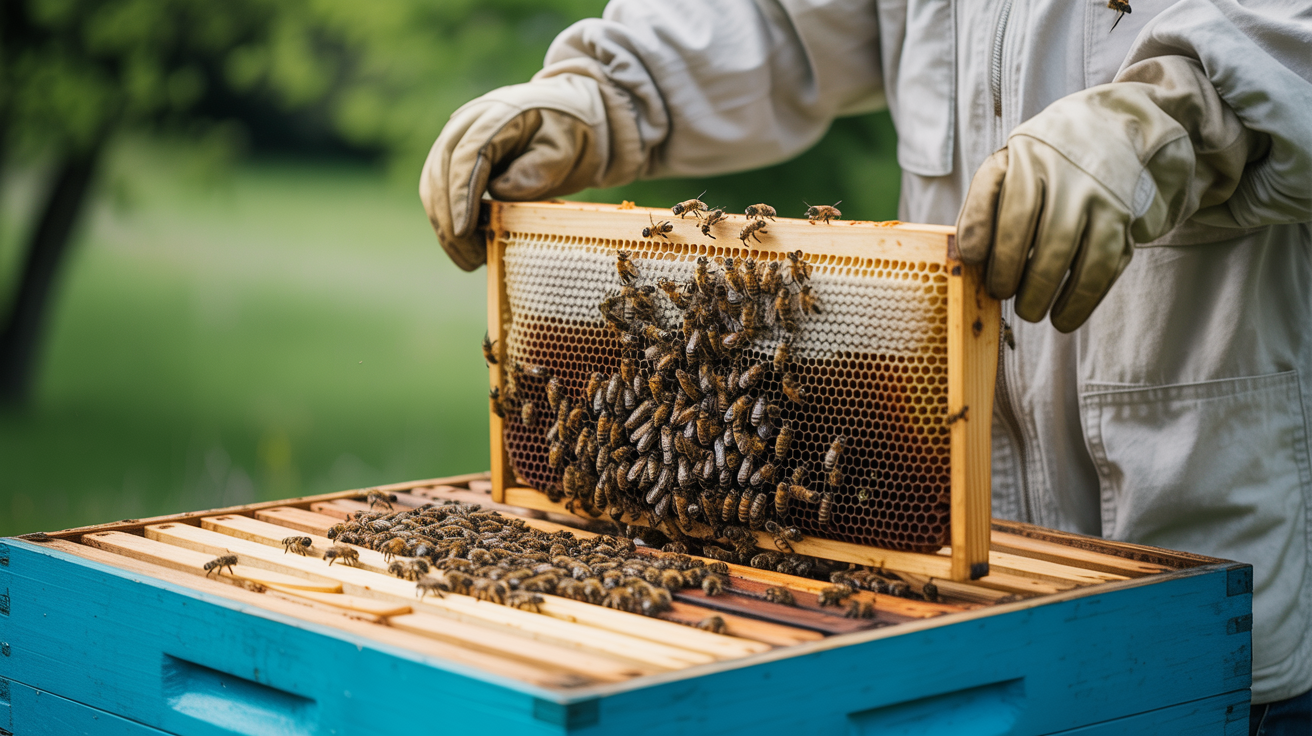
Spring is when a healthy colony goes from a fist-sized cluster to a boiling, frame-packed box in a matter of weeks, and most beginner mistakes happen because the beekeeper falls behind the pace of that growth.
Understanding what drives the buildup, and what your job is during it, makes spring the most satisfying season rather than the most stressful one.
What Drives the Spring Buildup
From late winter onward, the queen responds to two cues: lengthening days and increasing pollen flow. As soon as early bloomers like maples, willows, and dandelions open, foragers return with pollen, and that protein signal tells the queen to ramp up laying.
A productive queen can lay 1,500 to 2,000 eggs per day at peak. Each egg becomes a worker bee in 21 days. The math is relentless: a colony that enters spring on four frames of bees can cover eight frames within six weeks. The nurse bees feeding all that brood, the foragers collecting pollen and nectar, the house bees building comb, all of them are working at full capacity simultaneously.
What that means practically: the colony's need for space is outpacing your inspection schedule. If you open the hive every two weeks and see it crowded, it was probably already crowded a week ago.
Your First Spring Inspection
The moment your apple trees start budding and daytime temps are consistently above 55F (13C), it is time to open the hive. Cold snaps can still happen, so pick a warm afternoon with little wind. Aim for 60F or above at the time of the inspection if possible.
A beginner's spring inspection routine covers the full procedure, but here is the specific checklist for a spring visit:
What to look for:
- Brood pattern: is it solid and even, with capped brood in a tight arc? Scattered or shotgun patterns warrant a closer look at bee health.
- Egg presence: seeing eggs confirms the queen laid within the past three days.
- Food stores: has the cluster eaten through most of their winter honey? If frames look bare and no nectar is coming in yet, a small syrup feed can prevent starvation during a late cold snap.
- Space: how many frames are covered with bees? If bees cover eight or more frames in a ten-frame box, the hive needs more room soon.
- Signs of swarm prep: are there peanut-shaped queen cells hanging from the bottom edge of frames? That is a signal the colony is already thinking about swarming.
Do not skip locating the queen during this first inspection. Confirming she is present, laying, and healthy sets a baseline for everything that follows.
Managing Brood Buildup: Creating Space Before It Runs Out
The single most effective spring beekeeping task is adding room before the bees need it, not after. Bees make swarm decisions when they feel crowded, and by the time you see the hive jammed wall to wall, the decision may already have been made.
Adding a Second Brood Box
If you run a single ten-frame Langstroth, add a second brood box when seven or eight frames are covered with bees. You do not need to wait for every frame to be drawn. Place the new box directly above the first with fully drawn comb if you have it, or with foundation frames if you do not. Bees prefer moving upward as the season warms.
A common mistake is adding a box too early, when the colony is still small. A cluster of bees on three frames cannot heat a second brood box, and the brood in it will chill on a cold night. Match the expansion to the actual population.
Moving Frames to Encourage Upward Movement
Bees sometimes stall at the bottom box and pack it with honey and pollen, leaving the queen with nowhere to lay. You can break this pattern by moving one or two frames of capped brood (no eggs, no open brood) up into the new box. Nurse bees follow the brood, the queen follows the nurse bees, and within a week the colony is using both boxes.
When you move frames, check each one carefully for the queen before transferring. Moving her accidentally into the wrong box is easy to do and disorienting to the colony.
The Role of Drawn Comb
Nothing accelerates a spring buildup like a box of drawn comb. Foundation forces bees to spend energy building wax before they can do anything else. If you have frames from previous seasons, winter-stored in a chest freezer or a sealed bag to kill wax moth eggs, those frames are worth more than their weight in spring. Rotate old dark comb out after three or four years, but anything relatively clean is a head start.
Spring Swarm Prevention
A swarm is the colony's natural way of reproducing. Half the bees, plus the old queen, leave to find a new home. It is not a disaster for the bees; it is a significant setback for the beekeeper who loses half the season's foragers.
Swarm prevention is not about stopping a natural behavior permanently. It is about managing the impulse by giving the colony what it needs: space, ventilation, and a young queen.
Practical steps that reduce swarm pressure:
| Action | When to Do It | Why It Helps |
|---|---|---|
| Add a second brood box | 7-8 frames covered with bees | Gives queen room to lay |
| Add a honey super | Nectar flow beginning, top box 80% full | Moves nectar storage out of brood nest |
| Open screened bottom board | Spring through summer | Reduces heat and humidity |
| Remove queen cells (non-swarm) | Found during inspection | Buys time, not a permanent fix |
| Perform a split | Colony showing persistent swarm cells | Mimics swarm, resets colony |
Removing queen cells works short-term, but if the underlying cause (crowding, old queen, hot hive) is not addressed, the bees will build more within a week. Splits are a more durable answer when a colony is determined to swarm.
Adding a Honey Super at the Right Time
The spring nectar flow, when it starts, can come in fast. Some areas see the primary flow last only four to six weeks. Missing that window by being slow to add a super means the colony may backfill the brood nest with nectar instead, further reducing queen-laying space and increasing swarm pressure.
A full guide to adding a honey super covers the specifics, but the spring timing cue is simple: when the top brood box is about 80 percent full of bees and stores, and you are seeing a consistent nectar flow (bees returning with nectar-wet abdomens, the hive smelling faintly sweet when you open it), add the super.
Do not wait for every frame in the brood box to be capped. The bees need somewhere to put fresh nectar immediately.
Frequently Asked Questions
How often should I inspect in spring?
Every seven to ten days is a reasonable cadence during peak buildup. That interval is short enough to catch swarm cells before they ripen (it takes about nine days for a queen cell to go from egg to capped), but not so frequent that you are disrupting the colony constantly. Once the main flow is on and the hive is clearly thriving, you can stretch to every two weeks.
My colony is strong but I see no queen cells. Do I still need to worry about swarming?
Yes. Queen cells visible at an inspection are not the only signal. Bees can begin swarm preparations and have cells on inner frame surfaces you did not see, or have already swarmed before cells were visible. A crowded hive with a two-year-old queen in a warm spring is a swarm risk regardless of what you find on any single inspection.
Can I combine a weak overwintered colony with a strong one in spring?
You can, using the newspaper method. Stack the weak colony's box over the strong one separated by a sheet of newspaper with a few small holes poked in it. The bees chew through the newspaper slowly, mixing and acclimating in the process. Do this early in spring, before either colony has built significant population. Confirm the weaker colony's queen is removed first if you want to keep the stronger queen.
What if my hive is full but the nectar flow has not started yet?
This is a common and frustrating situation, sometimes called a dearth just before the flow. If the colony is genuinely packed, you can add a super with drawn comb anyway (bees will cluster there for warmth and may begin drawing it out), or you can make a split to relieve congestion. Avoid adding empty foundation supers in cold weather as the bees will not venture up to work them.
When is it too late to prevent a swarm?
Once a capped queen cell is present and the colony is showing the specific preparation behavior (bees hanging in a beard on the front, foragers loafing), swarming may be imminent within 24 to 48 hours. At that point, your best option is a controlled split: move the old queen and several frames of bees and brood to a new box, let the original colony raise the new queen. This mimics the swarm and satisfies the impulse.