Hives & Equipment
Queen Excluders: Do You Actually Need One and How to Use It
A plain look at queen excluders: what they do, the honest debate over using them, and how to decide if one belongs in your setup.
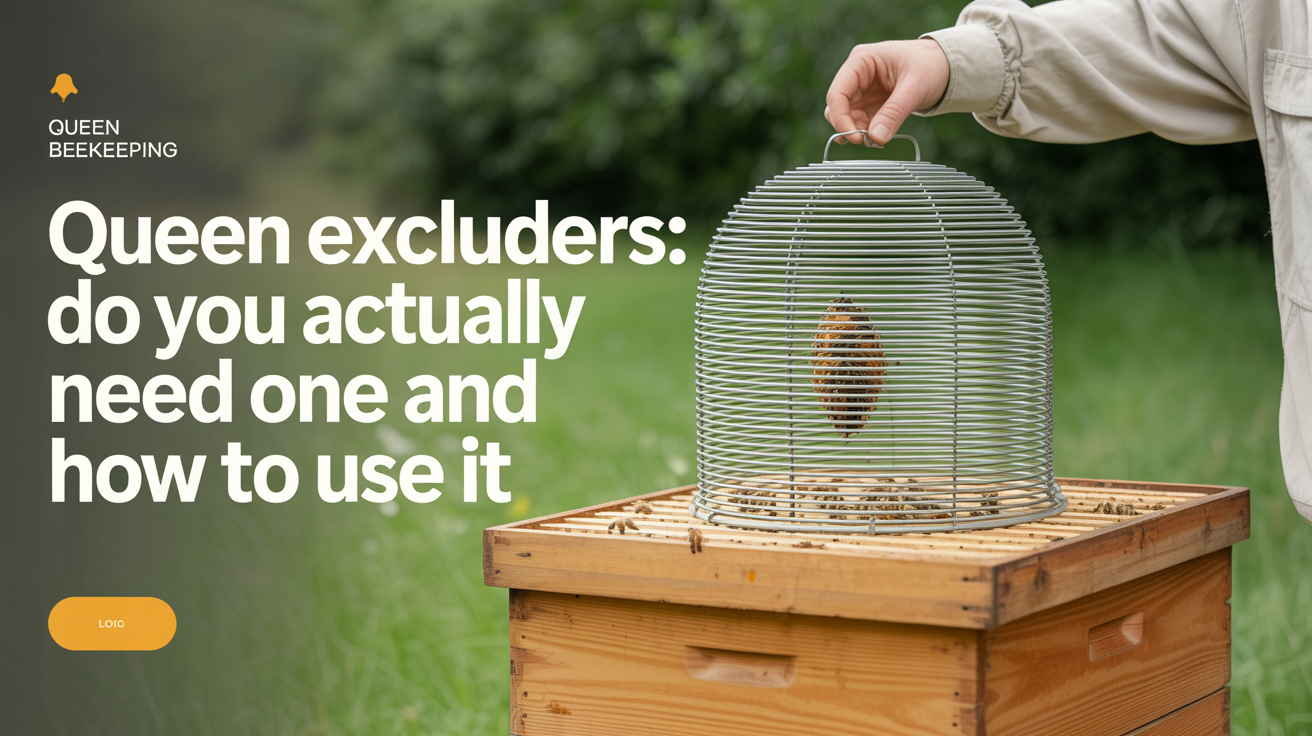
A queen excluder is a flat grille placed between the brood nest and the honey super so workers can pass through freely but the queen, being larger, cannot. That single sentence captures the whole idea, but it does not settle the argument over whether you should use one.
What a Queen Excluder Actually Does
The grille has slots sized at 4.2 mm. Worker bees fit through; the queen's thorax does not. The practical result is that, in theory, your honey supers stay brood-free. No brood in the honey means cleaner comb, easier extraction, and no risk of uncapping a frame that still has capped larvae tucked among the nectar cells.
That sounds straightforward, and for some beekeepers in some situations it works exactly that way. The complication is that bees did not read the instruction manual.
Wire, Plastic, or Metal Frame?
Queen excluders come in three common forms:
| Type | Material | Notes |
|---|---|---|
| Wire-on-wood frame | Galvanized wire stapled to a wood surround | Good airflow, easier to clean, slightly gentler on bees |
| Punched metal | Sheet metal with stamped slots | Durable but sharp edges can clip bee wings over time |
| Plastic | Molded slotted sheet | Inexpensive, light, can warp in heat, slots sometimes inconsistent |
Wire-on-wood is the most popular choice among hobbyists. Plastic is fine as a starter option. Punched metal tends to be sold with commercial setups. For a single backyard hive, the material matters less than how you use it.
The "Honey Excluder" Problem
Experienced beekeepers often call the queen excluder a "honey excluder," and they do not mean it as a compliment. The critique is real and worth understanding before you buy one.
Bees are reluctant to cross a barrier to build out empty comb. During a flow, foragers will stack nectar in the brood box rather than push through the excluder into a waiting super if that super feels cold, foreign, or has no drawn comb to attract them. The result is a packed brood box with backfilling around the brood nest, a condition sometimes called honey-bound. The colony may swarm before you ever see honey in the super.
A few conditions make this problem worse:
- New foundation in the super. Bees have little incentive to cross a barrier to draw fresh wax when there is plenty of uncapped space below.
- Cold or early-season supers. A super that has not been warmed by the cluster feels like a different building to the bees.
- A flow that is just starting. The colony has not yet committed to expanding upward, so the excluder acts like a locked door.
- A small colony. A colony that barely fills two boxes will not be enthusiastic about crossing any barrier.
None of this means queen excluders do not work. It means they work better under certain conditions, and beginners are often in exactly the conditions where they struggle.
When a Queen Excluder Genuinely Helps
There are situations where an excluder earns its spot in the hive:
You want section comb or cut-comb honey. Brood-free comb is essential for cut-comb production. A single larva in a section comb frame ruins the product. If this is your goal, an excluder is not optional.
You are running a strong colony with drawn comb in the super. A populous colony on a strong flow will cross the excluder readily if there is drawn comb waiting for them. The colony has enough foragers that the barrier is just a mild inconvenience.
You have had repeated brood-in-honey problems. Some queens range more aggressively than others. If you have opened supers to find fresh brood laid above the upper brood box, an excluder is a direct solution.
You are managing multiple hives. When you are running several colonies, having predictable brood-box boundaries simplifies inspection. You know where to look for the queen, you know the supers are clean.
For a beginner with one or two hives trying to get a first honey crop, the case is less clear.
When to Skip the Excluder
Leaving the excluder off makes sense in these situations:
During the first few days of a strong nectar flow. Let the bees move into the super freely, get comfortable, and start storing nectar. Once you see capped honey in the super frames, slide the excluder in below. The queen will likely be below the nectar band anyway.
With a new package or nucleus colony. A first-year colony is building comb, raising brood, and trying to fill its first box. Adding a super too early strains the colony, and adding an excluder on top of that further discourages expansion. Get the brood box solid before worrying about excluders.
If your last honey super sat mostly empty. That is a signal the colony was reluctant to cross upward. Pull the excluder out, let them move up, then reassess.
With top-bar or Warre hives. These hive designs do not use standard supers, so a queen excluder does not fit the same management style. Horizontal top-bar hives have their own approaches to keeping the broodnest in one area.
How to Use a Queen Excluder
If you decide to use one, placement and timing make a real difference.
Placement
The excluder sits directly on top of the upper brood box, below the first honey super. If you are running two deep brood boxes, the excluder goes on top of the second deep. If you are running a single deep with a medium brood box, it goes above that. The goal is to leave the entire brood nest below the excluder, not to cut through it.
See choosing your hive box sizes for a fuller discussion of brood box configurations and how they affect management decisions like this one.
Coaxing Bees Through
A few practical tricks reduce the "honey excluder" problem:
- Use drawn comb in the super. If you have drawn frames from a previous season, put them directly above the excluder. The smell of old honey and wax pulls bees upward far better than fresh foundation does.
- Pre-warm the super. Leave the super sitting on top of the inner cover (not yet in the stack) for a day so it reaches hive temperature before you add the excluder.
- Leave the excluder off for the first three to five days of a strong flow. Let workers establish the habit of moving into the super, then add the excluder once the super has some activity. The queen is unlikely to have laid above the nectar band in that short a window.
- Check that the excluder lies flat. Gaps around the edges let the queen slip through and defeat the whole point.
- Inspect the super within a week. If bees have not crossed the excluder at all, pull it and give it another few days.
For step-by-step guidance on adding the super itself, adding a honey super covers the timing and the setup in detail.
Checking for the Queen Above the Excluder
Once in a while, a queen does get through, either because she squeezed past a warped excluder or because she was briefly in the super when you installed it. Check the super during your first inspection after adding the excluder. If you find eggs in super frames, either the excluder has a gap or the queen was already above it when you put it in. Find her and move her back below, then check the excluder for flatness.
A Practical Decision Framework
If you are still not sure which way to go, ask yourself these questions:
- Is the colony strong enough to fill more than one full box? If not, hold off on both the super and the excluder.
- Do you have drawn comb for the super? If yes, the excluder is much more likely to work.
- Is this a strong nectar flow, or are you hoping for a trickle harvest? Excluders work on flows; they frustrate bees during slow periods.
- Are you producing cut-comb or section honey? If yes, use the excluder.
- Is this your first full season? If yes, consider skipping the excluder and learning how the colony moves before adding another variable.
There is no single correct answer. Plenty of experienced beekeepers never use one and produce honey consistently. Others use one every season without trouble. Your colony's behavior is the best guide.
Frequently Asked Questions
Do I need a queen excluder to get honey? No. Many beekeepers produce honey without one. The queen tends to stay in the lower brood boxes where there is brood to tend, so the upper super often stays brood-free on its own during a good flow. An excluder gives you more certainty but is not a requirement.
My bees won't cross the excluder. What should I do? Remove the excluder for a few days during a flow. Let bees get established in the super. Once you see capped nectar in the super frames, slide the excluder back in. Using drawn comb instead of fresh foundation is the single biggest improvement you can make.
Where exactly does the excluder go in the hive stack? Directly on top of your top brood box, under the first honey super. It should lie flat across the entire top of the brood box with no gaps around the edges.
Can the queen lay eggs in a honey super if there is no excluder? She can, though she usually prefers the lower boxes where temperature and brood pheromone are strongest. If the brood nest becomes honey-bound (full of nectar with no room to lay), she may move upward. An excluder prevents this, but so does staying on top of super timing.
How do I clean a queen excluder? Scrape off propolis with a hive tool. A propolis-caked excluder makes crossing it harder for workers. Some beekeepers briefly run a wire excluder through a wax melter or hold it over a smoker to soften stubborn propolis. Plastic excluders can be scraped cold.