Hive Management
Preparing Your Hive for Winter
A practical guide to winterizing a beehive, from assessing food stores to wrapping hives for winter. Get your colony through to spring.
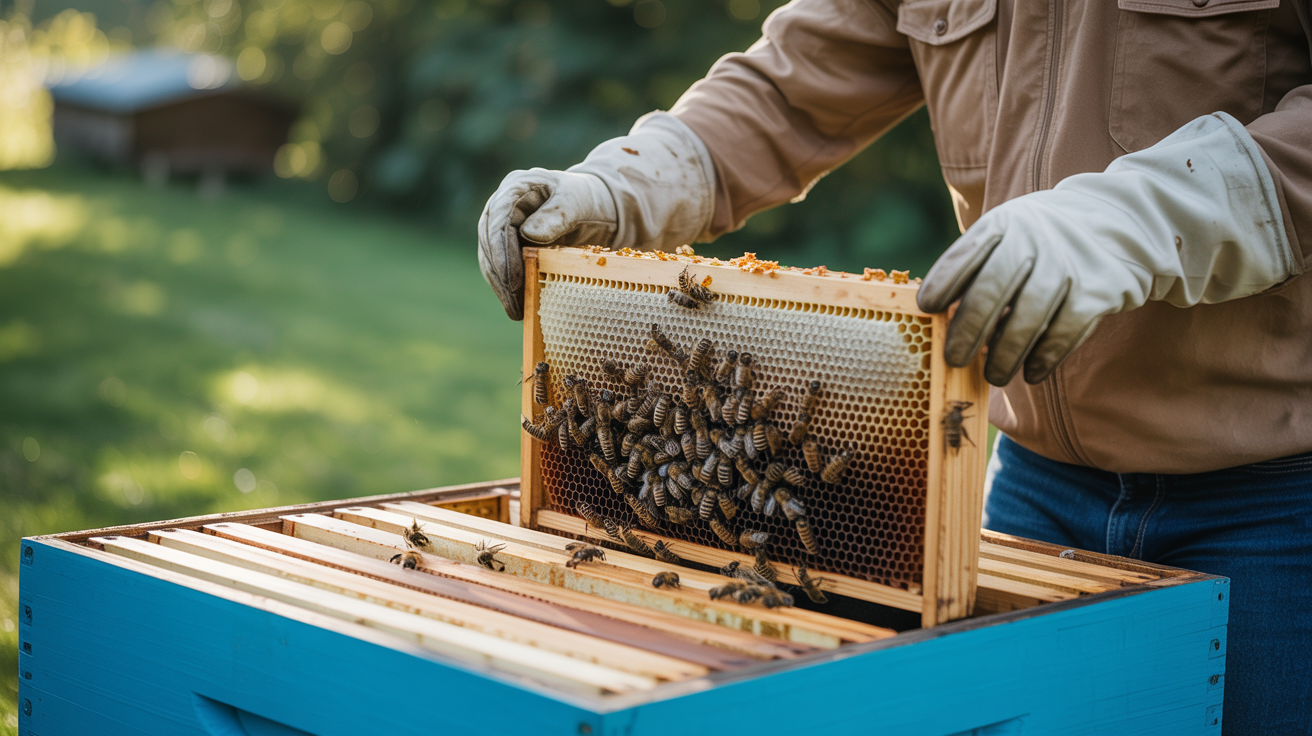
Bees don't hibernate, but they do cluster. Start your winter prep in late summer while the colony still has time to act on any problems you find.
When to Begin and What You're Working Toward
The honest answer to "when should I start?" is late August to early September in most temperate climates, well before the first hard frost. That timing matters because late-season interventions, including supplemental feeding, work best when nights are still warm enough for bees to move around the hive and properly dry down syrup. A colony left until October with inadequate stores often can't recover.
What you're aiming for: a colony entering winter with a healthy, mite-clean population of long-lived winter bees, enough honey to last until spring, a ventilated but draft-free hive body, and physical barriers to mice and cold drafts.
The colony that builds up over the summer needs a different kind of attention during the nectar flow than the one you're closing down for winter. Fall prep is specifically about assessing what's already there and filling gaps before it's too late to fix them.
Assessing the Colony Before You Close It Down
Before you add any hardware or start feeding, do a thorough hive inspection to understand what you're working with. Pull frames and look for three things.
Population: A winter cluster needs enough bees to generate heat. In a Langstroth setup, you want to see bees covering at least six to eight frames. A colony that is thin on bees in September is not going to grow its way out of trouble, because the queen is already winding down her laying by then.
Queen status: Find evidence of a live, laying queen before you close the hive for fall. A colony that goes into winter queenless will not survive. Look for a compact brood pattern with capped cells, eggs, and open larvae. If you're newer to reading brood, our guide on finding the queen during an inspection explains what to look for even when you can't spot her directly.
Food stores: This is the most critical variable. Heft the hive from the back to judge stored honey by weight. A light hive in September is a problem you can still solve.
How Much Honey Does a Colony Need?
The right number depends on your climate, but here are useful working benchmarks:
| Climate Zone | Minimum Winter Stores |
|---|---|
| Mild winters (zones 8-9) | 40-50 lbs (roughly 1 deep box) |
| Moderate winters (zones 6-7) | 60-70 lbs (roughly 1.5 deep boxes) |
| Cold winters (zones 4-5) | 80-90 lbs (2 full deep boxes) |
| Very cold winters (zones 2-3) | 90+ lbs plus fondant backup |
These are working estimates, not guarantees. A larger cluster burns through stores faster. A colony that breaks cluster repeatedly on warm winter days also burns through food faster than one that stays tightly clustered through a sustained cold spell.
Mite Treatment Before Winter Bees Are Born
This step belongs in late summer, before the winter bee population is built. Winter bees are the long-lived bees that carry the colony from October to March. If those bees develop while varroa levels are high, they emerge protein-depleted and shorter-lived before winter even starts.
Do a mite wash or sticky board count in August. If your mite level is at or above two mites per 100 bees, treat before the late-summer brood cycle closes out. Oxalic acid vapor and Apivar are common options; follow label directions and your local registration rules. This single intervention has the highest impact on overwintering success, and it has to happen at the right time to work.
Setting Up the Physical Hive for Winter
Once you know the colony is healthy and well-stocked, turn your attention to the box itself.
Entrance reducer: Swap the full-width entrance for a reduced one. This makes the opening easier for bees to defend against robbing in fall, and cuts down on heat loss once cold sets in. Leave at least one small opening for ventilation and cleansing flights on warm days.
Mouse guard: Install a metal mouse guard over the entrance before mice start looking for warm spots, typically when nights drop below 50°F (10°C). Mice will destroy a hive quickly, chewing through comb and harassing the cluster. A piece of no. 4 hardware cloth cut to fit, or a purpose-made metal guard, stops them without blocking bee traffic.
Ventilation: Moisture kills winter colonies as reliably as cold. A cluster generates a surprising amount of water vapor through respiration, and if that moisture has nowhere to go it condenses on cold hive walls, drips back down onto the cluster, and chills the bees. The standard fix is to prop the inner cover slightly off the top box, or use an upper entrance hole, so damp air can escape. Some beekeepers place an absorbent insulation board directly above the cluster for the same effect.
Insulation: Whether you add it depends on your climate. In zones 6 and warmer, a well-built wooden hive with good stores usually does fine without extra wrapping. In colder zones, a foam insulation board above the inner cover reduces heat loss from the top of the cluster. The goal is to hold warmth in, not to make the hive airtight.
Wrapping Hives for Winter in Cold Climates
In climates with sustained freezes and heavy snow, wrapping hives for winter is standard practice. Black roofing felt or foam board wrapped in a weatherproof layer both work. The black surface absorbs heat from sunlight on cold sunny days, which can prompt bees to break cluster and take cleansing flights without flying into temperatures that will kill them outright.
What to avoid: wrapping the hive so tightly that you seal the ventilation openings. A perfectly insulated but unventilated hive will kill the colony with condensation faster than the cold would have.
If your hives sit in an exposed location, a windbreak on the north and west sides makes a real difference without any modification to the hive itself. Straw bales, wooden pallets, or a tarp stretched between fence posts all work. A site with morning sun and afternoon wind protection is the ideal winter spot, though most backyards require some compromise.
Late-Season Feeding Options
If your inspection shows the colony is light on stores, feed before you close down for winter. Here's what to use and when:
- 2:1 heavy sugar syrup (September to early October): Bees can take it down and cap it, adding directly to winter stores. Stop feeding when temperatures drop consistently below 50°F, because cold bees cannot process liquid syrup.
- Dry granulated sugar over newspaper (any time, including mid-winter): Plain white sugar poured on a sheet of newspaper above the frames is an emergency option when it's too cold to open the hive. It won't sustain the colony alone but buys time.
- Fondant or candy boards: A more solid option that lasts longer than loose sugar and doesn't drip into the cluster. Many northern beekeepers install a candy board as insurance every fall regardless of stores.
Skip pollen substitute late in the season. Extra protein triggers brood rearing, which increases both food needs and varroa pressure at exactly the wrong time.
Frequently Asked Questions
When is it too late to feed bees for winter? Once overnight temperatures are consistently below 50°F, liquid syrup becomes useless. Bees can't move it, dehumidify it, or cap it at those temperatures. If you missed the syrup window, switch to fondant or a candy board, which bees can access even on cold days without you opening the hive.
Do I need to reduce to a single deep box for winter? Not necessarily. A large colony with adequate stores can winter in two deeps. The cluster moves upward through stored honey over the winter, so food needs to be above and around where the cluster starts in fall. A single deep is appropriate for a smaller colony, but don't artificially shrink the hive if the bees genuinely need the space.
How do I know if my colony made it through winter? On the first warm day above 55°F (13°C), watch the entrance for a few minutes. Active bees and pollen pellets coming in are a good sign. No activity by late morning on a warm day is worth a closer look. If you find a dead cluster on the bottom of the frames, the colony likely starved or froze as a unit. If the hive is mostly empty of bees, they may have been robbed out in fall.
Should I combine a weak colony before winter rather than try to overwinter it alone? Generally yes. A colony covering fewer than six frames of bees in September has a low survival probability on its own, and an even lower chance of building back fast enough to be productive the following spring. Combining it with a stronger colony using the newspaper method saves resources and gives you a better hive entering spring.
Does wrapping the hive block ventilation? Only if you cover all the openings. Keep the reduced entrance open and maintain at least one upper vent or a small gap at the inner cover. The wrapping slows heat loss; the vent prevents condensation buildup. Both are necessary for cold-climate overwintering to work.