Getting Started
Is Backyard Beekeeping Right for You? Time, Allergies, and Neighbors
Considering beekeeping? Honestly assess your time, sting allergy risk, and neighbor situation before buying gear.
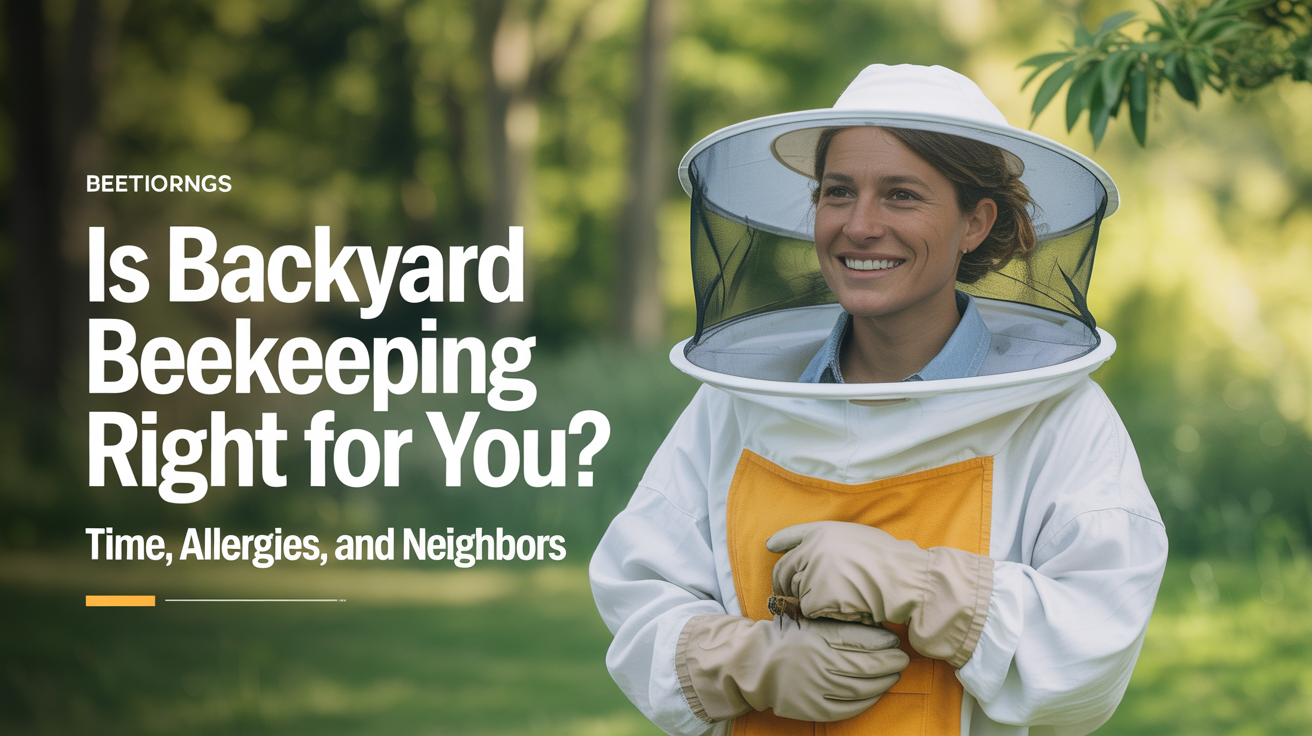
Backyard beekeeping is genuinely rewarding, but it is not right for everyone. Before buying gear, there are three questions worth sitting with honestly: how much time you have, whether you or anyone in your household has a bee sting allergy, and what your neighbors and local ordinances will allow.
How Much Time Does Beekeeping Actually Take?
New beekeepers often underestimate the time commitment in spring and summer, then overestimate how much work winter requires. A single hive is not a daily chore, but it does ask for consistent seasonal attention.
The Inspection Calendar
During the active season (roughly April through August in most of North America), plan on inspecting your hive every 7 to 10 days. A thorough inspection of one hive takes 20 to 40 minutes once you are comfortable working the frames. Add travel time to your backyard, suiting up, lighting the smoker, and putting everything away, and a single-hive inspection becomes a 60-to-90-minute block.
Inspections are not optional. Missing three weeks in May or June can mean a swarm departing with half your bees, a queen issue going undetected, or small hive beetles getting established before you notice. The beekeeping time commitment is highest in swarm season, which is exactly when many new beekeepers are also busy with gardens, travel, and spring obligations.
Off-Season Time
Late fall through winter is lighter. In colder climates you are mostly monitoring hive weight, making sure the colony has adequate stores, and checking that the entrance is not blocked by dead bees or snow. In mild climates, occasional inspections continue through winter, just less frequently.
Other time draws that people underestimate: picking up package bees or a nucleus colony in spring, assembling and painting equipment in the off-season, and processing honey in late summer. Harvest day for even two or three medium supers can run four to six hours.
Honest estimate: plan for 2 to 4 hours per week per hive during peak season, and roughly 30 to 60 minutes per week in the off-season.
Bee Sting Allergy and Beekeeping
Getting stung is part of beekeeping. The question is not whether you will get stung, but how your body responds. Understanding the difference between a normal sting reaction and a dangerous one is the single most important safety topic for anyone considering this hobby.
Normal Reactions vs. Anaphylaxis
Most people experience a local reaction: pain, swelling, and redness around the sting site. This is normal. Swelling at the sting site can look alarming, especially on hands or around the eyes, but local swelling is not a sign of a systemic allergy.
Anaphylaxis is different. Signs include hives or flushing far from the sting site, swelling of the throat or tongue, difficulty breathing, lightheadedness, nausea, or a sudden drop in blood pressure. Anaphylaxis is a medical emergency requiring epinephrine and immediate care.
If You Are Unsure About Your Allergy
If you have never been stung, you have no way to know in advance how you will react. Most people are not allergic. But if you have had a systemic reaction to any insect sting in the past, consult an allergist before starting. An allergist can run skin or blood tests and discuss whether venom immunotherapy (allergy shots) makes sense for your situation.
If you are not allergic, still tell someone where you are inspecting. Carry an antihistamine at the hive. If you are allergic or live with someone who is, talk to your doctor about whether keeping an epinephrine auto-injector on hand during inspections is the right call. Many beekeepers with known allergies keep bees successfully after completing immunotherapy; that is a conversation to have with your own physician.
Household Members
One person's bees mean stings are possible for everyone on the property. If a family member has a severe bee sting allergy, you need to think carefully about hive placement, flight path management, and whether backyard beekeeping is the right choice for your household at all.
Beekeeping and Your Neighbors
A poorly placed or poorly managed hive can create friction that is hard to undo. Getting this right from the start matters more than many beginners realize.
Check Your Local Ordinances
Many cities and suburbs allow backyard beekeeping, but rules vary. Some municipalities cap the number of hives, require them to be a set distance from property lines, or require the keeper to register with the county. Some HOAs prohibit bees outright. Look up your city or county ordinances before you buy a single piece of equipment. Your state bee inspector's office is often the fastest source of accurate information.
Having the Conversation with Neighbors
You are not legally required to notify neighbors in most places, but doing so before you start is practical. A neighbor who discovers the bees through a swarm landing on their fence is going to be far less receptive than one who heard about it from you over the fence first.
A few things that help:
- Explain that foraging honeybees are focused on pollen and nectar, not defending a home. A bee visiting their flowers has no reason to sting.
- Offer a jar of honey at the end of the season. It sounds small, but it works.
- Tell them where the hive is located and how you are managing flight paths.
Managing Flight Paths
Bees leave and return on a direct flight path from the hive entrance. In a small yard, angling the entrance toward a fence, hedge, or wall forces bees to gain altitude quickly before they cross into neighboring space. A six-foot fence or solid hedge directly in front of the hive entrance is the standard approach, and it genuinely changes behavior.
Provide a water source close to the hive as well. A colony foraging for water will find the nearest birdbath, pet bowl, or pool skimmer. A dedicated shallow dish with marbles or cork floats so bees can land without drowning keeps them in your yard and off your neighbor's patio.
Should You Start? A Practical Checklist
Before committing to your first hive, work through this list honestly:
| Question | What to confirm |
|---|---|
| Do you have adequate outdoor space? | A hive needs level ground, morning sun, and a windbreak |
| Is beekeeping legal where you live? | Check city/county ordinances and any HOA rules first |
| Do you or any household member have a severe sting allergy? | Consult an allergist if uncertain before proceeding |
| Can you inspect every 7-10 days from May through August? | Travel, work schedules, and health all factor in |
| Can you manage neighbor relations and flight paths? | A pre-start conversation with neighbors is worth it |
| Can you afford first-year startup costs? | See what beekeeping really costs in your first year for a full breakdown |
If you worked through that list honestly and are still nodding, you are likely a good fit. The next step is reading through a beginner's step-by-step guide to starting beekeeping and connecting with a local club before you order anything. Hands-on time with an experienced beekeeper before your bees arrive is worth more than any amount of reading, including this article.
Frequently Asked Questions
Can I keep bees if I have never been stung and do not know whether I am allergic?
Yes, but start cautiously. Most people are not allergic to bee venom. Wear full protective gear, especially early on when stings are more frequent. If you have a systemic reaction to your first sting, stop and see a doctor before continuing. Some beginners also arrange to be present at a mentor's inspection and handle a frame briefly before their own bees arrive. That is not a medical test, but it gives you useful information.
How many hives should a beginner start with?
Two hives is the standard recommendation, and there is a practical reason for it. With two colonies you can compare them side by side, which makes spotting problems in one much easier. If one hive goes queenless, you can often salvage it with a frame of eggs from the other. Starting with one hive saves money upfront but leaves you with less flexibility when something goes wrong.
Will my bees swarm and create problems for my neighbors?
Swarms happen when a colony outgrows its space or feels crowded. Regular inspections, giving the colony room before they feel cramped, and learning to recognize swarm cells are the main tools for reducing swarm likelihood. They cannot be entirely prevented, but a well-managed colony swarms far less often than a neglected one. Swarms themselves are typically calm since the bees are not defending a home, but a swarm landing on a neighbor's shrub is a situation you want to resolve quickly.
Do I need an epinephrine auto-injector to keep bees?
Not necessarily. Most beekeepers without a history of systemic reactions keep bees safely with standard protective gear and an antihistamine nearby. If you have a known bee venom allergy, talk to your allergist about whether a prescription auto-injector makes sense for your inspections. That is a medical decision, not a beekeeping one.
Should I get package bees or a nucleus colony to start?
Package bees and nucleus colonies have real differences in cost, timing, and how quickly they establish. The detailed comparison between packages and nucs covers both options, but the short version is that nucs start with an already-laying queen and an established brood nest, which gives new beekeepers a stronger foundation in the first critical weeks.