Getting Started
How to Find a Beekeeping Mentor or Local Club
Find a beekeeping club, mentor, or class near you with this practical guide. Includes where to search, what to ask, and how to get the most from local beekee...
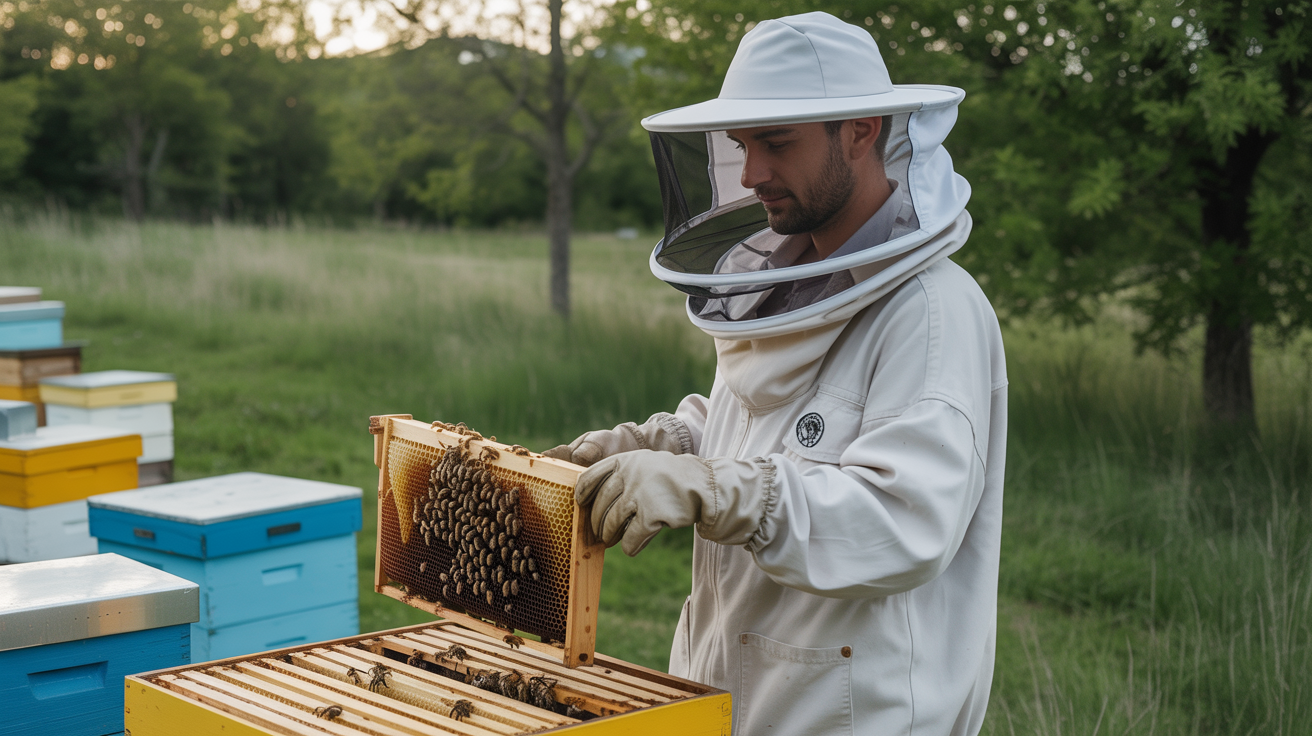
The fastest way to learn beekeeping is to stand next to someone who has already made the mistakes. A local beekeeping club or mentor gets you into a real hive before you've bought a single piece of gear, which is far more useful than any book.
Why a Local Club Matters More Than You'd Expect
Online forums and videos can teach you what a queen cell looks like, but they can't tell you that the basswood flow in your county ends two weeks earlier than the national guides suggest, or that your regional strain of bees is notoriously defensive in July. That kind of knowledge lives in your local club.
Most state and provincial beekeeping associations are broken down into smaller county or regional chapters. These chapters usually meet monthly, often at a fairground, extension office, or member's farm. The agenda typically includes a short educational program, a hands-on demo or apiary walk when weather allows, and a chance to ask questions of people who have been keeping bees in your exact climate for years.
Beyond education, a club gives you practical backup. When you spot something strange in your hive and you're not sure whether it's chalkbrood or something worse, you want a phone number to call. A good local association gives you that network from day one.
Joining also tends to be cheap. Most county-level clubs charge $20 to $40 per year for a household membership. Some offer free membership for your first year specifically to get beginners in the door.
How to Find a Beekeeping Club Near You
Start with your state's department of agriculture website. Most states list registered beekeeping associations, and many link directly to local chapter directories. If you can't find anything there, try these routes:
- American Beekeeping Federation (ABF) club directory -- the ABF maintains a searchable list of affiliated clubs by state at abfnet.org.
- American Bee Journal and Bee Culture -- both publications maintain club directories and frequently feature regional association news.
- Your county cooperative extension office -- extension agents who cover agriculture usually know whether a local bee club exists, and many extension programs host beginner workshops themselves.
- Local farm supply stores -- a Tractor Supply or independent feed store near you may have a bulletin board or know of club meetings. Staff who sell hive equipment often keep bees themselves.
- Facebook groups -- search "[your state] beekeepers" or "[your county] beekeeping." These aren't a substitute for an in-person club, but they're a quick way to find out where people are meeting.
When you find a local beekeeping association, attend a meeting before committing. Clubs vary in how welcoming they are to beginners. Some have a dedicated new-beekeeper program; others are primarily a social hour for experienced keepers. Sit in, ask a few questions, and see whether the group fits how you want to learn.
What to Look for in a Beekeeping Class
Many clubs run a short course in late winter or early spring, timed so new beekeepers are ready when package bees and nucs arrive. If you search "beekeeping classes near me," you'll likely find a mix of club-run courses, community college offerings, and commercial apiary workshops. Here's how to evaluate them:
Club-run beginner courses are usually 4 to 8 weeks, covering bee biology, hive equipment, first-year management, and a hands-on apiary session or two. Cost runs from free (for club members) to around $150. These tend to be taught by volunteers who know local conditions well.
University extension programs sometimes offer a condensed one- or two-day course with hands-on components. The instruction quality is usually high, but these can sell out fast. Check land-grant university extension sites in your state.
Commercial apiary workshops vary widely. Some are excellent; others are thinly disguised upsells. Look for ones that include at least one session inside a hive, ideally with small group sizes. A class of 30 people watching one instructor open a hive 15 feet away teaches you very little.
Online courses from reputable beekeepers (look for instructors who are Master Beekeeper program graduates or state apiarist-certified) can supplement hands-on learning but should not replace it. You cannot learn to read brood pattern from a video alone.
If you want a preview of what the first year actually costs before signing up for a class, the breakdown in What Beekeeping Really Costs in Your First Year gives you realistic numbers.
How to Find a Beekeeping Mentor
A mentor relationship is different from a club. With a mentor, you're working alongside one person at one apiary, regularly, during your first season. You see the same hives develop week to week, which builds pattern recognition far faster than attending occasional club demos.
Ask at your club. The most direct path to finding a beekeeping mentor is to show up at your local association, introduce yourself as a new beekeeper, and ask whether anyone would be willing to take on a mentee. Many experienced beekeepers enjoy teaching. Some clubs have formal mentor-matching programs; others operate on informal handshakes.
Be specific about what you're asking. "Can I shadow you at your hives a few times this season?" is a reasonable request. "Will you be on call whenever I have a question?" is a bigger ask. Most mentors are happy to do the former. Showing up prepared, on time, and with your own gear (veil and gloves at minimum) signals that you'll be a good mentee.
Offer something in return. Beekeeping is physical work. Mentors often appreciate an extra set of hands for moving boxes, extracting honey, or splitting colonies. You learn more by doing; they get help with tasks that are easier with two people.
Look beyond club meetings. Beekeepers who sell honey at a farmers market, run a teaching apiary at a nature center, or operate a small honey business often take on apprentices informally. Introduce yourself and ask.
What a good mentor looks like: Someone who asks about your goals (honey production? pollinator habitat? just curious?), doesn't push a single system as the only right way, and explains why they're doing what they're doing rather than just issuing instructions. A mentor who has kept bees in your county for 5 or more years and has weathered a few winters is more valuable for a beginner than a nationally known beekeeper from a different climate.
For context on the decisions you'll be making in your first season alongside a mentor, see Package Bees vs. Nucs: Which Should a Beginner Buy? and the full overview at How to Start Beekeeping: A Beginner's Step-by-Step Guide.
Making the Most of Club Membership Year-Round
Joining a local beekeeping association pays off most when you show up consistently. A few habits that help:
| Time of Year | What to Ask About at Club |
|---|---|
| January / February | Beginner course dates, equipment recommendations, local bee source suppliers |
| March / April | Package or nuc arrival timing, first inspection tips, queen acceptance rates |
| May / June | Swarm season management, adding supers, local nectar flow timing |
| July / August | Varroa mite treatment options and timing, dearth management, water sources |
| September / October | Winter prep, feeding strategy, cluster formation expectations |
| November / December | Equipment maintenance, off-season reading, spring planning |
Beyond meetings, most active clubs organize apiary tours, honey extraction days, and occasional field trips to commercial operations. These are worth attending even after your first year -- seeing a range of management styles sharpens your own.
Frequently Asked Questions
Do I need to join a beekeeping club before I get my first hive?
You don't need to, but it helps to join or at least attend a meeting before you buy equipment. Clubs often have members who sell quality used gear at fair prices, can tell you which local bee suppliers have a good reputation, and may point you toward a beginner course that starts at exactly the right time for your climate.
What if there's no beekeeping club in my area?
If the nearest local beekeeping association meets more than an hour away, check whether it has an active online group or newsletter you can follow. State associations sometimes host regional events that are worth the drive once or twice a year. Online communities (the Beesource forums, state-specific Facebook groups) can fill some of the gap, though they don't replace hands-on time.
How do I find a mentor if my club doesn't have a formal program?
Ask directly, and ask more than one person. Bring it up at the end of a meeting: "I'm starting my first hive this spring and would love to shadow someone at their apiary a few times. Is anyone open to that?" Most clubs have at least one or two members who enjoy teaching. You may hear no a few times before you find a yes.
How many hives does a mentor typically need to have for it to be useful?
Even a beekeeper running two or three hives can be an excellent mentor. What matters is how long they've been keeping bees in your specific area and how willing they are to explain their reasoning. Someone with three hives who walks you through every inspection frame by frame is more useful than someone with 50 hives who's too busy to stop and explain what they're seeing.
Are beekeeping classes through a club as good as a formal course at a university?
Often yes, and sometimes better for practical purposes. Club instructors typically know local forage patterns, regional pests, and the specific management challenges of your climate in ways that a general course may not cover. The main variable is instructor quality, which you can gauge by asking around at a meeting or two before enrolling.