Hives & Equipment
Hive Tools, Brushes, and Feeders: The Small Gear That Matters
A practical guide to the beekeeping hive tool, bee brush, and types of bee feeders: the small gear that makes inspections and feeding go smoothly.
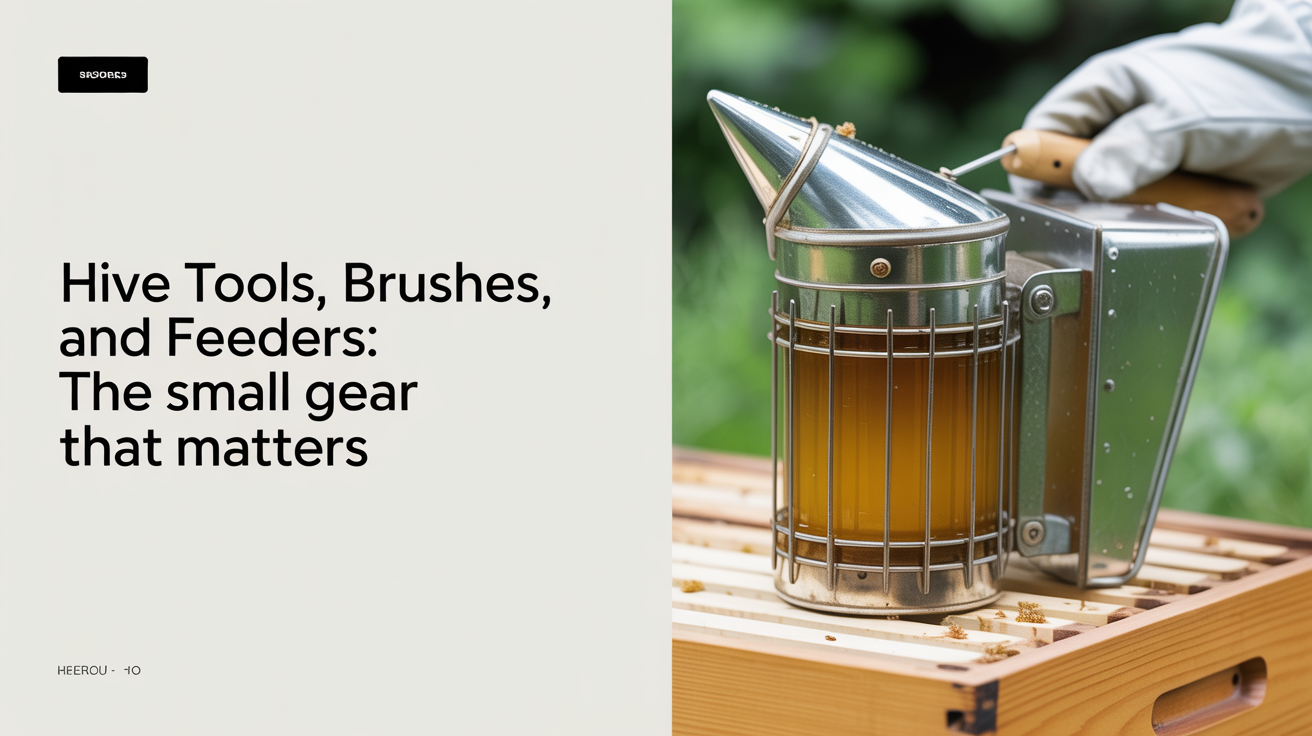
Your smoker and veil get the attention, but the hive tool, bee brush, and feeder are the pieces of gear you'll actually reach for every single visit. Here's how each one works and what to look for when you buy them.
The Beekeeping Hive Tool
A hive tool is a small pry bar, usually seven to ten inches long, made from hardened steel. Bees seal every gap inside the hive with propolis, a sticky resin they collect from tree buds. After a few weeks, propolis bonds frames, boxes, and covers together so firmly that bare hands can't break the seal. The hive tool gives you the leverage to separate boxes and lift frames without damaging comb or injuring bees.
Two Styles Worth Knowing
Standard (J-hook) hive tool. One end is bent into a J shape for scraping propolis and prying frames apart from the top. The other end is flat for splitting boxes. This is the most common style and a solid choice for beginners.
Frame lifter / Maxant style. Wider and shorter, with a hook on one end sized to slip under a frame lug. Some beekeepers prefer this for lifting full honey frames because the wider blade distributes pressure better. It's less useful for splitting boxes.
Most beekeepers eventually own both. Start with a standard J-hook tool and add a frame lifter once you know whether you want one.
How to Use It
To separate boxes, slide the flat end of the blade into the seam between the two boxes and twist. Work around all four sides rather than prying from one spot, which can crack wood. To free a frame, hook the J end under the lug of an adjacent frame and push sideways, then use the blade to scrape any propolis bridges before lifting.
Keep a second hive tool in your back pocket. When you set one down on the hive, it disappears into propolis and bees in about thirty seconds.
For a closer look at which hive styles affect how you use a tool, see Langstroth, Top Bar, or Warré: Choosing Your First Hive.
The Bee Brush
A bee brush has long, soft bristles, usually white or pale yellow horsehair or synthetic fiber, set in a handle about the size of a kitchen pastry brush. Its job is to move bees off a frame or surface without harming them.
When to Use One
The most practical use is clearing bees off a frame before you replace it in the box, so you don't crush any on the way down. It also comes in handy when harvesting honey frames -- you brush the bees off before moving frames to a honey house or extractor.
Use slow, sweeping strokes from the top of the frame toward the bottom. Don't press hard or scrub. The goal is to encourage bees to walk away, not to smear them across the comb.
When Not to Use One
Brushing agitates bees. If a colony is already defensive, running a brush across a frame full of bees can tip a tense inspection into a chaotic one. Experienced beekeepers often skip the brush entirely during routine inspections, preferring to use smoke to clear bees and then give the frame a single, firm shake over the box to drop most bees back in.
Save the brush for harvest time or situations where you need a surface genuinely clear of bees.
Keep your brush clean. Propolis and honey build up on the bristles, and a sticky brush pulls at bees rather than moving them. Rinse it in warm water after each use.
Types of Bee Feeders
Colonies need supplemental feeding in two main situations: during spring buildup when natural nectar is scarce, and in late summer or fall when you're building winter stores after pulling honey. The feed is almost always a sugar syrup (2:1 sugar to water by weight for fall, 1:1 for spring) or dry sugar in emergencies.
Different feeder designs have real tradeoffs. Here's a plain comparison:
| Feeder Type | Capacity | Drowning Risk | Ease of Refill | Robbing Risk |
|---|---|---|---|---|
| Hive-top (Miller/Boardman) | 1-4 gallons | Low (screened troughs) | Moderate -- must open hive | Low |
| Frame feeder (division board) | 1-2 gallons | Moderate -- need floats | Low -- replaces a frame | Low |
| Entrance feeder | 1 quart | Low | Easy -- pull and refill | High |
| Pail / jar feeder | 1 gallon | Very low | Easy -- replace pail | Low |
| Open / barrel feeder | Unlimited | High -- needs floats | Easy | Very high |
Hive-Top Feeders
A hive-top feeder sits directly over the top box, under the outer cover. Bees access syrup through screened openings on either side of a central bee-free zone. Capacity runs from one to four gallons depending on the model, so colonies can draw it down over several days without you opening the hive repeatedly. The main drawback is that you have to lift the cover to refill -- on cold fall days, that's a problem.
Frame Feeders
A frame feeder is a thin plastic reservoir the same width and depth as a standard frame. You pull out one or two frames on the edge of the box and drop the feeder in. Bees access the syrup from the inside, and because it's inside the hive, there's no robbing. Add a wooden paint stick or a strip of window screen as a float so bees can land and drink without drowning. These work well for packages and new splits that need feeding while getting established.
Entrance Feeders
Entrance feeders clip onto the entrance and hold an inverted quart mason jar or proprietary jar. They're the easiest to refill and fine for very short-term feeding, but they advertise syrup to neighboring colonies and can trigger robbing, especially in late summer when natural forage is thin. Use them with caution outside of a strong nectar flow.
Pail and Jar Feeders
An inverted pail or jar with small holes punched in the lid goes directly over the inner cover hole. Bees feed from below; the vacuum in the upturned container prevents the syrup from pouring out. They're inexpensive, clean, and carry no drowning risk. The limitation is capacity -- a quart jar runs dry fast on a strong colony in buildup.
For context on how box depth affects how much room a colony has for stores, see Deeps vs. Mediums: Picking Your Hive Box Sizes.
Other Small Tools That Earn Their Keep
Beyond the core three, a handful of small items pays for itself quickly:
- Frame grip. A one-handed clamp that holds a frame lug. Useful when you need a free hand to photograph comb or take notes, or when a frame is exceptionally heavy.
- Uncapping fork (or scratch fork). A row of thin tines for scratching open capped cells that a knife missed. Inexpensive and worth having before your first harvest.
- Queen marker. A small cage that holds a queen against the comb so you can dot her thorax with a paint pen. International color coding by year makes her easy to spot on a crowded frame.
- Propolis trap. A plastic grid you place under the inner cover in late summer. Bees fill the grid holes with propolis. Freeze it, flex it, and the propolis cracks out in chunks -- a clean way to harvest propolis if you want it.
- Extra hive tool. Not glamorous, but you will lose one. Keep a backup.
For a full look at what to buy when you're putting together your first setup, see The Beekeeping Starter Kit Worth Buying First.
Frequently Asked Questions
What size hive tool do most beekeepers use? The standard 10-inch J-hook tool covers the majority of tasks. Shorter tools (7 inches) are lighter to carry but give less leverage when splitting propolis-cemented boxes. Unless you have a specific reason to go shorter, the 10-inch is the practical default.
Can I use a flat screwdriver instead of a hive tool? A flathead screwdriver can separate frames in a pinch, but the tip is too narrow to distribute force without damaging the wood. It also lacks the J-hook for prying frame lugs. A proper hive tool is inexpensive enough that a screwdriver substitution isn't worth the damage risk.
How often do I need to feed my bees? It depends on the colony's situation. A new package needs feeding until it draws comb and builds stores, which might mean two to four weeks of steady feeding. An established colony with good stores only needs supplemental feeding if the scale weight is dropping in fall or the colony is too light going into winter. Not every colony needs feeding every year.
Why are my bees ignoring the feeder? During a nectar flow, bees often won't touch syrup because natural forage tastes better and has nutritional complexity that plain sugar syrup lacks. If you put out a feeder and bees show no interest, check whether local plants are blooming. If there's a strong flow on, hold off on feeding -- the colony is probably doing fine on its own.
How do I clean a feeder before storing it? Rinse with hot water until the water runs clear, then let it dry completely before storing. Mold grows fast in wet feeders, and a feeder with old syrup residue can introduce fermentation into fresh syrup at the next refill. A quick scrub with a bottle brush handles the corners in a frame feeder or hive-top trough.