Honey & Harvest
Why Does Honey Crystallize, and How to Fix It
Crystallized honey is perfectly good honey. Learn why it happens, how to safely restore it to liquid, and when to just leave it alone.
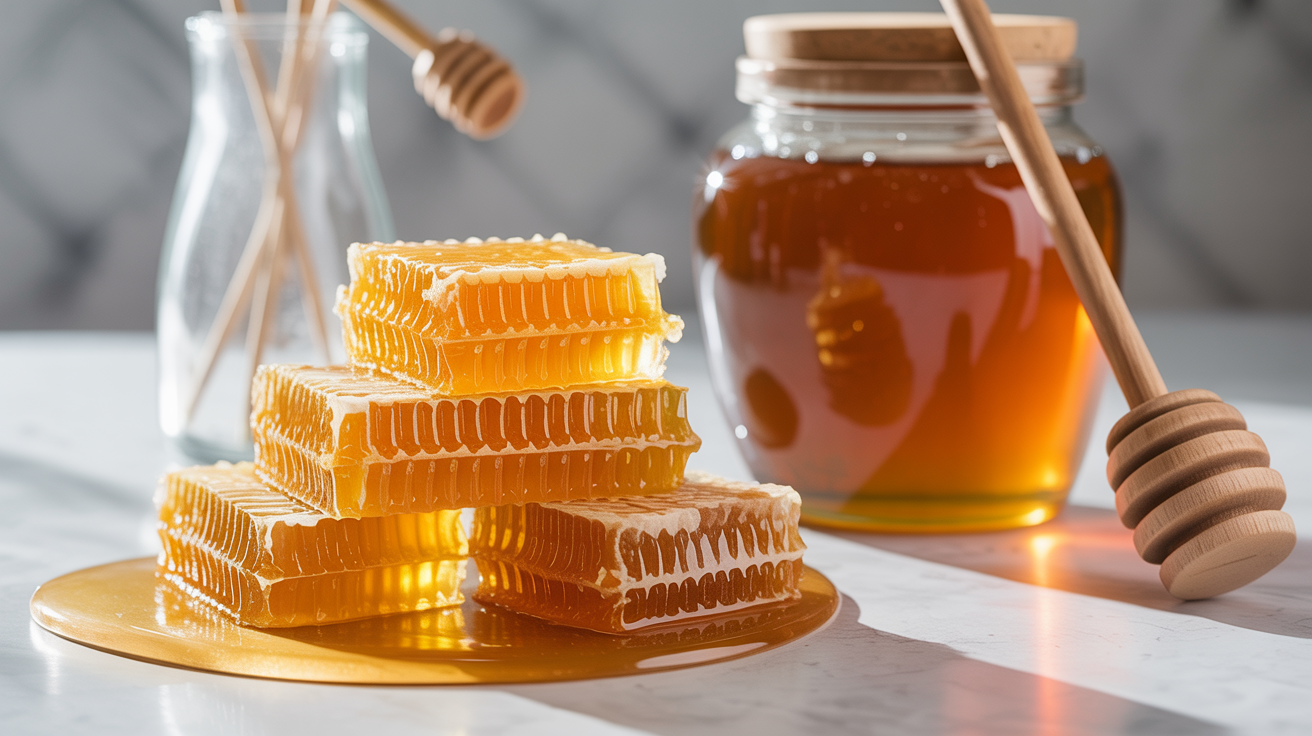
Honey crystallizes because it is a supersaturated sugar solution, and glucose wants to form solid crystals over time. That is not a flaw or a sign of spoilage. It is chemistry doing exactly what it should.
The Science Behind Crystallization
Raw honey is mostly two sugars: fructose and glucose. Glucose has low solubility in water, which means there is more of it dissolved in honey than water can comfortably hold at room temperature. Given time, those excess glucose molecules find each other and stack into an ordered crystal lattice, pulling free water into the structure as they go.
The fructose stays liquid because it dissolves more readily. That is why fully crystallized honey often has a creamy, spreadable texture rather than turning into a hard solid block. The ratio of glucose to fructose in the original nectar source determines how quickly your honey will set.
Nectars that crystallize fast (within weeks to a few months):
- Canola (rapeseed)
- Clover
- Dandelion
- Alfalfa
Nectars that stay liquid longer (months to over a year):
- Tupelo
- Black locust (acacia)
- Sourwood
- Most late-season wildflower blends with high fructose content
A jar of clover honey left on the shelf through one winter will almost certainly be solid by spring. A jar of acacia might still be pourable the following fall. Neither is better or worse; they just behave differently.
Is Crystallized Honey Bad?
No. Crystallized honey is not spoiled, fermented, or degraded. The enzymes, pollen, antioxidants, and flavor compounds are all still present. The only thing that has changed is the physical structure of the sugars.
Honey can genuinely spoil, but crystallization is not how it happens. Real spoilage comes from fermentation: wild yeasts that are already present in raw honey start converting sugars to alcohol and carbon dioxide when the water content is high enough to support them. You will know fermented honey by its off smell (yeasty, almost alcoholic), fizzing, and a lid that has been pushed upward by gas pressure.
Honey with a water content below about 18 percent does not ferment under normal storage conditions because the yeast cannot reproduce at that concentration. That is one reason harvesting capped frames at the right time matters: the bees cap cells when the water content is low enough to be stable for the long term.
If your crystallized honey smells clean and sweet, it is fine to eat and fine to restore to liquid.
Why Storage Conditions Affect the Speed
Temperature and the presence of seed crystals both drive how fast glucose precipitates out.
Temperature sweet spots for crystallization:
| Temperature Range | Effect on Crystallization |
|---|---|
| Below 10 C (50 F) | Very slow; cold thickens but does not seed well |
| 10 to 21 C (50 to 70 F) | Fastest crystallization zone |
| 21 to 27 C (70 to 80 F) | Moderate; many honeys stay pourable longer |
| Above 40 C (104 F) | Crystals dissolve back into solution |
The range between about 10 and 21 C is the prime crystallization window, which is exactly the range of most pantry shelves and unheated rooms in autumn and winter. If you store honey in a consistently warm kitchen cabinet, it often stays liquid noticeably longer than honey kept in a cool basement.
Seed crystals are the other factor. Once a few glucose molecules organize into a tiny crystal, nearby molecules use it as a template and join in. That is why partially crystallized honey sets up much faster than fresh liquid honey. It is also the principle behind creamed honey: producers intentionally add finely milled seed crystals to liquid honey and hold it at around 14 C (57 F) to grow a smooth, consistent, spreadable texture before packaging.
If your extractor or settling tank has any residue from a previous batch that has already crystallized, expect your new honey to seed quickly from contact with those particles.
How to Decrystallize Honey Safely
The goal is to melt the crystals without overheating the honey. Temperatures above about 40 to 43 C (104 to 110 F) start to degrade the enzymes and volatile aromatics that give raw honey its character. Temperatures above 70 C (158 F) cause noticeable darkening and flavor loss. A hot tap or a low-and-slow water bath keeps you well below the damage threshold.
The Warm Water Bath Method
This is the most reliable approach for most jars.
- Fill a pot or deep bowl with water that feels comfortably warm on your wrist, around 40 C (104 F). Do not use boiling or near-boiling water.
- Place the sealed jar in the water. The water level should come up to the level of the honey inside, not just the base of the jar.
- Let it sit for 20 to 30 minutes, then check. Stir if the jar is open-top or if you can safely stir through the lid.
- Replace the water when it cools. Repeat until the honey is fully liquid.
- Let the jar cool to room temperature before sealing and storing.
For a heavily crystallized quart jar, plan on two to three water changes over an hour or so. Rushing it with hotter water costs you flavor and enzyme activity.
The Low Oven Method (for large volumes)
If you have a full bucket or multiple jars from an extraction session, an oven on its lowest setting (usually around 65 to 70 C / 150 F) with the door cracked slightly open can work. Use a thermometer inside the bucket and pull the honey when it reads 40 to 43 C. This takes patience but is effective for larger volumes.
What Not to Do
Microwaving crystallized honey creates hot spots that can scorch portions of the honey while other parts stay cool. The result is uneven quality and potential overheating of some of the honey even if the average temperature seems fine. It is worth the extra time to use a water bath instead.
Do not leave honey to melt in direct sunlight through a window. The UV exposure combined with uncontrolled temperature swings can push temperatures into the damage range.
Keeping Honey Liquid Longer
If you prefer your honey pourable and want to slow crystallization:
- Store it in a consistently warm spot (above 22 C / 72 F) rather than a cool pantry.
- Use glass jars rather than plastic. Plastic surfaces can provide nucleation points that seed crystals faster.
- Keep lids tight to prevent moisture absorption, which can also encourage crystallization.
- Process in smaller batches so jars get used before they have time to set up.
None of these are foolproof for high-glucose honey like clover or canola. If your bees are working clover-heavy forage, expect crystallization no matter what. The workaround is to keep a small jar accessible and restore larger reserves as needed rather than trying to keep a full gallon liquid all winter.
If you are thinking about how much honey to keep versus how much to leave in the hive, that calculation also affects storage duration. Honey you pull for yourself needs to get eaten or processed before it sets solid if you prefer it liquid. Check how much honey to leave bees for winter before deciding how aggressively to harvest in late summer.
Frequently Asked Questions
Does crystallized honey mean it has been adulterated with sugar? Not on its own. Adulterated honey crystallizes differently and often unevenly, but pure honey also crystallizes routinely. The simplest indicator of pure honey is buying it from a source you trust or from your own hive. Crystallization alone is not evidence of anything other than normal glucose chemistry.
Can I re-liquefy honey more than once? Yes, though each heat cycle does degrade quality slightly. Enzymes like diastase and invertase are heat-sensitive proteins. One careful warm water bath will not noticeably affect flavor or quality. Repeated high-heat treatments will eventually flatten the flavor and reduce enzyme activity. For honey you care about eating at its best, liquify once and use it.
Why does my honey have white foam or a white layer on top after crystallizing? The white layer is usually fine-grained glucose crystals that have risen to the surface, or air bubbles that were trapped during the crystallization process. It is harmless. Some beekeepers actually prefer this partially crystallized surface layer as a spread.
My crystallized honey smells a little off. Is it still safe? A yeasty, alcoholic, or sour smell combined with crystallization can mean fermentation has started. Check whether the lid was sealed tightly and whether the honey was extracted at the correct water content. If it smells genuinely off, trust your nose. Fermented honey is not toxic, but it has a different flavor profile and is not the same product as properly cured honey.
Is there a way to permanently prevent crystallization? Ultra-filtration and heating to around 71 C (160 F) before bottling, which is how large commercial operations produce honey that stays liquid on store shelves for years, does prevent crystallization. It also removes most of the pollen, enzymes, and aromatic compounds that make raw honey worth keeping bees for in the first place. For backyard beekeepers, crystallization is a feature of real honey, not a problem to engineer away.