Colony Life
Why Bees Swarm and What It Means for Your Hive
Swarming is natural honey bee reproduction, not a sign something is wrong. Learn why it happens, what to watch for, and how to respond.
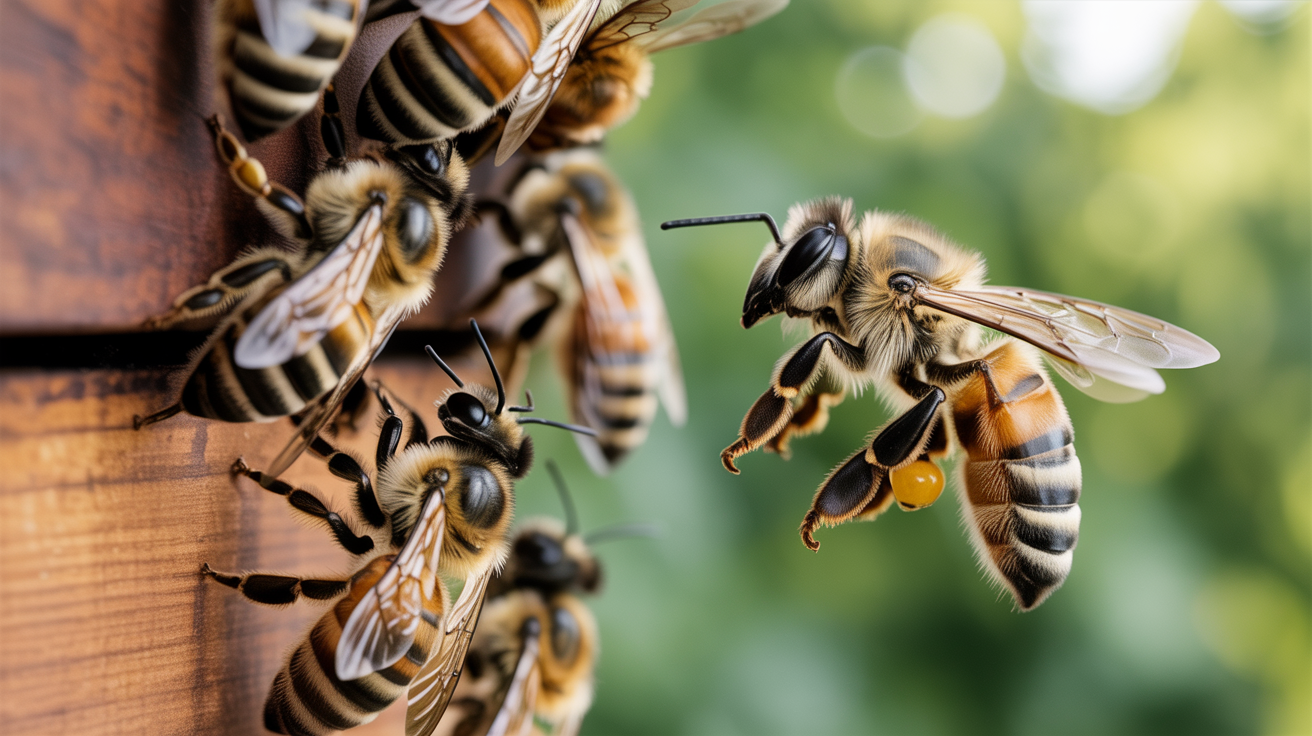
Swarming is how a honey bee colony reproduces itself. It is one of the most dramatic things you will witness as a beekeeper, and also one of the most misunderstood. When a swarm leaves your hive, it is not a sign that something is broken; it is a sign that your colony is strong, healthy, and doing exactly what evolution shaped it to do. That said, a swarm costs you roughly half your workforce and much of your honey crop for the season, so understanding what drives it, and catching the signs early, is one of the most useful skills you can develop.
What a Swarm Actually Is
A swarm is the old queen leaving the hive with around half the colony's workers. Before she goes, the workers have been raising new queens in preparation. Once the new queens are nearly ready to emerge, the old queen departs in a cloud of bees, typically on a warm afternoon.
The departing bees are loaded with honey. They gorged before leaving, giving them fuel for the journey and for building comb in a new location. This is why they cluster on a branch, fence post, or the side of a shed for anywhere from a few hours to a few days while scout bees find a permanent home.
Back in the original hive, a new queen will emerge, mate with drones on her orientation flights, and take over laying duties. If the colony is very strong, a secondary swarm (called an afterswarm or cast) may leave with the first virgin queen before she has even mated. These afterswarms are usually smaller.
For a deeper look at the different roles inside the colony before a swarm forms, see queen, workers, and drones.
Why Bees Swarm
The short answer is congestion. A colony in spring can grow faster than it can expand. Bees cap honey in frames that could hold brood, the brood nest gets compressed, and the queen runs out of space to lay. When the hive is packed, the workers begin to lose meaningful contact with the queen's pheromones — the population is simply too large for her chemical signals to reach everyone. That break in communication is what triggers the swarm impulse.
Several factors raise swarm probability:
- A strong, overwintered colony that built up quickly through spring forage
- A hive body that was not expanded with supers or additional boxes in time
- An older queen who lays slower and produces fewer swarm-suppressing pheromones
- Warm, stable weather that keeps foragers active and population growth fast
- A large amount of capped brood, which means even more bees are about to emerge
Swarming is fundamentally the colony's reproductive drive. The original colony and the swarm are now two separate colonies, each with a chance to survive and pass on their genes. It is the same logic as any organism reproducing, just expressed at the colony level.
Warning Signs Your Hive Is Preparing to Swarm
You rarely get zero warning. Bees typically spend one to three weeks building up to a swarm, and the signs are readable if you look.
Signs your hive is preparing to swarm:
- Queen cells along the bottom edges of frames (swarm cells are built there, unlike supersedure cells, which tend to be in the middle of the comb)
- Multiple queen cells at different stages of development
- Heavy bearding on the outside of the hive, especially in the evening, when it is not simply hot weather ventilation
- The brood nest is packed and surrounded by capped honey on all sides (called honeybound)
- A rapid drop in available open comb inside the hive
- Increased balling and restlessness among workers near the entrance
Finding one or two queen cells is not always a sign of imminent swarming; a colony may be superseding an aging queen. The table below lays out the differences.
| Event | What it is | Why it happens |
|---|---|---|
| Swarm | Old queen leaves with ~50% of workers | Colony is overcrowded; reproductive drive takes over |
| Supersedure | Workers raise a replacement queen while the old queen is still present | Old queen is failing, injured, or declining in production |
| Absconding | Entire colony abandons the hive | Severe pest pressure, disease, disturbance, or failed hive setup |
Supersedure cells appear in small numbers (often just one or two) toward the center of the frame. Swarm cells appear in clusters, often five to twenty, along the bottom bars. Absconding leaves you with an empty box overnight.
When Swarm Season Happens
Swarming is a spring phenomenon in most climates. The timing tracks the main nectar flow in your area. In much of the eastern and midwestern United States, peak swarm season runs from late April through June. In warmer southern regions it can begin in March. In the Pacific Northwest it tends to fall later, into June and July.
The window closes as summer heat arrives and nectar flow tapers off. A colony that has not swarmed by midsummer will usually hold until the following spring. Swarms in late summer or fall are uncommon and are more often a sign of absconding due to mite pressure or disease than a true reproductive swarm.
Check your hives every seven to ten days during swarm season. If you go longer than that between inspections in April and May, you can easily miss the entire build-up and come out one morning to find half your bees clustered in a tree.
What Happens to a Swarm After It Leaves
The cluster that lands on your fence post is not lost or confused; it is organized and purposeful. Scout bees from the swarm are already fanning out to find cavities. They inspect tree hollows, wall voids, old equipment, and any other space that meets their requirements: roughly 40 liters of volume, a small defensible entrance, some height off the ground.
Scouts return to the cluster and perform waggle dances to advertise potential sites. Other scouts visit the advertised sites and return to dance in support or opposition. Over time the quorum tips toward the best option, and the cluster takes flight as a group to their new home. The whole process usually takes one to three days, though a cluster can sit for up to a week in cool or rainy weather.
If the swarm finds a cavity in a wall or tree before a beekeeper collects it, it becomes a feral colony. Feral colonies are not a problem in themselves; they are part of a healthy regional bee population. If you want to recover the swarm, you have a short window before they move on.
To understand how the bees in a swarm develop once they establish a new home, the bee life cycle explains what happens from egg to forager.
Is a Swarm Dangerous?
The question comes up every time a neighbor calls in a panic because bees are covering a bush. The honest answer is that swarms are about as docile as honey bees ever get.
Bees sting to defend their home. A swarm has no home and no honey stores to defend. They are gorged on food and focused entirely on surviving until scouts find a new cavity. Unless you grab a handful of them or spray them with something, most people can walk within a foot of a cluster without incident.
Children and pets who come into direct contact with the cluster can provoke defensive behavior, so some caution is reasonable. But the dramatic scenes of people being chased by a swarm are almost always from disturbed in-hive colonies or Africanized bees in regions where they are present, not from reproductive swarms of European honey bees.
If you find a swarm on your property and do not want to collect it yourself, contact your local beekeeping club or extension office. Most regions have swarm-removal lists of beekeepers who will come collect it for free. Do not spray them with pesticides; a healthy swarm is a resource.
A Short Note on Prevention and Splits
You cannot eliminate the swarm impulse, but you can manage it. The main tools are timely hive expansion (adding supers or brood boxes before the colony runs out of space), removing queen cells during inspections, and making splits. A split takes a frame or two of brood and a queen cell (or a new queen you purchase) and puts them in a separate box, mimicking what a swarm would accomplish naturally. The original colony loses its swarm pressure; the split becomes a new colony.
How bees use the nectar they bring back connects directly to why a packed brood nest triggers swarming; how bees make honey covers that storage process and gives context for why honeybound frames crowd out the queen.
Frequently Asked Questions
Is a swarm dangerous?
For most people in most situations, no. A reproductive swarm has no hive to defend, and the bees are loaded with honey, which makes them calm. Standing near a swarm cluster is generally safe. The exception is if you are allergic to bee stings, in which case any bee interaction carries risk and you should keep your distance and call someone to collect the swarm.
Will my hive die if it swarms?
Not usually. The colony left behind has workers, capped brood about to emerge, and queen cells in progress. Within a few weeks, a new queen will be mated and laying. The hive will be smaller for a while and will not produce as much honey that season, but it should recover. The bigger risk is if the new queen fails to mate successfully (usually due to poor weather during her mating flights) and the colony becomes queenless. That is why checking for eggs about three weeks after a swarm is a good habit.
When is swarm season?
In most of the United States, peak swarm season is April through June, tracking the spring nectar flow. Warmer climates see it start earlier; cooler ones later. Once summer heat sets in and the main flow ends, swarming drops off sharply.
What should I do if I find a swarm?
If the swarm is on your property and you want it removed, contact a local beekeeper. Most beekeeping associations maintain free swarm-removal lists. If you are a beekeeper yourself, you can collect the swarm into a nuc or hive body by shaking the cluster onto frames or into a box, making sure to get the queen. Once she is inside, the rest of the bees will follow.
Can you prevent swarming entirely?
No. Swarming is a deeply ingrained instinct, and no management technique eliminates it completely. You can reduce the likelihood by keeping ahead of space needs, making splits before the colony feels overcrowded, and working with queens that have lower swarm tendency. But even well-managed hives from experienced beekeepers swarm occasionally. Accepting that and knowing how to respond is a more realistic goal than prevention.