Colony Life
How Bees Make Honey, Step by Step
Honey is nectar that bees have concentrated and chemically transformed into shelf-stable food. Here's exactly how they do it.
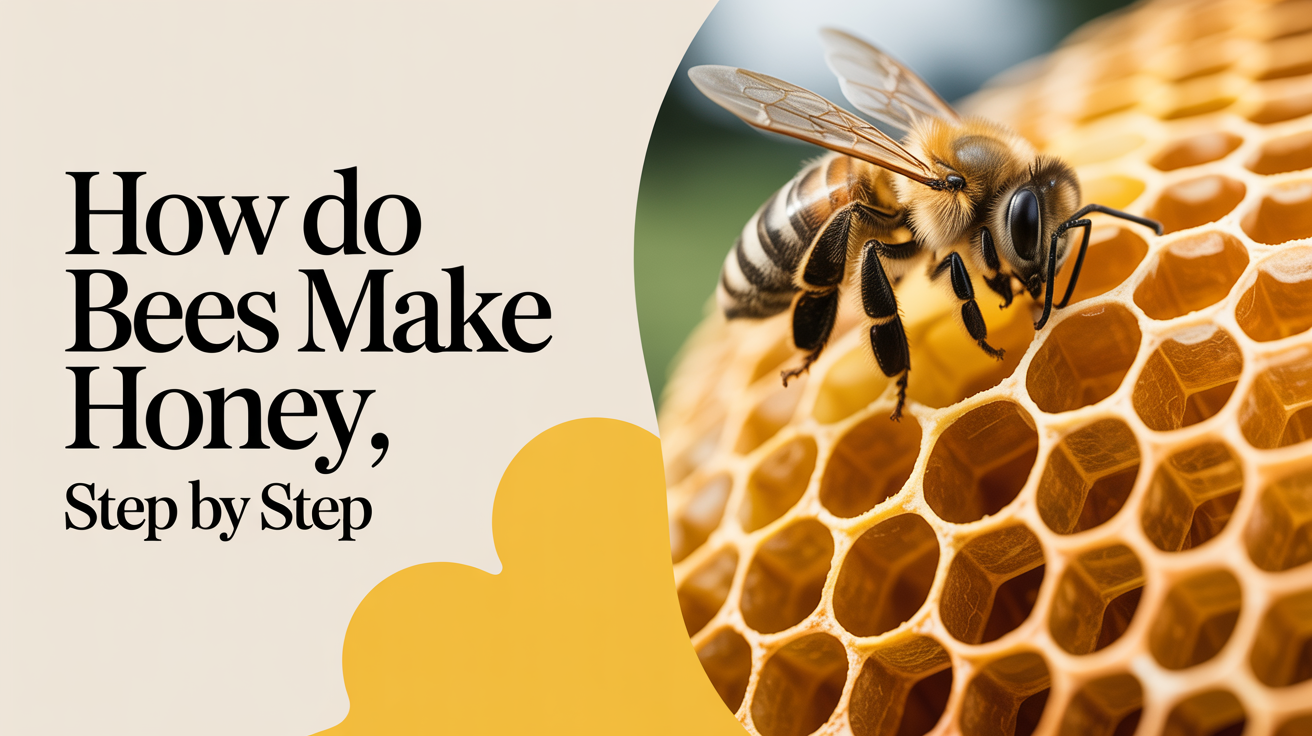
Honey is not simply collected nectar; it's nectar that bees have chemically converted and then dehydrated until it becomes stable enough to store indefinitely. The process is a colony-wide effort involving field foragers, house bees, enzymes, and a lot of controlled airflow. Understanding it makes you a better beekeeper because you'll know what conditions your bees need to produce quality honey and why disturbing that process at the wrong time matters.
Why Bees Make Honey in the First Place
Bees don't make honey for us. They make it because their colony needs a calorie-dense, low-moisture food that won't spoil or ferment over a long winter. A raw flower nectar with 20-80% water content would ferment within days. Honey, brought down to about 17-18% water, is so concentrated that most microorganisms can't survive in it.
A healthy colony in a temperate climate needs roughly 60-100 lbs of honey to carry it through winter. Strong colonies, left to their own devices, will often store 150-200 lbs or more. That surplus is what beekeepers harvest. We're not stealing their food; we're skimming the excess above what they'd realistically consume before the next nectar flow.
Step 1: The Forager and Her Honey Stomach
It starts with a forager bee, typically three weeks old or more, visiting flowers. She uses her proboscis to drink nectar from the floral nectaries and loads it into her honey stomach (also called the crop), a specialized sac that sits in front of her digestive stomach. When full, a honey stomach holds about 40 mg of nectar, roughly 80% of the bee's own body weight.
The honey stomach is not a passive container. As soon as nectar enters it, the bee begins adding invertase, an enzyme she produces in her hypopharyngeal glands. Invertase begins breaking sucrose (the dominant sugar in nectar) into its two component sugars: glucose and fructose. This enzymatic conversion is already underway on the flight back to the hive.
A forager makes dozens of these trips per day. Over her entire foraging career, she'll produce about one-twelfth of a teaspoon of honey.
Step 2: Passing the Load and Adding Enzymes
When the forager returns to the hive, she doesn't deposit nectar directly into a cell. Instead, she regurgitates it to a waiting house bee (a younger worker assigned to in-hive duties). That house bee chews and manipulates the nectar, mixing it further with her own salivary enzymes, including more invertase and glucose oxidase.
Glucose oxidase is important for another reason: it converts some glucose into gluconolactone, which breaks down into gluconic acid. That mild acidity (honey sits around pH 3.9) is part of what keeps pathogens out. This bee-to-bee transfer happens multiple times, each pass adding enzymes and reducing water content slightly through evaporation from the bees' bodies.
This is where the "is honey bee vomit" question comes from. Technically, the nectar comes from the crop via regurgitation, not from the digestive stomach. The enzymatic change is real and deliberate. "Bee vomit" is a shorthand that's not wrong exactly, but it misses the point that the bees are intentionally processing and transforming the material, not just expelling it.
Step 3: Ripening in the Cells
After the nectar has passed through enough house bees, it gets deposited into a honeycomb cell. At this point it still contains far too much water, often 50-70%, to be stable. The ripening process now shifts from enzymatic to physical.
House bees fan the open cells with their wings, creating a current of warm air across the combs. The hive interior stays around 95°F (35°C), which accelerates evaporation. Water leaves the nectar and exits through the hive's ventilation openings.
This fanning is not random; bees orient themselves at hive entrances and ventilation gaps to move air in coordinated ways. On a warm day during a heavy nectar flow, you'll see bees clustered at the entrance in a "bearding" posture and hear the hive hum louder than usual as the fanning intensifies.
Step 4: Capping and Storage
When the moisture content of a cell drops to roughly 17-18%, the bees consider it ripe. They seal the cell with a thin layer of beeswax, called a capping. That wax cap is an indicator beekeepers rely on: capped honey is ready; uncapped honey in a cell still has too much water and will ferment if you harvest it.
The glucose oxidase in the honey also plays a role here. When honey is diluted (as it is during processing), the enzyme produces small amounts of hydrogen peroxide as a byproduct. In the fully ripe, capped cell this reaction stops, but it's another layer of protection during the vulnerable in-between stage.
From Nectar to Capped Honey: The Full Sequence
- Forager locates a nectar source and loads her honey stomach.
- Invertase is added in the honey stomach; sucrose conversion begins in flight.
- Forager passes the load to a house bee inside the hive.
- House bee adds more invertase and glucose oxidase; further sucrose is converted.
- Nectar is passed bee-to-bee several more times, losing water with each transfer.
- Partially ripened nectar is deposited into an open comb cell.
- House bees fan the combs; water evaporates until moisture reaches ~17-18%.
- Bees cap the cell with beeswax.
| Stage | What Happens | Who Does It |
|---|---|---|
| Collection | Nectar loaded into honey stomach; invertase added | Forager |
| Transfer | Bee-to-bee regurgitation; more enzymes added | Forager + house bees |
| Ripening | Water evaporated from open cells by fanning | House bees |
| Capping | Cell sealed with beeswax when moisture is correct | House bees |
| Storage | Honey stable indefinitely at correct moisture | Colony |
Honeydew Honey: A Brief Aside
Not all honey comes from flower nectar. Bees also collect honeydew, the sugary excretion of aphids and scale insects feeding on plant sap. The bees process it the same way (enzymatic conversion, fanning, capping), but the resulting honey has a different composition: darker, with higher mineral content, less fructose, and a more complex flavor. Honeydew honey is prized in parts of Europe and tends to have a lower pH and higher enzyme activity than nectar honey. In North America, it's less common but does appear in late-season honey from apiaries near forests.
How Much a Colony Actually Needs
A colony needs enough honey to feed its bees through the dearth, whether that's a cold winter or a summer drought period with no blooming flowers. In temperate climates, the rule of thumb is 60 lbs minimum for winter, with 80-100 lbs giving a comfortable margin. A full deep Langstroth super holds about 80-90 lbs of honey. Colonies that head into fall with less than that are at risk, and feeding supplemental syrup becomes necessary.
The surplus above winter stores is what beekeepers harvest. In a productive year, a strong colony can produce several hundred pounds of honey; it's not unusual for a well-managed hive in a good nectar year to produce 100+ lbs of surplus above their own needs.
For more on how these workers fit into the colony's wider division of labor, see queen, workers, and drones.
Frequently Asked Questions
How much nectar does it take to make one jar of honey?
About 2 lbs of honey requires the bees to visit roughly 2 million flowers and fly a combined distance of around 55,000 miles. A standard 1-lb jar of honey represents the lifetime work of about 768 bees. The exact ratio depends on the nectar's starting sugar concentration, which varies considerably by plant species, from under 10% in some flowers to over 70% in others.
Why do bees make honey?
To survive periods when flowers aren't blooming. Bees are active year-round in a colony (even in winter they form a cluster and generate heat), and they can't forage when it's cold or when nothing is in bloom. Honey is their stored energy reserve. Making more than they need in good times buffers them against bad ones.
Is honey bee vomit?
The honest answer is: kind of, but the framing is misleading. Bees do regurgitate nectar from their crop (honey stomach), and that organ is distinct from their digestive stomach. But the process is intentional enzymatic processing, not involuntary vomiting. The bees are adding specific enzymes and transforming the material on purpose. Calling it vomit is technically defensible but strips out most of what's interesting about it.
How long does it take bees to make honey?
For a single batch, the time from nectar collection to capped honey is roughly one to three weeks, depending on the nectar flow rate, hive population, temperature, and ventilation. During a strong flow with a large colony, the bees can cap honey surprisingly fast. During slower periods, the process drags out. A full honey super can take anywhere from a few weeks to the entire season.
What is the honey stomach, exactly?
The honey stomach (crop) is a sac between the bee's esophagus and her main digestive stomach. A muscle called the proventriculus sits between them and acts as a valve, preventing the nectar from passing into the digestive system unless the bee needs to eat it herself. The honey stomach can expand to hold about 40 mg of nectar, and it's the site of the first enzymatic processing step during the flight home.
Understanding the honey-making process also puts things like swarm behavior in context. Swarming is partly driven by the colony running out of room to store honey and expand brood, which is why space management matters so much. Read more at why bees swarm and what it means for your hive. And for a broader view of how the bee doing all this work came to be, the bee life cycle from egg to forager fills in the developmental picture.