Colony Life
What Bees Do in Winter and How the Cluster Survives
Bees don't hibernate. They form a tight winter cluster and shiver to stay warm. Here's exactly how that works and what it means for your hive.
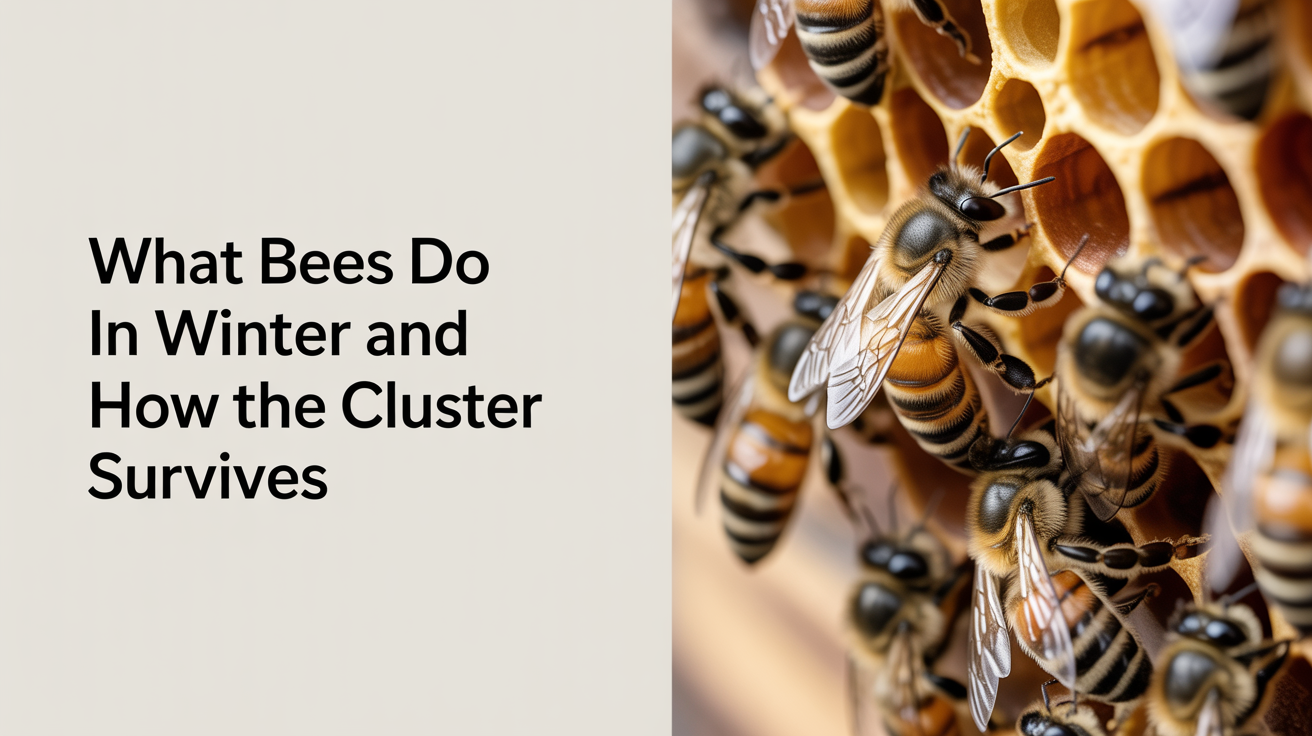
Honey bees do not hibernate. When temperatures drop, the colony pulls together into a tight ball called the winter cluster and generates its own heat by vibrating their flight muscles constantly until spring.
Do Bees Hibernate? The Short Answer
No. True hibernation means slowing the body down to a near-standstill to conserve energy. Bees do the opposite. The winter cluster is an active, working structure that burns through stored honey all season. Individual bees at the core of the cluster stay warm, those on the shell act as insulation, and the whole group rotates inward and outward so no bee freezes on the outside for long.
The colony is quieter than in summer, and foraging stops entirely once temperatures fall below about 50°F (10°C). But inside the box, work never really stops.
How the Winter Cluster Forms
Cluster formation begins in late summer and early fall, well before the first frost. As day length shortens and nectar stops flowing, the colony shifts its behavior in several key ways.
Worker composition changes
Worker bees born in late summer and fall are physiologically different from their summer sisters. These "winter bees" carry larger fat bodies, which store protein and help them live four to six months rather than the six weeks typical of a summer forager. You can read more about how this generational shift works in the bee life cycle.
Drones are expelled
By late fall, worker bees stop tolerating drones. Since drones contribute nothing to heat generation or honey storage, they are pushed out of the hive and left to die from cold and starvation. If you see a cluster of drones at the entrance in October, that eviction is underway.
The queen slows down
The queen's egg-laying rate drops sharply in fall and may stop completely for several weeks mid-winter. This is normal. Brood requires heat to survive (around 93°F / 34°C), and maintaining a large brood nest through the coldest stretch costs more honey than the colony can afford. Egg-laying typically resumes in January or February, even while snow is still on the ground, which is one reason early spring inspections often reveal more brood than beekeepers expect.
How Bees Stay Warm Inside the Cluster
The cluster's core temperature sits between 80°F and 95°F (27°C to 35°C) depending on whether brood is present. The bees holding that temperature use a mechanism called thermogenesis: they decouple their flight muscles from their wings and vibrate those muscles rapidly, producing heat without flying.
The outer shell of the cluster acts as an insulating layer. Those bees stay cooler (around 50°F / 10°C) but are not idle. They pack tightly together, reducing heat loss at the surface. As the shell bees cool, they push inward and warmer bees cycle out to take their place.
This rotation is continuous and critical. A colony that loses population below roughly a double handful of bees may struggle to generate enough collective heat. Small clusters fail not from cold directly, but because there are not enough bees to sustain the rotation.
What Bees Eat in Winter
Honey is the fuel. The cluster moves slowly upward through the hive as winter progresses, eating through capped honey stores as they go. A full-sized colony in a cold climate typically consumes 60 to 80 pounds of honey between October and April. Lighter winters or warmer climates reduce that number, but it is always substantial.
The honey-making process the colony completed through spring and summer is, in effect, the colony's winter survival plan. A hive that did not store enough honey before fall will starve before March regardless of how well the beekeeper manages everything else.
Signs of low stores
| Sign | What it indicates |
|---|---|
| Cluster near the bottom of the top box | Adequate honey still above |
| Cluster pressed against the top bars | Stores nearly exhausted |
| Dead cluster with capped honey nearby | Cluster isolated from stores, possibly by cold snap |
| Light heft when you lift the back of the hive | Low overall honey weight |
A quick heft test in October and again in January tells you more than any inspection. Lift the back of the hive slightly. A heavy hive is a reassuring hive.
How the Colony Protects Itself from Moisture
Cold alone rarely kills a winter colony in good health. Moisture is the more common culprit. Bees respire constantly, and a cluster of thousands produces significant water vapor. If that moisture condenses on the inner cover and drips back onto the cluster, it chills the bees and promotes mold.
Most beekeepers address this with one or more of the following:
- Upper ventilation. A small notch or drilled hole in the upper brood box lets moist air escape without creating a cold draft at cluster level.
- Moisture quilts. A shallow box filled with wood shavings placed above the inner cover absorbs condensation before it can drip.
- Absorbent inner covers. Some beekeepers replace the standard inner cover with one made from Masonite or cover it with burlap for the winter.
The goal is airflow without draft. A sealed-tight hive in a cold climate often fares worse than one with modest ventilation, because trapped moisture is harder on bees than low temperatures.
What Beekeepers Can Do Before Winter
Most of the work that determines winter survival happens in late summer and early fall, not in November.
Check honey stores in August. If frames are not two-thirds capped by late August, feed 2:1 sugar syrup to supplement. Stop liquid feeding once temperatures drop below 50°F because bees cannot properly process cold syrup and will not take it down well.
Treat for Varroa. Mite loads left untreated through the fall will devastate the winter bee population. Winter bees with heavy Varroa infestations have damaged fat bodies and shorter lifespans, which means the cluster runs thin before spring. Test with a wash or sticky board and treat if counts exceed threshold.
Reduce the entrance. A smaller entrance is easier for a reduced winter population to defend against robbers and keeps out mice, which will build nests inside a warm hive if given the chance. Mouse guards work well and can stay on through late spring.
Consider wrapping in cold climates. Beekeepers in USDA zones 4 and colder often wrap hives in roofing felt or foam insulation. This is not strictly required but reduces the energy bees spend maintaining cluster temperature during extreme cold snaps.
Leave the bees alone. Resist the urge to open the hive on a warm winter day "just to check." Every inspection breaks the propolis seal the bees have built to reduce drafts and exposes the cluster to cold air. If the hive sounds busy when you put your ear to the side and it hefts well, leave it alone until a genuine warm spell in early spring (consistently above 55°F for several hours).
Frequently Asked Questions
Can bees freeze to death in winter?
Individual bees can freeze if they become separated from the cluster. The cluster itself rarely freezes as long as it has enough population and honey stores. A colony that runs out of food in January is far more likely to die from starvation than from cold directly.
Do I need to feed bees in winter?
If you confirmed strong honey stores going into fall, you do not need to feed. If a colony is light on stores and temperatures have dropped too low for liquid syrup, you can use dry fondant or candy boards placed directly on the top bars above the cluster. Bees can access these even in cold weather because they do not need to break cluster to reach them.
Why is my hive silent in January? Is it dead?
A silent hive in deep winter is not necessarily dead. On cold days the cluster is tightly packed and very quiet. Tap firmly on the side of the box; a healthy cluster will buzz back within a second or two. No response at all is concerning but not conclusive. Wait for a day above 50°F and watch for brief cleansing flights at the entrance before drawing conclusions.
When do bees start flying again in spring?
Bees will take short cleansing flights on any day the temperature climbs above 50°F (10°C), even in January or February. These are not foraging flights; they are simply waste-elimination runs. True foraging resumes when consistent warm weather returns and early pollen sources, such as willow or maple, come into bloom.
How many bees survive to spring?
A healthy colony may enter winter with 20,000 to 30,000 bees and emerge with 8,000 to 15,000. The winter bee population is smaller by design. The key marker is not the absolute number but whether the cluster is tight and the queen resumes laying on schedule in late winter. A cluster that contracts steadily and shows fresh eggs in February is on track.