Bee Health
Nosema in Bees: Symptoms and Management
Nosema is a gut parasite that quietly drains your colony. Learn the signs, how to confirm it, and what you can actually do about it.
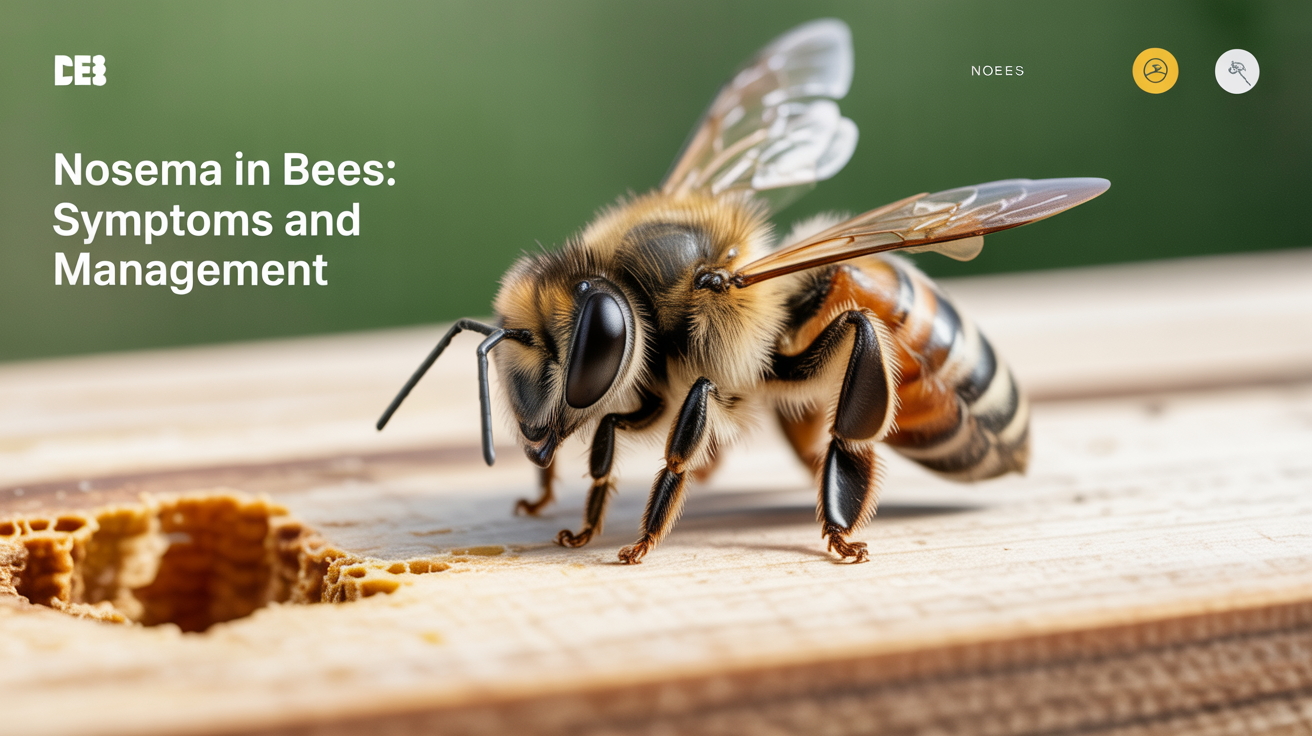
Nosema is a microsporidian gut parasite that can quietly sap a colony over weeks, often doing its worst damage in late winter and early spring when bees have been confined and stressed. Unlike some bee diseases with obvious, dramatic signs, nosema is a slow drain, colonies just don't build up the way they should, and by the time most beekeepers notice, the damage is already done. Understanding what you're looking for, and how to create conditions that limit its impact, is worth knowing whether or not you've ever had a confirmed case.
What Is Nosema, Exactly?
Two species of nosema affect honey bees: Nosema apis and Nosema ceranae. Both are fungi (microsporidians were reclassified from protozoa to fungi some years ago), and both invade the cells lining the bee's midgut, disrupting digestion and shortening the bee's life.
Nosema apis was the species well-documented through most of the 20th century. It tends to be worse in cold, wet springs and is strongly associated with dysentery, brown streaking on the hive entrance and front, because infected bees can't hold their feces during long winter confinements.
Nosema ceranae is newer to Apis mellifera, having jumped from Asian honey bees (Apis cerana), and is now found worldwide. It's typically more virulent, can persist year-round rather than peaking in spring, and often presents with no visible dysentery at all. This makes it harder to spot without a microscope.
Both species spread the same way: spores in bee feces contaminate comb and food; other bees ingest those spores while cleaning cells or eating stored pollen; the spores germinate in the midgut. Infected bees shed millions of spores throughout their shortened lives, amplifying the problem inside the hive.
Signs a Colony May Have Nosema
There's no single sign that says "nosema" with certainty, but several patterns together should raise your suspicion.
Poor Spring Buildup
This is the most consistent indicator. A colony that went into winter looking strong comes out in spring, or stays, thin. Population doesn't climb the way it should as the season warms. Queens may be replaced more often than expected, because young workers infected with nosema age physiologically faster, reducing nurse-bee coverage and brood care quality.
Crawling and Dying Bees Near the Entrance
Infected bees often lose their ability to fly and crawl on the ground in front of the hive. Their abdomens may appear distended. This can be confused with other causes of crawling bees (pesticide exposure, virus-induced paralysis, varroa related wing damage), so it's a flag, not a diagnosis.
Dysentery Streaks (Mainly N. apis)
Brown, smeared feces on the landing board, front wall of the hive, or frames inside, especially visible in spring after a long confinement period, suggest N. apis. With N. ceranae, this symptom is often absent. Never assume a clean hive front means no nosema.
Dwindling Population Without an Obvious Cause
When a colony steadily shrinks through spring and summer without evidence of laying issues, queenlessness, or other disease, nosema (especially N. ceranae) is worth considering.
Confirming a Nosema Diagnosis
Here's the honest truth: you generally can't confirm nosema by eye. The symptoms overlap with a range of other problems, and N. ceranae often shows no external signs at all.
Microscopy
The standard method is crushing bee abdomens in water and examining the result under a compound microscope (400x). Nosema spores are oval, about 4–6 microns, and distinctive once you've seen them. You need at least 60 bees per sample, ideally foragers, taken fresh or stored in alcohol. This is accessible for beekeepers willing to invest in a basic microscope and learn to prepare slides, but it's a skill that takes practice.
Lab Testing
Most state apiarists, university extension labs, and some private labs will test samples for you. This is the most reliable option if you want to know not just whether nosema is present, but which species. Dried samples on paper, or bees in alcohol, are typically acceptable. Check with your local extension service for submission protocols.
Diagnosis of Exclusion
In practice, many beekeepers treat nosema as a working diagnosis when they see poor spring buildup, crawling bees, and no other clear explanation after ruling out queenlessness, brood disease, and heavy mite loads. It's an imperfect approach, but understandable given the barriers to lab confirmation.
N. apis vs. N. ceranae: A Quick Comparison
| Feature | N. apis | N. ceranae |
|---|---|---|
| Peak season | Late winter / early spring | Year-round (often summer/fall) |
| Dysentery streaking | Common | Rare or absent |
| Typical signs | Weak spring buildup, crawling bees, streaks | Dwindling, poor buildup, often subtle |
| Geographic spread | Worldwide, older introduction | Worldwide, now dominant in many regions |
| Virulence | Moderate | Often higher |
Management and Prevention
There is no silver bullet for nosema. Management is mostly about reducing the conditions under which it thrives and limiting spore loads in the equipment.
General practices that reduce nosema pressure:
- Keep colonies strong and well-fed going into and through winter. Starving or stressed bees are far more susceptible to nosema's effects.
- Ensure adequate winter stores (honey and pollen). Pollen patties in early spring can support colonies trying to build up when natural forage isn't yet available.
- Provide good ventilation. Damp, poorly ventilated hives extend confinement stress and give N. apis ideal conditions.
- Rotate out old dark comb regularly, every few years at minimum. Old comb carries the highest spore loads from years of bee traffic, and fresh comb reduces reinfection pressure.
- Control varroa. Mite-damaged and virus-infected bees are physiologically weaker, and a colony already struggling with varroa has less resilience to absorb nosema's additional stress. Check out how to do a mite wash if you're not monitoring regularly.
- Provide a good water source early in the season. Bees gathering water from contaminated sources can pick up nosema spores.
- Avoid moving heavily infected equipment between hives without scorching or replacing the comb.
A Note on Chemical Treatments
Fumagillin was once the go-to treatment for nosema in North America, but it was withdrawn from the Canadian market in 2011 due to concerns about bee product residues, and it was never registered in the EU or most other regions. In the United States, it has been available under the brand name Fumidil B, but registration and availability have been uncertain in recent years, check with your state apiarist or a current regulatory source before counting on it.
Some beekeepers report using thymol-based products, organic acids, and herbal supplementation, but the evidence base for these is thin and inconsistent. The honest position is: effective, widely available chemical treatments for nosema are limited, and the regulatory picture varies significantly by country.
Before considering any treatment, confirm the diagnosis. Treating without confirmation adds unnecessary chemical exposure to your colonies and doesn't address the underlying management conditions that let nosema take hold.
Managing co-infections matters too. Colonies dealing with nosema alongside heavy mite loads, foulbrood, or other stressors are in a harder spot, address the whole picture, not just one piece.
Frequently Asked Questions
How do I know if my bees have nosema?
You can't know for certain without microscopy or lab testing. The most common presentation is poor spring buildup, colonies that stay thin when they should be growing, sometimes combined with crawling bees near the entrance. With N. apis, dysentery streaking on the hive front is a useful clue. If you're seeing these signs and have ruled out mite damage, queen problems, and starvation, nosema is worth investigating further.
Is there an approved treatment for nosema?
This depends heavily on where you are. Fumagillin (Fumidil B) has historically been used in North America but has faced regulatory restrictions in recent years and is not available in most of the world. There is currently no universally available, well-studied chemical treatment. Focus on management practices and consult your local apiarist or extension service for current options in your region.
Can nosema kill a colony?
Yes, in severe cases or under poor conditions. More often, though, it weakens a colony gradually, reducing population, impairing foraging, and lowering productivity. A nosema-heavy colony going into winter has a much lower chance of surviving it. The mortality is often indirect: a weakened colony is more vulnerable to winter starvation, queenlessness, and secondary stressors.
How do I prevent nosema?
There's no foolproof prevention. The most effective strategies are keeping colonies strong and well-fed, controlling varroa (stressed bees are more susceptible), rotating old comb, ensuring good hive ventilation, and keeping equipment clean. Sterilizing used equipment with gamma irradiation kills nosema spores effectively, but it's not accessible for most hobbyists. Scorching wood with a blowtorch is imperfect but better than nothing.
Is dysentery always caused by nosema?
No. Dysentery (loose, smeared feces on and around the hive) can also result from low-quality winter stores (too much honeydew honey or high-mineral honey), a long confinement period during cold weather, or other gut disturbances. Dysentery is a sign of digestive stress, not a nosema diagnosis. It's most suggestive of N. apis when it appears in early spring after a cold confinement, but confirmation still requires a microscope.