Bee Health
How to Do a Mite Wash: Alcohol Wash and Sugar Roll
Learn to count varroa mites accurately with an alcohol wash or sugar roll. Step-by-step instructions, the math, action thresholds, and how often to test.
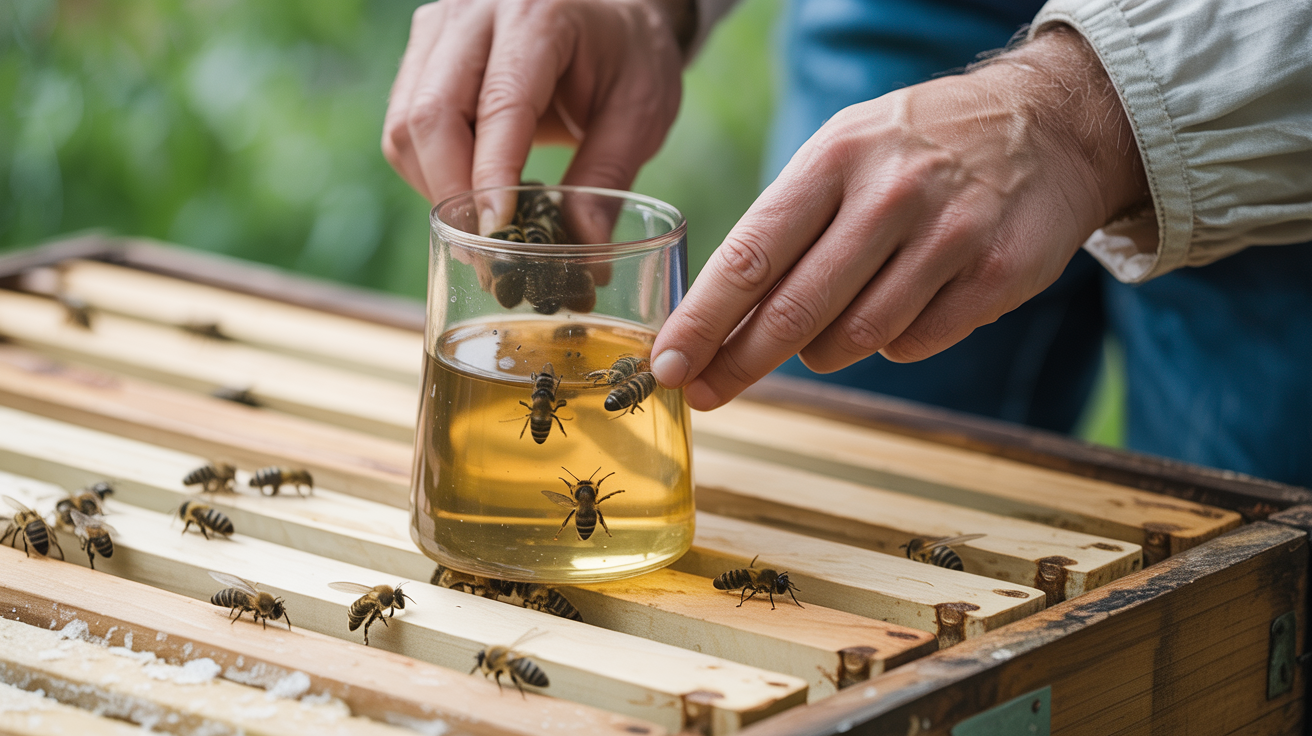
You cannot manage mites you have not counted. A sticky board or a quick glance at the brood can tell you mites are present, but neither gives you a number you can act on. Sampling roughly 300 bees from a brood frame takes about ten minutes and hands you a real mite-per-100-bees figure.
At a Glance
- A 300-bee sample (about half a cup) from a brood frame is the standard for both alcohol wash and sugar roll testing.
- Alcohol washes are more accurate, recovering close to 100 percent of mites; sugar rolls recover roughly 60 to 70 percent and let you return the bees alive.
- Main-season action threshold: 3 mites per 100 bees (9 in a 300-bee sample). Going into fall, that drops to about 2 percent (6 mites).
- Test at least four times a year: early spring, early summer, midsummer or late summer before the fall transition, and after treatment to confirm it worked.
- The math is simple: mites counted ÷ bees sampled × 100 = mites per 100 bees. With 300 bees, just divide the mite count by 3.
- A low count is not a guarantee. Mite populations can double in three to four weeks, so testing on schedule matters more than any single result.
Why a Wash Beats a Sticky Board or Eyeballing
Sticky boards are passive. They catch mites that fall naturally, and that rate depends on colony size, time of year, and how many bees are grooming. Two hives can show the same daily drop and have wildly different infestation levels. Eyeballing capped brood for deformed wings is similarly unreliable early in a buildup, when visible damage lags the actual load.
An alcohol wash or sugar roll samples a fixed number of bees and counts every mite on them. That gives you a percentage, and percentages are what treatment thresholds are based on. The Honey Bee Health Coalition's Varroa management resources, most state extension programs, and beekeepers who have watched colonies crash all point to the same conclusion: regular washes are the standard.
The alcohol wash is slightly more accurate because alcohol detaches mites that might cling through a sugar roll. Sugar rolls are useful when you want to return the bees to the hive, for example in a single-hive operation or when you are already near a threshold and want to retest after treatment without the additional loss.
Collecting a Good Sample
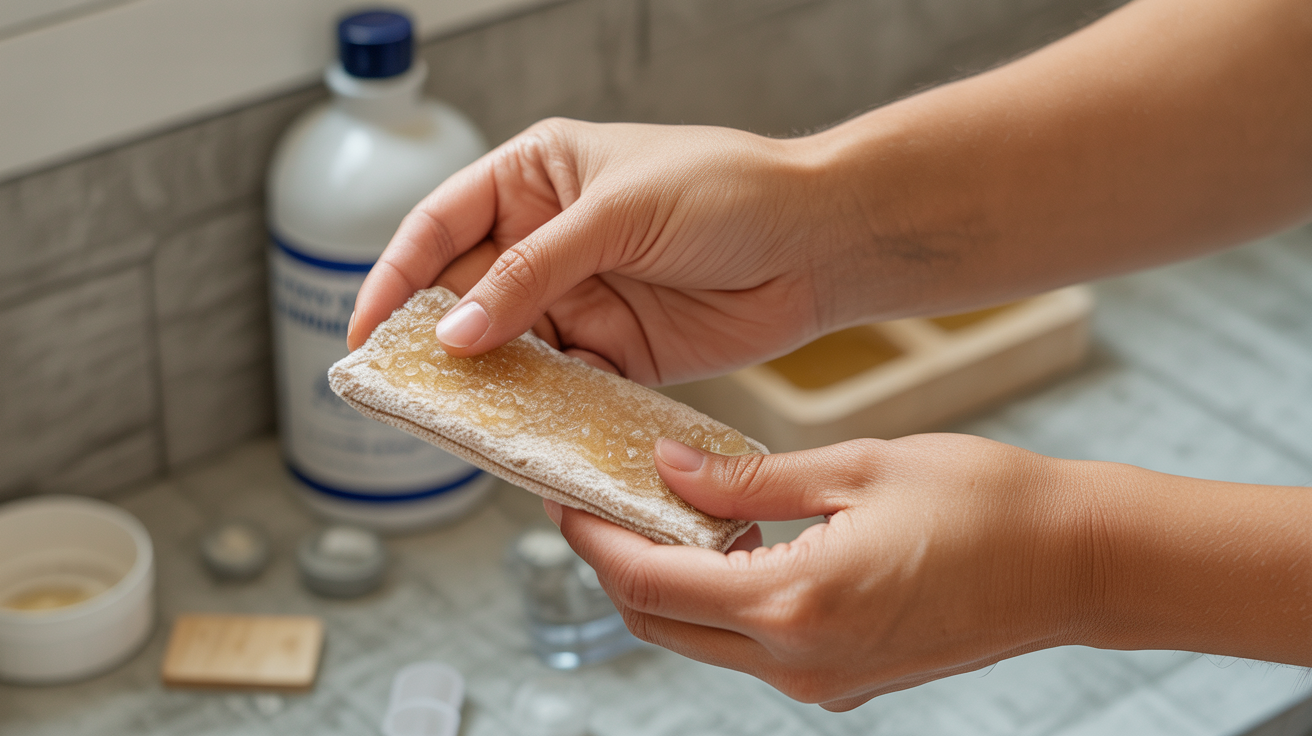
What You Need
- A wide-mouth mason jar with a mesh or hardware-cloth lid (1/8-inch hardware cloth works well)
- A second jar or measuring cup for the wash
- Rubbing alcohol (70%) or soapy water for an alcohol wash; powdered sugar for a sugar roll
- A white tray or light-colored container to count mites against
- A bee brush or a bare hand
Finding the Right Frame
You want nurse bees, the young adult bees that are actively attending capped brood. They carry the highest mite loads because mites reproduce in capped cells and hitchhike on emerging bees. Pull a frame from the center of the brood nest where you can see capped cells and open larvae being fed.
Collecting ~300 Bees Without the Queen
Hold the frame over the open hive and give it a sharp downward shake. Most bees drop back into the box. Look at what remains on the frame: if you see a mass of bees clustered in one spot, that cluster likely contains the queen. Brush those bees off gently and let them return. Remaining bees on capped brood are mostly nurses.
Tip the frame at an angle and let bees walk or brush into your jar until you have roughly half a cup of bees, which works out to around 300 bees. You do not need to count them individually. Close the lid firmly.
If you're worried about accidentally scooping the queen and don't want to risk it, an alternative some beekeepers use is to shake bees from two or three different frames into a bucket first, then scoop your sample from the pooled bees. This dilutes the odds of the queen ending up in the wash and can give a slightly more representative sample of the whole colony rather than one frame.
The Alcohol Wash, Step by Step
- Add roughly two cups of rubbing alcohol (70%) or a tablespoon of dish soap dissolved in two cups of water to a large jar or bucket.
- Hold your sample jar over the liquid and open the lid, shaking the bees directly in. Work quickly so stragglers do not escape.
- Close the container and shake vigorously for 30 to 60 seconds. This dislodges mites from the bees.
- Pour the liquid through the mesh lid of the original jar (or through a separate strainer) into your white tray. The bees stay in the jar; the mites pass through with the liquid.
- Add a second rinse of alcohol or soapy water, shake again, and pour that through as well. This catches mites that were not released the first time.
- Count the mites in the tray. They are tiny reddish-brown dots, roughly 1.5 mm across. A magnifying glass helps if you have one.
- Count the bees left in the jar. If your sample was close to 300, use 300 for the math. If not, use your actual count.
Penn State Extension's alcohol wash protocol uses this same half-cup, two-rinse method and recommends monitoring mite levels on a monthly basis so you can compare results over time rather than reacting to a single count.
The Sugar Roll, Step by Step
- Add two tablespoons of powdered sugar to the jar before or after collecting your bees.
- Close the lid and roll the jar slowly for 60 seconds, coating the bees thoroughly. The sugar causes mites to lose their grip.
- Let the jar sit for two minutes.
- Hold the jar upside down over your white tray and shake firmly for 30 to 60 seconds. Sugar and mites fall through the mesh; the bees stay inside.
- Add a small amount of water to the tray to dissolve the sugar, making the mites easier to see and count.
- Count the mites on the tray. Return the bees to the hive by opening the jar near the entrance.
Penn State Extension's sugar roll guide walks through the identical steps and uses the same 2 percent (6 mites per 300 bees) figure as the point where treatment becomes warranted, which lines up with the fall threshold below.
Sugar rolls typically recover 60 to 70 percent of the mites that an alcohol wash would find. If you are borderline on a threshold, consider confirming with an alcohol wash before deciding against treatment.
Doing the Math
The formula is straightforward:
Mites counted ÷ bees sampled × 100 = mites per 100 bees (%)
If you collected 300 bees and counted 9 mites, that is 9 ÷ 300 × 100 = 3%. A shortcut: with a 300-bee sample, simply divide mites counted by 3.
| Mites Found (300-bee sample) | Mite % | What to Do |
|---|---|---|
| 1–5 | 0.3–1.7% | Monitor monthly; no treatment needed |
| 6–8 | 2.0–2.7% | Watch closely; retest in 2–3 weeks |
| 9–15 | 3.0–5.0% | Treat now; mite load is at or above threshold |
| 16+ | 5.3%+ | Treat immediately; colony is at high risk |
These ranges apply during the main season. Going into fall, the threshold drops.
Action Thresholds and Seasonal Timing
The standard action threshold during the main nectar flow (spring through mid-summer) is 3 mites per 100 bees, or 9 mites in a 300-bee sample. At that level, the mite population is growing faster than the bee population and will cause serious harm within weeks.
Going into fall, lower that threshold to around 2% (6 mites per 300 bees). The reason is the winter cluster. Mites build up on the long-lived winter bees that a colony produces in late summer and early fall. A colony that enters winter at 2% infestation may be in serious trouble by February with no opportunity to intervene. Treating in August, before that winter-bee cohort is sealed in cells, does the most good.
In early spring, when brood production is limited, a wash can look artificially clean because there are fewer nurse bees and fewer cells for mites to reproduce in. Do not skip the spring test, but interpret a low count in context.
Threshold by Season, at a Glance
| Season | Action Threshold | Mites in 300-Bee Sample | Why It's Different |
|---|---|---|---|
| Spring (limited brood) | 2–3% | 6–9 | Low counts can be misleadingly reassuring; retest as brood ramps up |
| Main season (spring–midsummer) | 3% | 9 | Standard growing-season threshold |
| Late summer / pre-fall | 2% | 6 | Protects the winter-bee cohort before it's sealed in cells |
| Winter (broodless, optional) | No fixed threshold | Any count is informative | Broodless colonies are easy to sample; used mainly to plan spring management |
How Often to Test Through the Season
A reasonable testing schedule for a managed hive:
- Late April or early May (as brood production ramps up): establish your baseline.
- June: midseason check, especially if you are seeing high brood density.
- July or early August (before the fall transition): the most important test of the year. This is your window to treat while the mite population is still manageable and before winter bees are raised.
- September: verify that treatment worked; retreat if the count is still elevated.
- December or January (optional, during a warm spell): a broodless colony is easy to sample and gives you a winter read.
If a colony shows sudden behavioral changes (bees with deformed wings, patchy brood, a dramatic drop in population), test immediately regardless of your schedule. A late-season mite spike can accelerate faster than a monthly cadence catches.
For more on what to do once you have a count, see the guide to monitoring and treating varroa. And since mite-stressed colonies are more susceptible to secondary infections, it is worth knowing how to recognize American and European foulbrood and nosema as well.
Frequently Asked Questions
Is the alcohol wash more accurate than the sugar roll?
Yes, in most comparisons. Alcohol physically kills and dislodges mites, recovering close to 100% of the mites on the sampled bees. Sugar rolls typically recover 60 to 70 percent because some mites cling even through sugar coating. If you use a sugar roll and get a count near the threshold, confirm with an alcohol wash before deciding against treatment.
Will I accidentally kill the queen?
If you shake the frame before collecting and avoid any cluster of bees you see, the chance of scooping the queen is low. Queens spend most of their time on frames where laying is active, but they move. If you are worried, locate and cage the queen before sampling, pull your sample frame from a brood area you can see she is not on, or pool bees from multiple frames before drawing your sample. Losing 300 bees is a minor setback; the hive recovers in a few days.
How many bees do I actually need?
A 300-bee sample (about half a cup) is the standard. Smaller samples make the math less reliable. If you only get 200 bees, that is acceptable, but use your actual count in the formula, not 300.
How often should I test?
Four times a year at minimum (spring, early summer, late summer, fall), with late summer being the test you absolutely should not skip. If you are treating or monitoring a known problem colony, test every two to three weeks until the count is stable below threshold.
My count was low. Does that mean I am safe?
A low count is good news, not a guarantee. Mite populations can double in three to four weeks under the right conditions. A clean result in June says nothing about August. Keep testing on schedule, and remember that the sugar roll underestimates, so a borderline sugar-roll result probably warrants a follow-up alcohol wash.
Do I need to wash every hive in my apiary, or is one sample enough?
Test every colony separately. Mite loads vary a surprising amount between hives sitting a few feet apart, especially once robbing or drifting starts moving bees (and their mites) between colonies later in the season. A strong colony with a heavy mite load can look and behave fine right up until it collapses, so a single "representative" sample from your best hive will miss problems building in a weaker one. If you're short on time, prioritize testing your weakest-looking colonies and any hive that received bees or equipment from an outside source that season.