Colony Life
The Queen Bee: Mating, Laying, and Replacement
Learn queen bee facts every beekeeper should know: how she mates, how she lays, and how the colony replaces her through supersedure.
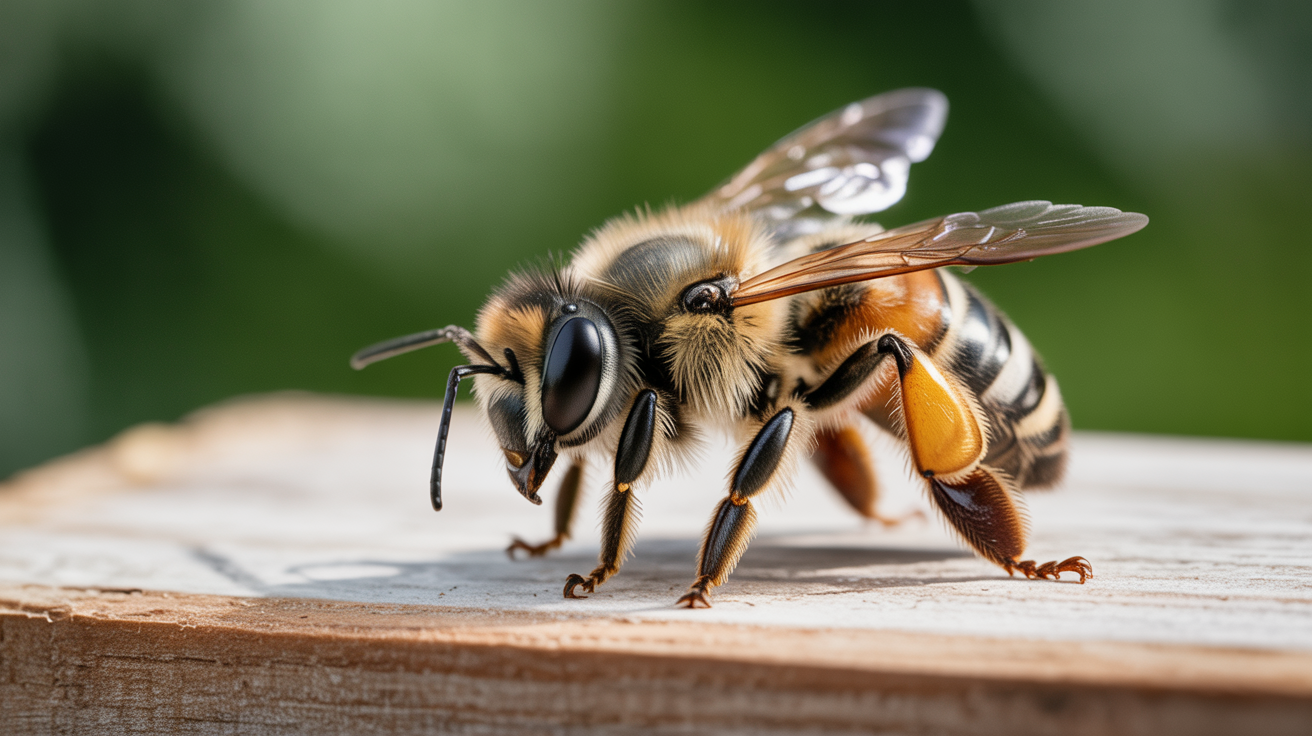
The queen is the only bee in the hive laying fertilized eggs, and the whole colony's future depends on her. Here is what actually happens during her mating flight, what her laying pattern tells you at an inspection, and how colonies handle replacement when she starts to fail.
How a Queen Bee Develops
A queen does not start out different from any other female bee. She hatches from the same fertilized egg a worker would hatch from. What sets her apart is the food she receives and the size of her cell.
Worker larvae are switched from royal jelly to a pollen-and-honey mixture after about three days. A queen larva is fed nothing but royal jelly throughout her entire larval stage. That continuous diet triggers a different developmental path: fully developed ovaries, a longer abdomen, and a lifespan measured in years rather than weeks. You can read more about how each bee type develops in our guide to the life cycle of a honey bee.
Queen cells look nothing like regular brood cells. They are peanut-shaped, hang vertically from the comb face or bottom bar, and measure roughly 25 mm long. A virgin queen chews her way out through the capped tip. If other capped queen cells exist when she emerges, she will often try to sting them through the wax, killing her rivals before they hatch.
Development timeline
| Stage | Duration |
|---|---|
| Egg | 3 days |
| Larva (in queen cell) | 5 days |
| Capped cell (pupa) | 8 days |
| Total egg to emergence | 16 days |
| Mating flights begin | 5-10 days after emergence |
| First eggs laid | 2-3 days after successful mating |
Compare that to workers at 21 days and drones at 24 days. The queen's faster development timeline matters during emergency replacements, because the colony needs a laying queen as quickly as possible.
How a Queen Bee Mates
A virgin queen does not mate inside the hive. She leaves on mating flights, typically 5 to 10 days after she emerges, once temperatures are above about 20 C (68 F) and skies are clear. These flights usually happen in the afternoon.
She flies to a drone congregation area (DCA), a specific airspace where drones from many different colonies gather. No one fully understands how drones and queens locate these zones, but the same spots are used year after year. Mating happens in flight, often 10 to 30 meters above the ground.
On a single flight, a queen mates with roughly 12 to 20 drones. Each drone dies immediately after mating because his reproductive organ tears away during the process. The queen may make two or three separate mating flights on different days to accumulate enough sperm.
Once she has mated, she stores all that genetic material in an organ called the spermatheca, a small sac near her abdomen. That stored sperm fertilizes eggs for the rest of her life, which can stretch three to five years. Because she has mated with many drones, the colony contains several genetic subfamilies of workers, which researchers believe contributes to colony resilience and disease resistance.
If weather is poor for several days after emergence, a queen may not get out to mate properly. A queen that never mates, or mates poorly, will only lay unfertilized eggs. Those eggs produce drones. A colony full of only drone brood has no future workers and will eventually collapse. Beekeepers call this a "drone layer." You can spot it at inspection: scattered drone-sized cells, often in the center of frames where worker brood normally sits, with a domed capping rather than the flat capping on worker pupae.
Queen Laying Eggs: Reading the Brood Pattern
A well-mated queen starts laying two to three days after her last mating flight. At peak season, she can lay 1,500 to 2,000 eggs per day, which is more than her own body weight in eggs every 24 hours.
She controls whether an egg gets fertilized based on the width of the cell. Worker cells are roughly 5.4 mm across. When her abdomen contacts the cell walls, she releases a fertilized egg. Drone cells are wider, about 6.4 mm, and she lays unfertilized eggs in those. A healthy queen almost never makes mistakes about this.
What a good brood pattern looks like: Pull a frame of capped brood and hold it up to natural light. A solid pattern means most cells are capped, with few empty gaps. A "spotty" or "Swiss cheese" pattern, with many skipped cells scattered through the brood area, is a warning sign. It can point to a failing queen, chalkbrood, sacbrood, or American foulbrood, so spotty brood always warrants a closer look.
A few things to keep in mind when reading the pattern:
- The brood nest has zones. The center frames hold the densest brood. Outer frames may look thinner even with a good queen.
- Laying workers muddle the picture. If a colony has been queenless for several weeks, workers develop the ability to lay. Their eggs are unfertilized, scattered, and often placed off-center in cells. Multiple eggs per cell is a telltale sign.
- Newly crowned queens start slowly. A queen that began laying a week ago will have a smaller brood patch than an established layer from last year.
For a broader look at how the queen relates to the rest of the colony, see inside the hive: queen, workers, and drones explained.
Supersedure: How the Colony Replaces the Queen
Supersedure is the colony's quiet, orderly method of replacing a queen that is failing but still alive. Workers seem to sense declining queen quality through pheromones. When queen mandibular pheromone output drops below a threshold, either from age, disease, or injury, workers start building supersedure cells.
Supersedure cells typically number one to three. They are built on the face of the comb, often toward the middle, rather than along the bottom bar where swarm cells cluster. This position is not a guaranteed rule, but it is a useful first indicator.
The colony usually tolerates both queens simultaneously for a short period after the new queen hatches. The daughter may even continue to lay alongside her mother for a few weeks before the older queen disappears. This overlap helps ensure continuity.
Supersedure vs. swarm preparation
These two situations look similar at first glance, but the beekeeper's response to each differs:
- Swarm cells appear along the bottom edges and sides of frames, often in clusters of five or more. The colony is preparing to split and swarm. The old queen will leave with roughly half the bees.
- Supersedure cells appear on the comb face, usually in smaller numbers. The colony has no plan to swarm; it simply wants a better queen.
Finding one or two mid-frame queen cells does not mean a swarm is imminent. Take a breath, confirm the existing queen's status, and watch what happens over the next week before intervening.
Emergency queen cells
If the queen dies suddenly, the colony responds faster and less selectively. Workers select larvae that are three days old or younger, build emergency cells around them, and flood those cells with royal jelly. Emergency cells can appear anywhere on the comb because workers build them wherever a suitable young larva happens to be. The resulting queens are functional, but the process is riskier than supersedure because workers have fewer choices about larval age and genetics.
When to Requeen and How to Read the Signs
Most beekeepers requeen every one to two years, not because the queen has failed outright, but as a management practice to keep egg-laying rates high and colony temperament manageable.
Signs it is time to requeen:
- Brood pattern has gone from solid to consistently spotty over multiple inspections
- Colony population has been declining through summer, not just a normal fall drawdown
- The queen is present but egg production is clearly thin
- The colony has become notably more defensive than in past seasons
- The queen is three or more years old
When you introduce a replacement, use a slow-release method: leave her in the shipping cage with the candy plug intact so workers accept her gradually over two to three days rather than balling her immediately.
A strong laying queen in spring drives the population surge needed for the main nectar flow. For more on that chain of events, see how bees make honey step by step.
Frequently Asked Questions
How long does a queen bee live? A well-mated queen can live three to five years, though most beekeepers replace her every one to two years to maintain peak output. A healthy queen kept by a hobbyist can lay productively for two full seasons before output drops noticeably.
Can you tell a queen bee from a worker bee by looking? Yes. The queen has a longer, more tapered abdomen that extends past her wing tips. Workers' abdomens are shorter and rounder. During a calm inspection, the queen moves more deliberately and workers tend to part around her.
What happens if a queen is lost during a mating flight? It does occur, especially with strong winds or bird predation. Workers detect the loss within a few hours and begin building emergency queen cells if young larvae are present. If no suitable larvae exist, the beekeeper must introduce a mated queen or combine the colony with a queenright one.
Why does a colony sometimes supersede a queen that seems to be laying fine? Workers assess queen quality through pheromones a beekeeper cannot detect by eye. A queen may look productive but be producing fewer chemical signals or laying more drone eggs than the brood pattern reveals. If you find supersedure cells alongside a queen that appears healthy, let the bees proceed. They are usually right.