Honey & Harvest
Propolis and Bee Pollen: What They Are and What to Do With Them
Learn what propolis is, how bees use it, and how hobbyist beekeepers collect both propolis and bee pollen from their hives.
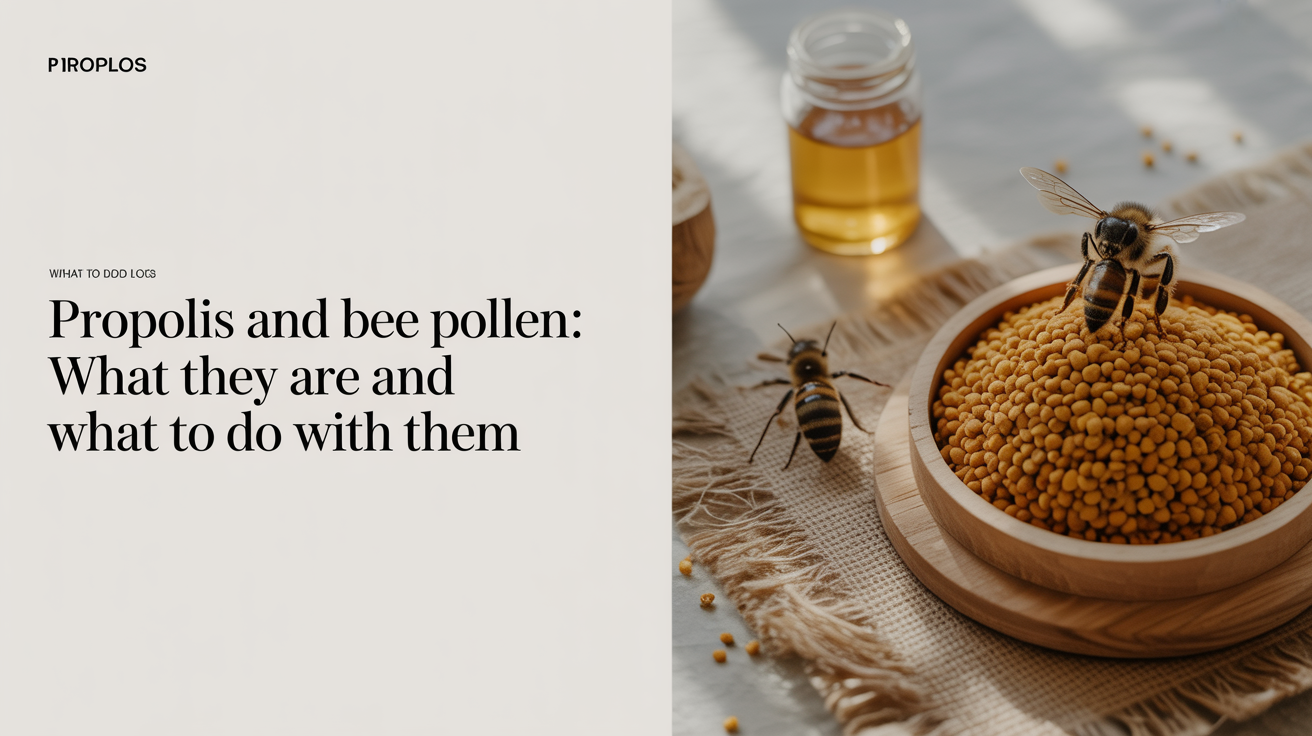
Propolis is the sticky, resinous substance bees gather from tree buds and bark, then use to seal gaps, coat surfaces, and defend the hive. Bee pollen, harvested from foragers by a pollen trap at the hive entrance, is a different product entirely. Both are worth understanding, and both can be collected by hobbyist beekeepers without disrupting a healthy colony.
What Is Propolis and Why Do Bees Make It?
Bees collect plant resins mostly from tree buds, bark wounds, and leaf surfaces. They mix those resins with wax and salivary secretions to produce propolis, sometimes called "bee glue." It is not honey, not wax, and not a byproduct of digestion. Forager bees carry it back in their pollen baskets and pass it off to house bees, who work it into whatever gaps need sealing.
Inside the hive, propolis does several jobs:
- Seals gaps and cracks. Bees prefer an entrance smaller than a certain size for ventilation and defense. Anything larger, they fill with propolis.
- Varnishes internal comb surfaces. A thin propolis coat on the inside walls acts as an antimicrobial lining before the queen lays in fresh cells.
- Encapsulates intruders. If a mouse or large insect dies inside the hive and is too heavy to haul out, bees will mummify it in propolis to prevent decomposition and bacterial spread.
- Reinforces frames and covers. This is the one you notice most at inspections: propolis glues frames together and sticks the inner cover to the top box.
The color ranges from pale yellow-green to deep red-brown to nearly black, depending entirely on which plants are available locally. Hives in areas with birch, poplar, and alder typically produce lighter, more aromatic propolis. Hives near pine stands produce darker, stickier material.
How to Collect Propolis from Your Hive
There are two practical methods for backyard beekeepers.
Propolis Traps
A propolis trap is a thin sheet of flexible plastic or rubber with a grid of small slits cut into it. You lay it across the top bars in place of the inner cover and leave it for several weeks. Bees fill every slit with propolis, sealing the gaps as they would any other opening. To harvest, remove the trap, put it in a zip-lock bag, and place it in the freezer overnight. Frozen propolis becomes brittle. The next morning, flex and twist the trap over a clean container and the propolis chips out cleanly. A single trap can yield 50 to 200 grams depending on the colony and season.
Traps are inexpensive, the process is clean, and the bees barely notice. This is the best method for anyone who wants a consistent yield.
Frame and Hive Body Scrapings
Every time you do a hive inspection, propolis builds up on your hive tool. Many beekeepers scrape frame ears, the rebate on box tops, and the bottom board into a clean jar. The material is mixed with wax, dead bees, and debris, so it needs filtering before use. Melt it gently in a double boiler (not direct heat), pour through cheesecloth, and the propolis-wax blend separates somewhat as it cools.
This method gives you a cruder product but requires no extra equipment and adds no steps to your normal inspection routine.
Timing and Colony Impact
Propolis collection peaks in late summer and early autumn, when bees start winterizing the hive. Collecting at this time does not harm the colony; bees replace it quickly. Avoid pulling a propolis trap during a strong nectar flow, when bees are focused on comb building and will be slower to fill the trap.
What to Do with Propolis
Raw propolis straight from the trap has a waxy, resinous smell. Before you do anything with it, freeze it briefly and remove obvious wax chunks and bee parts. From there, the most practical use for hobbyist quantities is an alcohol tincture.
Making a propolis tincture:
- Weigh out your cleaned propolis. A 1:5 ratio works well: 10 grams propolis to 50 ml of high-proof alcohol (70% isopropyl or food-grade grain alcohol).
- Combine in a small glass jar with a tight lid.
- Shake daily for two to four weeks.
- Filter through a coffee filter into a dark glass bottle.
The resulting tincture is a deep amber liquid. Some beekeepers apply it to minor cuts; others use it as a wood varnish for cutting boards or salve tins. It also works as a hive tool cleaner and can coat the inside of a new wooden swarm trap, since bees are drawn to the scent.
A quick-reference table on common uses for hobbyist-scale propolis:
| Use | Form Needed | Notes |
|---|---|---|
| Topical skin application | Tincture | Dilute before use; test on a small area first |
| Wood finish for small items | Raw or tincture | Color varies by source tree; not food-contact approved |
| Swarm trap attractant | Tincture | Wipe inside walls; let dry |
| Hive tool cleaning | Tincture | Cuts waxy buildup |
| Beeswax-propolis blend | Melted and filtered | Good for wood conditioning |
Bee Pollen: What It Is and How to Collect It
Bee pollen is different from propolis in every way except that bees bring both back to the hive on their hind legs. Forager bees pack pollen into their pollen baskets by moistening it with nectar, forming the dense pellets you see in bright orange, yellow, purple, and white at the hive entrance. Once inside, bees tamp pollen into cells where it ferments into "bee bread," a protein source for the larvae and nurse bees.
Installing a Pollen Trap
Pollen traps fit over the entrance or the bottom board and have a grid with holes slightly smaller than a bee's pollen baskets. As a forager walks through, the basket scrapes against the grid and the pollen pellets fall into a collection drawer below. The bee still gets through; she just loses her pollen load in the process.
A few practical points:
- Do not run a pollen trap full-time. Colonies need pollen reserves for brood rearing. Two to three days on, then several days off is a reasonable rotation during a strong flow.
- Empty the drawer daily in warm weather. Pollen is high in moisture and spoils quickly; it should go straight to the freezer or a dehydrator.
- Watch for robbing. A trap alters the entrance in ways that can make it harder for bees to defend during dearth. Monitor the entrance behavior when first installing.
Drying and Storing Pollen
Fresh pollen pellets contain roughly 20 to 30 percent moisture and will mold within a day or two at room temperature:
- Freeze immediately. Put pellets in a sealed container and freeze. They keep for up to a year this way with no loss of quality.
- Dehydrate. Spread pollen in a thin layer on a dehydrator tray at the lowest setting (around 95 to 100 degrees Fahrenheit). Four to six hours drops moisture below 8 percent; store in an airtight jar away from light.
Avoid temperatures above 110 degrees Fahrenheit; heat degrades the enzymes and proteins.
How Propolis and Pollen Fit Into Your Harvest Season
Honey usually takes priority at harvest time. If you want to add propolis and pollen to your routine without overcomplicating it, here is how they slot in naturally:
- Install a propolis trap in late July or August. Harvest it in early September before the fall cluster forms.
- Run a pollen trap during strong spring and summer flows when pollen comes in heavily and there is clearly a surplus.
- Process pollen and propolis during the same sessions you use for extracting honey at home.
Before any harvest, confirm the colony has enough stores. The rule for honey applies loosely to pollen too: you can take surplus, but not at the colony's expense. For guidance on leaving enough for the colony heading into winter, see how much honey to leave bees for winter and apply the same conservative logic to capped pollen reserves in the brood nest.
Pollen and propolis collection should never come before the colony's needs. A colony short on protein stores in late summer goes into winter weaker.
Frequently Asked Questions
Can I collect propolis from any hive? Yes, but output varies widely. Italian bees are generally lighter propolis producers. Russian, Caucasian, and some feral-lineage colonies produce far more. If your hive is covered in propolis at every inspection, you have a strong propolis-producing stock and a propolis trap will pay off quickly. A cleaner hive may yield very little.
Is it safe to handle raw propolis? Most people handle it without issue. A small percentage of people with tree resin allergies can have a skin reaction. Wearing gloves when first handling raw propolis is a sensible precaution, especially if you have reactions to adhesive bandages or certain plants.
Can I eat bee pollen I collect from my hive? Pollen collected by bees from local plants is the same pollen that causes seasonal allergies in some people. Start with a very small amount if you plan to eat it, and do not give it to anyone with known pollen or bee product allergies. This is one area where the site disclaimer applies directly: consult a healthcare provider if you have any doubts.
Does collecting pollen hurt the bees? Short-duration trapping during a genuine surplus flow has minimal impact. Leaving a trap in place for weeks or running it during a dearth can reduce protein intake for the brood and stress the colony. Use it sparingly and monitor brood health.
How do I know if my honey is ready to harvest? The capping of frames is the clearest indicator. See when honey is ready to harvest for how to read frames before pulling supers.