Bee Health
How to Tell If Your Hive Is Queenless
Learn the key queenless hive signs every beekeeper should know, from no eggs to laying workers, and how to fix a queenless hive before the colony collapses.
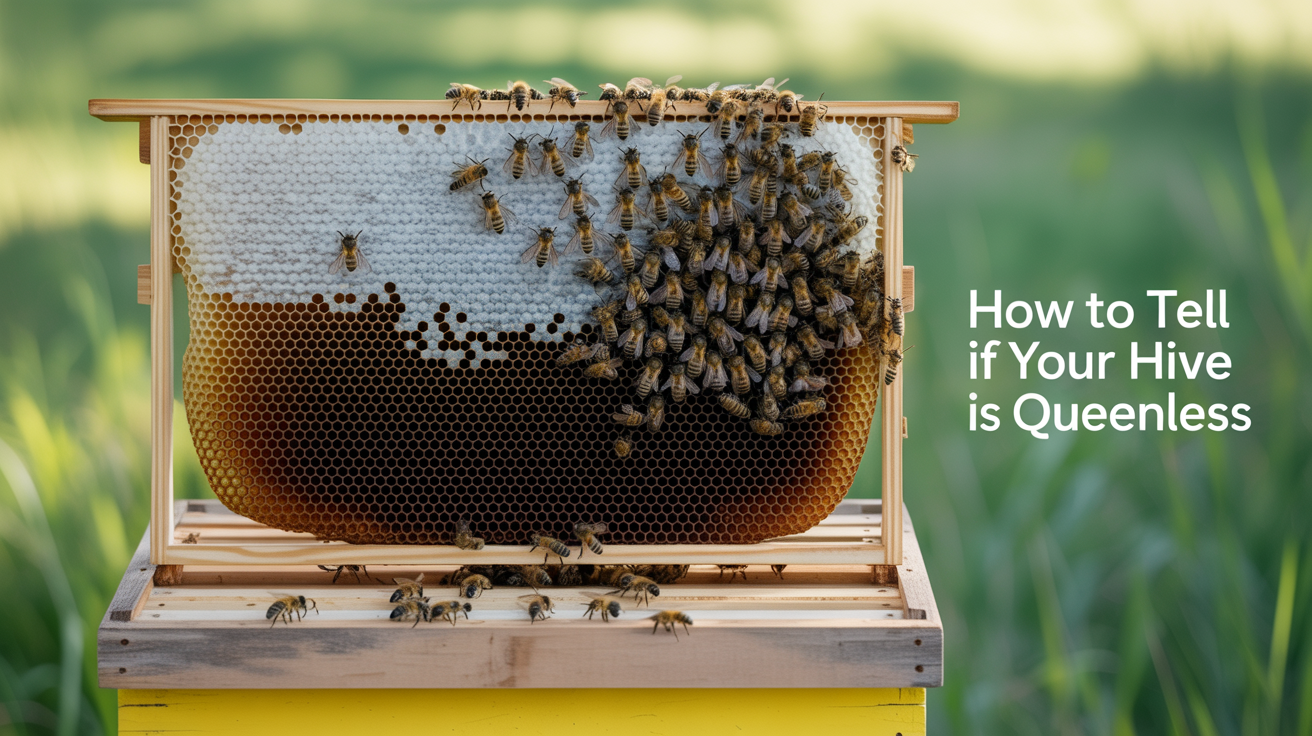
A queenless hive will tell you something is wrong within a week or two of losing her. You just need to know what to look for at your next inspection.
Why Queens Go Missing
Before listing the signs, it helps to understand how a colony ends up without a queen. Common causes include:
- Swarming: The old queen left with part of the colony. A virgin queen should emerge from swarm cells, but she can fail to mate or get lost on a mating flight.
- Supersedure failure: The colony attempted to replace an ailing queen, but the new queen never mated successfully.
- Accidental death: Rolling her during an inspection or shaking frames too aggressively. This happens more often than beekeepers admit.
- Old age: Queens typically live two to four years, but productivity drops off sharply after year two. A failing queen can become a lost queen quickly.
- Laying worker development: If the colony has been queenless for three to four weeks with no replacement, workers with underdeveloped ovaries begin laying unfertilized eggs. This is a late-stage sign, not an early one.
Early Queenless Hive Signs (Days 1 to 14)
Catching a queenless situation early gives you the most options. These are the things to check at your next inspection.
No Eggs in the Hive
Eggs are the most reliable indicator. A queen lays continuously, so fresh eggs (tiny white grains standing upright at the base of a cell) confirm she was present within the last three days. No eggs in any brood frame means the hive has been without a laying queen for at least that long.
Get your face close to the frame and tilt it toward natural light. Eggs disappear in dim conditions. A head torch aimed down into the cells makes them much easier to spot.
Unusual Temperament
A queenless colony often becomes agitated or "roary," a low restless hum that is different from normal colony sound. Bees may rush toward your hands or veil more than usual. Some colonies go the other direction and seem eerily listless.
Neither behavior is conclusive on its own, but combined with absent eggs it is a meaningful signal worth noting.
Emergency Queen Cells
If the colony lost its queen within the past week and still had young larvae (under three days old) when she died, the workers will build emergency queen cells. These look different from planned swarm cells:
- Location: Pressed onto the face of the comb, not hanging from the bottom edge like swarm cells
- Shape: Lumpy, peanut-shaped, often built into an existing worker cell
- Number: Anywhere from one to a dozen, scattered across the brood frames
Finding emergency cells means the colony recognized it was queenless and had larvae young enough to work with. Check whether any cells are already capped or have an emerged queen (a torn, ragged opening at the base). If so, a virgin queen may already be somewhere in the hive.
Shrinking Brood Area Over Time
You will not see this on a single inspection, but checking the same hive a week or two apart tells the story. A healthy laying queen produces a solid, predictable pattern of capped worker brood. A colony that lost its queen two weeks ago will still have capped brood from her last eggs, but nothing new behind it. The brood box starts to look emptier each visit.
Late Queenless Signs: Laying Workers
If a hive has been queenless for three to five weeks with no replacement queen, laying workers become the problem. Worker bees can lay eggs, but only unfertilized ones that produce drones.
| What You See | What It Means |
|---|---|
| Multiple eggs per cell (2 to 5 or more) | Workers laying, not a queen |
| Eggs on the cell walls instead of the base | Workers are shorter; they reach only partway down |
| Scattered, irregular brood pattern | No single queen laying in systematic rows |
| Drone brood in worker-sized cells | Unfertilized eggs become drones |
| Domed capping over worker-sized cells | Drone pupae need extra height |
A laying worker hive is significantly harder to fix than a recently queenless one. The pheromones from laying workers mimic queen signals, which suppresses acceptance of any new queen you try to introduce.
How to Fix a Queenless Hive
Your options depend on how long the hive has been queenless.
Within the First Two Weeks
If you catch it early and find emergency queen cells, the simplest fix is to wait. Let the colony raise its own queen. Mark your calendar: a new queen needs about 16 days to develop from egg to adult, then another five to seven days before she takes mating flights, then two to five more days before she starts laying. You may wait four weeks from the point you notice the queenless state before seeing fresh eggs.
If there are no viable queen cells (perhaps the colony had no young larvae when she died), two other options are available:
- Add a frame of open brood from another hive: This gives the colony material to raise a queen from and also slows laying worker development if caught early. Repeat the brood donation every five to seven days until cells appear.
- Purchase and introduce a mated queen: The fastest path back to normal. Queenless colonies can be defensive toward new queens, so a slower five-day introduction via candy plug is safer than a direct release.
With Laying Workers Present
This is the most difficult situation to correct. Options include:
- Moving the hive and shaking all bees out on the ground away from the stand: Laying workers are poor fliers and may not return. This is disruptive and not practical late in the season.
- Combining with a strong queenright colony using the newspaper method: Dilutes the laying workers and lets the queenright colony's pheromones take over.
- Requeening with multiple brood frame donations before introduction: Add a frame of open brood with nurse bees every five days for two or three cycles to shift the hive's pheromone balance before attempting to introduce a mated queen.
Not every laying worker hive is worth saving. Late in the season, combining a failing queenless colony with a healthy queenright one is often better for both.
Building Better Inspection Habits
Getting in the habit of checking for eggs at every visit means queenless conditions rarely sneak past two weeks undetected. A quick checklist:
- Eggs present? (Check brood frames with light angled down into the cells)
- Young larvae visible? (Comma-shaped, pearly white, floating in royal jelly)
- Capped brood pattern solid and consistent with prior visits?
- Any emergency or supersedure queen cells?
- Colony temperament consistent with how this hive normally behaves?
If all five look normal, your queen is almost certainly working. If any flag raises concern, come back in three to five days rather than waiting for your next scheduled visit.
A high mite load can shorten a queen's life or reduce drone viability, which makes queenlessness more likely in late summer. Staying on top of varroa mite levels and running a mite wash or sugar roll during routine inspections helps you connect the dots if a queen problem appears alongside high mite counts.
If the brood pattern looks irregular and cells are sunken, discolored, or have an off smell, also rule out American and European foulbrood before assuming the problem is the queen.
Frequently Asked Questions
How long can a hive survive without a queen? A colony can last several weeks after losing a queen, but population decline starts immediately because no new workers are being raised. By eight to ten weeks, the original workers are dying off faster than any replacements can arrive. Laying workers extend the colony's life, but only with drones that cannot do colony work or survive winter.
Can I confirm a queenless hive without actually finding the queen? Yes. Eggs are far more reliable than spotting the queen herself. Queens move quickly and hide in corners. Fresh eggs give you a three-day window on her activity without needing to locate her on the frame.
Why are my bees more aggressive than usual? Heightened defensiveness is one queenless hive sign, but it also occurs before a storm, during a nectar dearth, or after nighttime harassment from a skunk or raccoon. Check for eggs first. If eggs are absent and the mood shift is recent, queenlessness is a likely cause.
How do I know if a virgin queen is already in the hive? Virgin queens are slimmer than mated queens and move fast across the comb. They are genuinely difficult to spot. If you find empty queen cells with the cap torn at the base but no eggs yet, give the hive two more weeks before intervening. Mating flights take time, and opening the hive frequently can cause a virgin queen to be lost during inspection.
When is it better to combine a queenless hive rather than requeen it? If the hive is queenless in September or later in northern climates, requeening often does not leave enough time for the new queen to build a population that can survive winter. Combining a failing queenless colony with a strong queenright one is usually the smarter call for both hives.