Colony Life
How Bees Communicate: The Waggle Dance and Pheromones
Learn how bees share information through the waggle dance and chemical signals, and what it means for your hive inspections.
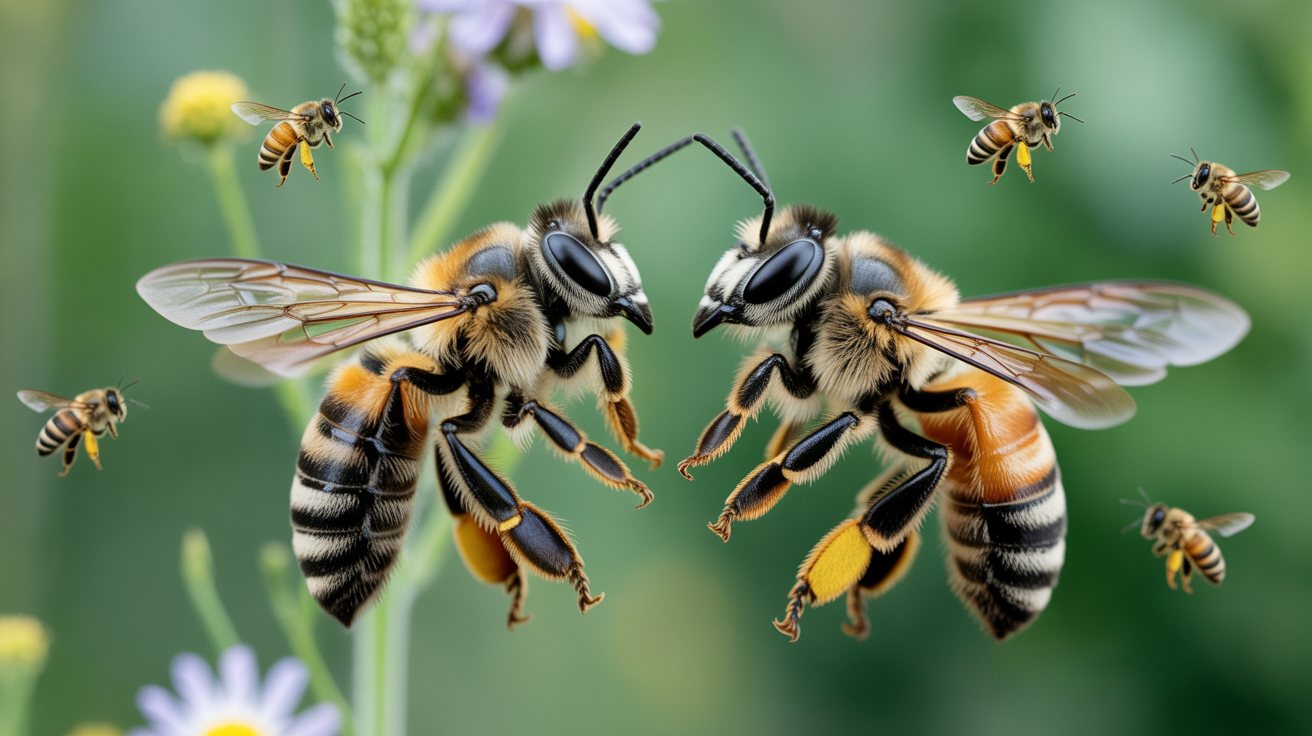
Bees have no mouths in the conversational sense, yet a colony of 50,000 individuals stays remarkably coordinated. They manage this through two main systems: physical movement (the waggle dance) and chemistry (pheromones). Understanding both gives you a real edge as a beekeeper.
The Waggle Dance: Giving Directions in the Dark
A forager bee that finds a good nectar or pollen source doesn't just fly back to the hive and eat. She performs a specific figure-eight movement on the comb face that tells her sisters exactly where to go.
The dance was decoded in detail by Austrian biologist Karl von Frisch in the mid-twentieth century. The core pattern works like this:
- The straight run (the middle stroke of the figure eight) points toward the food source relative to the sun's position.
- The duration of the waggle encodes distance. A short waggle run means a nearby source; a longer one signals something farther out.
- The vigor and speed of the dance loosely signal quality. A bee that found exceptional forage dances more enthusiastically, which recruits more followers.
On vertical comb, straight up equals "fly toward the sun." Straight down means "fly away from the sun." If the food is 30 degrees to the right of the sun, the bee runs 30 degrees to the right of vertical. Bees constantly adjust for the sun's movement across the sky, so a dance performed at noon differs from one performed at 3 p.m. for the same food patch.
Bees following the dance touch the performer with their antennae, sampling her vibration patterns and the scent she carries from the source. Within minutes, a handful of bees can be recruited to a specific flower patch miles away.
The Round Dance: Short-Distance Signals
For sources closer than about 50 to 80 meters, bees use a simpler round dance rather than a full waggle run. They circle in alternating directions without a clear straight run, which signals "food is close, search nearby" without giving precise coordinates. Distance is estimated differently in different bee strains, so this threshold varies.
What Dances Tell You as a Beekeeper
If you watch your landing board through a hive window or observe bees on an empty top bar, you can sometimes catch dance activity. High-energy waggle dancing on warm afternoons usually means the colony is finding something worth recruiting to. Muted or absent dancing in good foraging weather can signal a weaker colony or a nectar dearth, which is worth noting alongside your other hive checks.
Pheromones: The Chemical Layer
While dances move information fast, pheromones shape the colony's long-term behavior and identity. Bees produce chemical signals from several glands, each with a distinct function.
Queen Mandibular Pheromone
The queen mandibular pheromone (QMP) is the most studied signal in the hive. The queen produces it from glands near her mouthparts, and worker bees spread it through the colony by touching and grooming her.
QMP does several things at once:
- It suppresses the workers' ovaries, keeping them sterile as long as a healthy queen is present.
- It discourages workers from building queen cells.
- It acts as a short-range attractant that draws workers toward the queen.
- It plays a role in swarm cohesion, helping the swarm cluster hold together around the queen after she departs the hive.
When you open a hive and find the workers calm and clustered normally on the frames, QMP is doing its job. A queenless colony feels different: bees often move in fast, disorganized patterns, and you may hear a higher-pitched hum. These are signs that QMP has dropped off and the colony is stressed. Learning to read this changes how quickly you can diagnose a problem.
For more on how the queen fits into the hive hierarchy, see Inside the Hive: Queen, Workers, and Drones Explained.
Alarm Pheromones
Two main alarm signals are released when bees feel threatened.
The first comes from the sting apparatus. When a bee stings, a banana-scented compound called isoamyl acetate releases alongside the venom. This compound marks the target and recruits nearby bees to defend the same spot. It's why a single sting near a calm hive can quickly escalate if you don't move away or use your smoker.
The second alarm signal comes from the Koschevnikov gland, also located near the sting. It amplifies defensive behavior and encourages fanning, which spreads the alarm further through the colony.
Practical implications for inspections:
- Keep your smoker lit and use it at the entrance and under the cover before opening.
- If you get stung, puff cool smoke over the sting site immediately to mask the isoamyl acetate.
- Avoid inspecting during hot afternoons, which is when bees are naturally more defensive.
Nasonov Pheromone
The Nasonov gland sits near the tip of a worker's abdomen. Bees fan it by raising the abdomen and beating their wings, releasing a citrus-like blend of compounds that acts as a homing signal.
You'll see this behavior in a few situations:
| Situation | What the bees are doing |
|---|---|
| Swarm cluster forming | Fanning to call flying bees back to the cluster |
| Bees returning to the hive entrance | Orienting new foragers to the exact entrance location |
| Water foragers at a water source | Marking the source as safe and desirable |
| Bees after a hive move | Re-orienting to the new entrance position |
If you're rehousing a captured swarm and see a group of bees fanning at the entrance of the new box, that's a good sign. They're calling the stragglers in.
Footprint Pheromones
Bees also leave chemical residue from glands in their feet. These tarsal pheromones mark the entrance as home, worn landing boards, and even flowers that have already been visited. Some flower-footprint signals tell incoming foragers a bloom has recently been worked and may not have refilled yet, nudging them to move on.
How the Systems Work Together
The waggle dance and pheromone signaling aren't separate systems running in parallel. They reinforce each other.
A forager returning from a strong nectar flow brings floral scent on her body. Attendants smell it while watching her dance, which helps them recognize the source when they arrive. If the nectar is high quality, the dancer also releases Nasonov pheromone during her recruitment run, adding a chemical emphasis to the physical message.
Meanwhile, QMP keeps the whole colony's reproductive state stable while this foraging coordination happens. Worker bees freed from ovary development can focus on other tasks, from capping cells to guarding the entrance to following the dance floor activity. The colony functions as a unit because chemistry and movement keep everyone calibrated.
This coordination is also why colonies respond quickly to sudden changes. When QMP drops after a queen dies, the whole colony adjusts within hours. Understanding these signals helps you read changes early rather than discovering a queenless hive three weeks later.
For context on how individual bees develop into foragers capable of learning and performing these dances, see The Life Cycle of a Honey Bee: Egg to Forager.
And if you've ever wondered how recruited foragers turn collected nectar into honey once they return, How Bees Make Honey Step by Step covers the full process inside the hive.
What to Watch for During Inspections
You can use your knowledge of bee communication to gather information every time you open the hive.
- Bees fanning at the entrance with raised abdomens often means Nasonov release. Check whether they're reorienting after a move, signaling swarm activity nearby, or calling in stragglers.
- Rapid, frenetic movement across the top bars when you remove the cover suggests queenlessness or a recent disturbance. Slow, purposeful movement is a sign of a settled colony.
- Bees following your movements closely after an initial puff of smoke often means alarm pheromone has already spread. Apply more smoke to the area and slow your movements.
- Vibration noise changes as you work through frames. A steady low hum is normal. A sharp, rising tone means the colony is becoming alert. Smoke and slow down.
None of these signals are foolproof, but they're real data points. Combined with what you see on the frames, they build a picture of the colony's state faster than any single observation.
Frequently Asked Questions
Can bees communicate at night? Yes. Foraging stops at night, but pheromones circulate continuously, and bees can perform the waggle dance inside the dark hive using vibration rather than visible movement. Attendant bees pick up the signals through touch and antennae contact.
Does smoke interfere with pheromone communication? Smoke masks alarm pheromones effectively, which is its main purpose during inspections. It doesn't significantly disrupt QMP or Nasonov signaling at normal quantities, but heavy cold smoke can temporarily disorient a colony. Use moderate, well-lit smoke for routine inspections.
Why do bees sometimes swarm even when the hive seems healthy? Swarming is triggered partly by QMP failing to reach all workers in a crowded hive. When the pheromone can't spread evenly through a packed population, workers begin preparing swarm cells. Managing space before the peak of spring buildup reduces swarm pressure significantly.
Can different bee strains interpret dances differently? Strains vary in dance thresholds (how far a source needs to be before they switch from round to waggle dancing) and in how precisely they follow directional cues. Broadly consistent across Apis mellifera subspecies, but minor dialect-like differences exist between geographically separated populations.
Do other bee species use the waggle dance? Only honey bees in the genus Apis use the full waggle dance. Stingless bees use sound bursts and scent trails. Bumblebees use a simpler excitement display that doesn't encode direction or distance precisely. The waggle dance appears to be specific to Apis, having evolved over tens of millions of years.