Bee Health
Feeding Bees: Sugar Syrup, Fondant, and Pollen Patties
When and how to feed your bees with sugar syrup, fondant, and pollen patties. Ratios, timing, feeder types, and common mistakes for beginners.
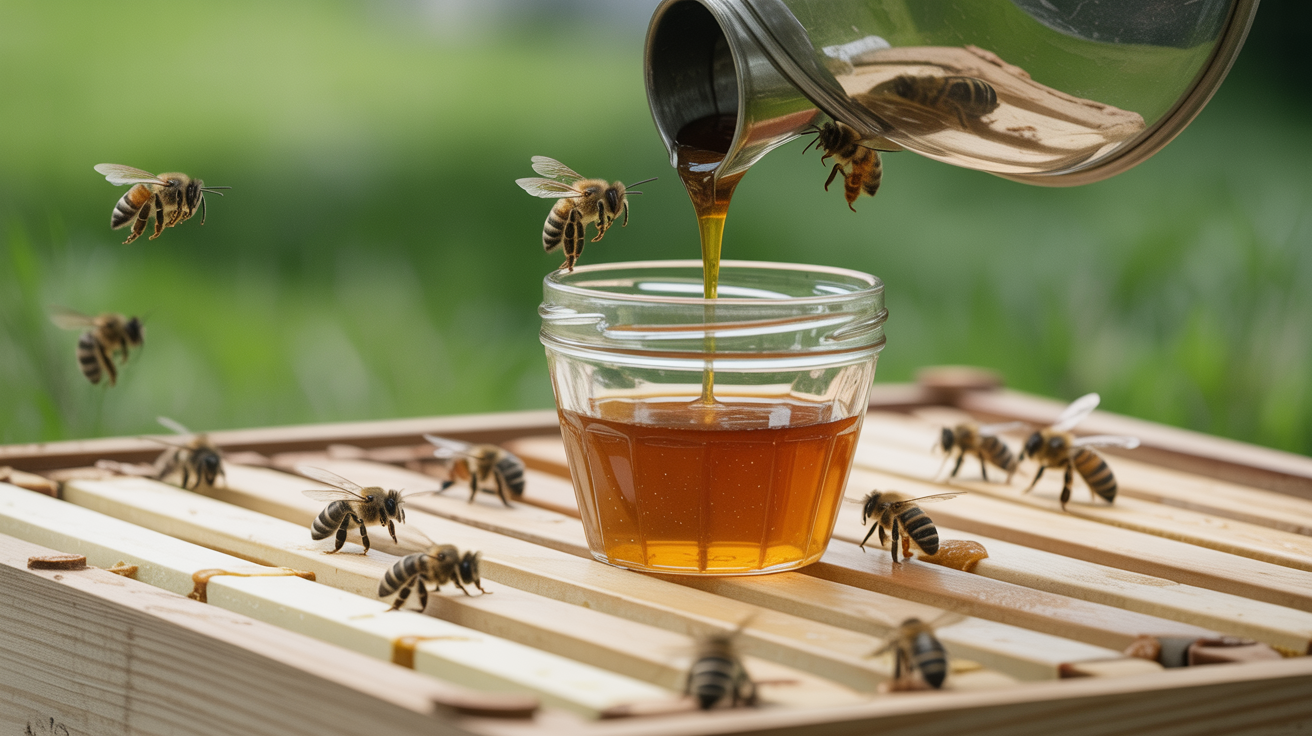
Supplemental feeding keeps a colony alive through dearth, builds it up in spring, and gives a safety net when stores run short heading into winter. The decisions are straightforward once you understand what each feed type actually does.
Why Bees Need Supplemental Feed
Bees are foragers by nature. A strong colony in a good nectar flow does not need anything from you. But several situations call for supplemental feed:
- Nectar dearth: high summer or mid-winter periods when little or nothing is blooming
- Spring buildup: early in the season before natural forage opens, when the colony needs to raise brood but stores are thin
- New packages and nucs: a fresh install has no honey stores and needs carbohydrates while workers draw comb and the population builds
- Post-treatment recovery: after a varroa treatment that stresses the colony, or when you have removed a significant amount of honey
- Winter insurance: if your late-summer inspection reveals stores below the recommended threshold (roughly 60 to 80 lbs of honey for a full-depth Langstroth, depending on your climate)
Feeding is not a substitute for good management. A persistently weak colony may have an underlying problem -- disease pressure, low brood viability, or a failing queen -- that syrup alone will not fix. Check the frames, not just the feeder.
Sugar Syrup: Ratios, Mixing, and When to Use Each
Sugar syrup is the backbone of bee supplemental feeding. You dissolve plain white granulated sugar in water at one of two ratios, depending on the time of year and what you are trying to accomplish.
1:1 Ratio (Spring and Summer)
One part sugar to one part water by weight or volume. This thin syrup is easy for bees to process and mimics the consistency of a light nectar flow. Use it to:
- Stimulate brood rearing in spring when forage is thin
- Feed packages or nucs while they get established
- Encourage comb drawing on new frames
Bees take 1:1 readily in warm weather. Because it contains more water, they have to evaporate it down before capping it, so do not expect them to store it efficiently. It is for consumption and stimulation, not winter stores.
2:1 Ratio (Late Summer and Fall)
Two parts sugar to one part water. This thicker syrup is closer to finished honey in sugar concentration, which means less evaporation work for the bees and a better chance they will cap it as stores. Use it to:
- Build up winter stores before the end of the foraging season
- Top off hives that came up short during your fall inspection
- Boost a hive recovering from a late-season stress
Stop feeding 2:1 once overnight temperatures drop below about 50F (10C). Bees will not break cluster to visit a feeder, and wet syrup in cold weather can promote fermentation and chilled brood.
Mixing tip: Hot water dissolves sugar faster, but you do not need to boil it. Stir white granulated sugar into hot tap water until clear. Do not use brown sugar, raw sugar, molasses, honey from an unknown source, or corn syrup as a substitute. Impurities cause dysentery, and foreign honey risks introducing American foulbrood or European foulbrood spores.
Feeder Types at a Glance
| Feeder Type | Best For | Notes |
|---|---|---|
| Entrance feeder (Boardman) | Packages, observation | Small capacity; visible robbing risk in dearth |
| Frame feeder (division board) | In-hive, less disturbance | Holds 1 to 2 qt; bees can drown without floats |
| Top feeder (hive-top) | Large volumes, winter prep | 1 to 2 gallon; minimal inspection disruption |
| Bag or zip-lock feeder | Budget option, one-time use | Place bag over frames, punch small holes |
| Bucket or jar feeder | Small operations | Inverted over hole in inner cover |
Frame feeders and top feeders are the workhorses for most backyard beekeepers. Entrance feeders look convenient but invite robbing behavior from neighboring colonies during a dearth. Use them only in the first week or two after installing a package, when your bees are housebound.
Fondant and Candy Boards
Fondant is sugar with minimal water content, formed into a solid or semi-solid mass. It serves a different purpose than syrup: it is emergency winter feed that bees can access when it is too cold for liquid.
When a colony in February runs out of honey and the cluster is too tight to move to another frame, fondant placed directly over the cluster hole in the inner cover gives them carbohydrates without requiring them to break cluster. It is a lifeboat, not a feeding program.
Making fondant: The simplest method is a no-cook fondant. Mix roughly 15 lbs of granulated sugar with about 1/2 cup of water, stir into a stiff paste, and press it into a foil pan or candy board frame. Let it harden. Some beekeepers add a tablespoon of apple cider vinegar to lower pH and discourage nosema, though the evidence for that benefit is modest.
Candy boards are a pre-made version you can buy or build -- a shallow frame filled with hardened sugar that sits on top of the upper box. Many northern beekeepers install them every November regardless of stores, because the sugar is far cheaper than a lost colony.
Do not use fondant as a primary feeding strategy in spring and fall. Syrup is cheaper, more efficient, and better for stimulating brood.
Pollen Patties: When Protein Matters
Carbohydrates keep bees alive. Protein is what lets them raise brood. A larva's diet is almost entirely pollen-derived, fed as brood food by nurse bees. Without adequate pollen stores, a colony can starve its brood even while it has plenty of honey.
Pollen patties are compressed cakes of pollen substitute -- usually a blend of soy flour, brewer's yeast, and sometimes real pollen -- placed directly on top of the frames above the cluster or brood nest.
When to Use Pollen Patties
- Late winter into early spring: before natural pollen is available, to kickstart brood rearing in preparation for the spring flow
- Mid-summer dearth: if your area hits a stretch with no blooming plants and you see bees neglecting brood cells
- After packages or splits: a fresh colony often lacks the pollen stores to sustain early brood
When NOT to Use Pollen Patties
Pollen patties can backfire if used at the wrong time. They stimulate brood rearing by signaling that protein is available. If you place a patty in a hive that already has a heavy mite load heading into fall, you risk extending brood production and giving varroa mites more opportunity to reproduce in capped brood. Check your mite levels before adding a fall patty. A mite wash or sugar roll takes twenty minutes and tells you whether feeding is safe or counterproductive right now.
Avoid patties during a strong flow as well. If bees have access to abundant natural pollen, a patty will sit ignored and eventually grow mold or attract hive beetles. Place them when they are actually needed, and replace them within two to three weeks.
Patty placement: Set the patty directly on the top bars of the brood frames, unwrapped. The bees will consume it from below. A standard patty is 1 lb; for spring buildup, start with one per hive and add a second if the first disappears in under a week.
A Practical Feeding Calendar
This is a general framework. Adjust for your local bloom schedule and winter severity.
- March to April: 1:1 syrup plus pollen patties as soon as overnight temps are above 50F and brood is present
- May to June: Step back and let the bees forage; remove feeders during a strong nectar flow
- July to August: Monitor stores; if frames are light, offer 1:1 syrup; skip patties unless you have confirmed low mite counts
- August to September: Switch to 2:1 syrup for winter prep; assess stores at your final inspection
- October onward: Stop syrup; install a candy board or fondant as insurance if needed; hold off on patties until late January or February
Frequently Asked Questions
Can I use honey instead of sugar syrup to feed my bees? Only if it comes from your own healthy hives. Grocery store honey or honey from an unknown source can carry American foulbrood spores. Introducing it to your colony is one of the fastest ways to start an outbreak. Use plain white granulated sugar instead.
How do I know when to stop feeding? Stop syrup when the feeder stays full for 48 hours, when a strong flow begins, or when overnight temps drop below 50F. A colony that ignores the feeder does not need it.
What is the right sugar syrup ratio for bees during winter prep? Use 2:1 (two parts sugar to one part water) for fall feeding. The higher sugar concentration means less evaporation work for the bees, and they are more likely to cap it properly as winter stores. Start feeding 2:1 in August or early September and stop by the time nights turn cold.
My bees will not touch the pollen patty. Is something wrong? Usually not. Bees skip patties when natural pollen is plentiful or when the colony is small. Try halving the patty size, or wait until pollen is genuinely scarce. A hive that ignores a patty in June likely does not need it yet.
How much syrup does a hive go through in a week? It varies with colony size, temperature, and whether a flow is on. A strong colony in spring buildup can consume a gallon of 1:1 every three to five days. A small fall colony might take a week to finish a quart of 2:1. Track consumption -- a sudden drop usually means the flow has started or the feeder needs cleaning.