Colony Life
Drones and Drone Brood: Their Role in the Colony
Learn what drone bees do, how to recognize drone brood at inspection, what happens at drone congregation areas, and what a healthy drone population signals.
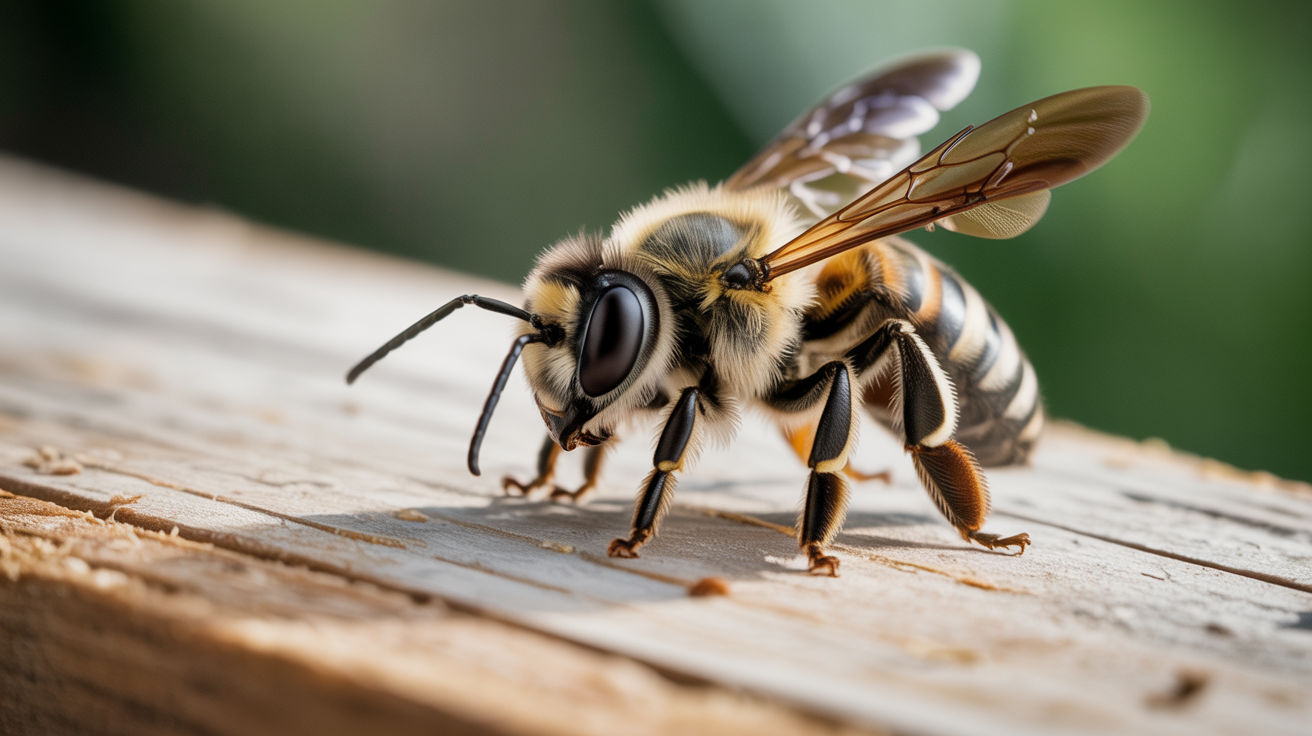
Drone bees are the male members of a honey bee colony, and their entire biological purpose centers on one thing: mating with virgin queens from other hives. They do not sting, do not forage, and do not make honey.
What Drone Bees Look Like
Drones are the easiest of the three bee types to identify once you know what to look for. They are noticeably larger than workers, though smaller than a laying queen. Their most distinctive feature is their eyes: two large, dome-shaped compound eyes that meet at the top of the head. Workers have eyes set to the sides; drones look like they are wearing goggles.
Drones also have a blunt, rounded abdomen (workers taper to a point), no pollen baskets on their hind legs, and no wax glands or stinger. Their wings are proportionally larger, which powers the sustained flight needed to reach and navigate drone congregation areas.
For a full look at all three bee types and how they fit together, see Inside the Hive: Queen, Workers, and Drones Explained.
What Drone Brood Looks Like
Spotting drone brood on a frame is one of the first skills worth building at an inspection. Drone cells are larger than worker cells and are capped with a bullet-shaped, domed cap that rises well above the surface of the comb. Worker cell caps are flat to gently convex; drone caps are noticeably raised and rounded.
Drone brood usually appears in clusters along the lower edges of frames and on any irregular or burr comb that fills gaps. It is common in spring and early summer. A frame covered in dome-capped cells is drone comb.
One distinction worth knowing: a frame of mostly drone-capped cells in a strong colony during swarm season is normal. The same frame in a queenless hive almost always means a laying worker has taken over, since unfertilized eggs (which develop into drones) are all she can produce. The laying-worker pattern looks different: scattered, random cell placement rather than organized clusters, often with multiple eggs per cell.
The Life Cycle of a Honey Bee: Egg to Forager covers how drone development differs from worker development, including the longer incubation period of 24 days from egg to emergence, compared to 21 days for workers.
What Drones Do: Mating Flights and Congregation Areas
Drones leave the hive in the afternoon when conditions are warm and calm, typically between 1pm and 4pm on days above about 60°F (15°C). They fly to drone congregation areas (DCAs), which are specific airborne zones 100 to 300 feet in the air, often positioned near landmarks like tree lines, hills, or field edges.
DCAs are not random. Drones from multiple colonies within several miles gather in the same airspace year after year. Researchers have mapped established DCAs that persist across seasons even as the surrounding colonies turn over completely. No one has fully explained how the locations are passed on or how drones locate them, but they do, reliably.
A virgin queen makes one or more mating flights, usually within the first two weeks after emergence. She flies into the congregation area and mates with roughly 10 to 20 drones in succession. Each mating drone dies immediately afterward. The queen stores the sperm in her spermatheca and uses it across her entire laying life, which can span several years.
The genetic diversity that comes from mating with many drones contributes directly to colony health and behavioral consistency. A queen who mated with more drones typically heads a colony that is more disease-resistant and even-tempered.
How the Colony Manages Its Drone Population
The colony does not keep drones year-round. In spring and summer, a healthy colony tolerates several hundred to a couple thousand drones. As fall approaches and nectar flow tapers off, workers begin evicting drones from the hive. You will see workers dragging drones to the entrance and pushing them out. Drones, unable to forage or feed themselves, die within days once expelled.
This eviction is a reliable seasonal signal. Inspect in late September or October in a temperate climate and find no drones and no drone brood, that is normal and healthy. Drones persisting through late fall in a colony that otherwise looks past its active season can indicate a queenless hive where laying workers are still producing unfertilized eggs.
| Time of Year | Expected Drone Situation |
|---|---|
| Early spring | Few or no drones; colony begins raising drone brood as population rebuilds |
| Late spring and summer | Active drone population; congregation flights on warm afternoons |
| Late summer and early fall | Gradual reduction; eviction begins |
| Winter | No drones present in a healthy, queenright colony |
What Drone Brood Tells You at Inspection
Beyond their reproductive role, drone cells and drone brood are useful diagnostic tools during hive inspections.
Capping Condition
Drones raised in worker-built drone comb have normal dome caps. Sunken, perforated, or discolored drone caps can still indicate American foulbrood or sacbrood disease, just as with worker cells. If you see irregularities on drone-capped cells, treat them the same as suspect worker cells: note the location, smell the open cells, and compare against known disease photos.
Varroa Mite Monitoring
Varroa mites prefer drone brood at roughly 8 to 10 times the rate of worker brood, because the longer capping period (14 days for drones versus 12 for workers) gives mites more time to reproduce. Many beekeepers use a dedicated drone brood frame as a mite trap. You insert a frame of foundationless or drone-size foundation, let the bees draw and cap it, then remove and freeze the frame before the drones emerge. This kills the drones and the mites capped inside without any chemical treatment and gives you a rough sense of mite pressure when you inspect the frozen comb.
Laying Pattern
Irregular scattered drone cells throughout the brood nest, not confined to drone comb areas, can flag a laying worker situation, especially if you see multiple eggs per cell or no worker brood at all. This is one of the more important frame-reading skills for diagnosing a failing colony.
The health of drone brood connects to overall colony vitality. A colony raising a clean, organized population of drones in spring and summer is generally in good shape. For more on what is happening across the colony during peak season, see How Bees Make Honey Step by Step.
Frequently Asked Questions
Do drone bees sting?
No. Drones have no stinger. They are the only bees in the colony you can handle without any risk of being stung. Workers carry a modified ovipositor that doubles as a stinger; drones have no such structure.
How long do drones live?
Drones typically live four to eight weeks during active season. They do not do housework, nurse brood, or forage, so they depend on workers entirely for food and heat. Once the colony stops tolerating them in fall, they survive only as long as their stored fat reserves hold out, usually a few days after eviction.
Why is there so much drone brood during swarm season?
A colony preparing to swarm raises extra drones in advance. The departing swarm takes the old queen, and the new colony she founds needs to find and mate with drones. The parent hive, meanwhile, raises a new queen who also needs to mate. Colonies time their drone production to overlap with other colonies' swarming cycles, which is why DCAs are especially active in late spring.
Can I reduce drone brood to help control Varroa mites?
Removing drone brood reduces the mite population somewhat and is a useful integrated pest management step, but it does not replace a miticide treatment when mite loads are high. Think of drone brood removal as one tool in a broader strategy. Monitor mite levels with an alcohol wash or sugar roll and treat based on actual counts rather than guesswork.
Is it normal to see drones clustered at the hive entrance?
Yes, in summer. Drones often wait at the entrance or on the landing board during mid-morning before heading out for their afternoon congregation flight. A cluster of large, blunt-bodied bees near the entrance on a warm day is routine. Workers aggressively evicting those same drones in late summer or fall is equally normal.